





Related: City Begins Installing High-Tech, Low-Clearance Warning
What Empty Auto Haulers Are Telling Us
If cars are selling so fast, as TV commercials say, why must we see those spots so often? asks Senior Contributing Editor Tom Berg.
August 27, 2018
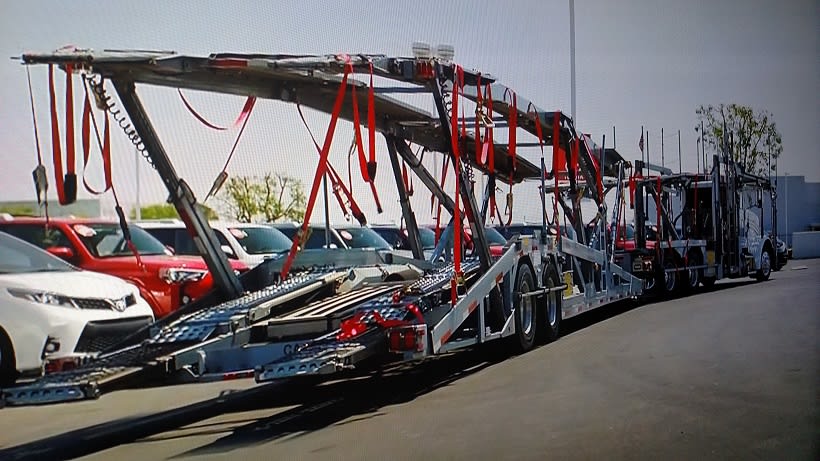
Look – the truck’s empty! We told you they’re selling fast! Or are they?
3 min to read
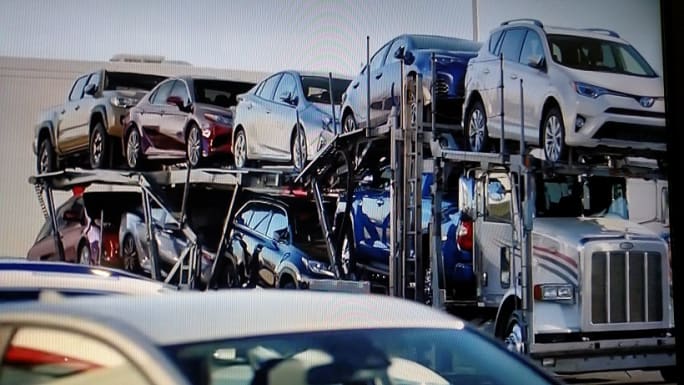
In a current commercial, an auto-hauling rig loaded with 2018-model cars and truck arrives at a Toyota dealer, ready for the big year-end sales event.
Credit:
Screen captures by Tom Berg
If you watch television, you know that this is the time of year to buy a new car or truck. Commercials constantly remind us that dealers need to clear out the old models to make room for the new, and manufacturers are aiding the effort with lowered prices, decent rebates, and special financing for purchases and leases.
There are all kinds of themes in these “spots,” and one now playing is Toyota’s “here comes another truckload of ‘18 models.” We see spokespersons standing outside a showroom and observing a car-hauling rig entering the lot loaded to the gills with Camrys, Corollas, RAV4s, Tacomas, and so on. The rack-type trailer is open so the shiny new vehicles gleam in the sun.
"Ah, but they won’t last long,” one person or the other remarks, "because they’re going fast.” We know that’s true because other Toyota commercials show enthusiastic customers in showrooms and on lots, claiming title to one car after another.
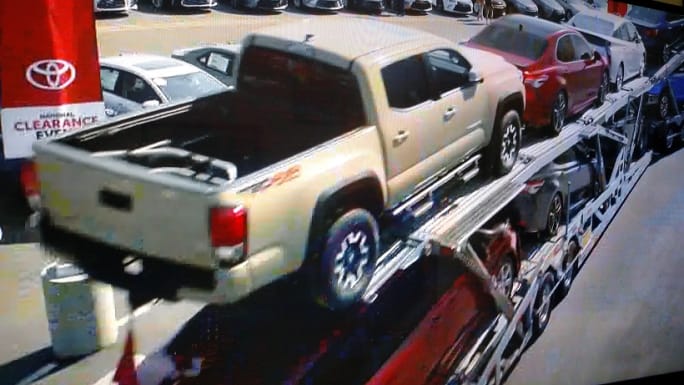
The new ’18 vehicles gleam in the sun, but “they won’t last long because they’re going fast!”
By this time in the sales cycle, the leftover 2018s are going so very fast that they’re apparently being snatched right off the truck! Look – that trailer that just came in loaded is now empty. Its ramps are bare and tie-down straps are hanging in the breeze. Ha ha, that’s cute. And Toyotas are good products, so I’m tempted to visit a dealer and see what I could snatch in the way of a deal. If not on a Toyota, then maybe a Chevy, Ford, Chrysler, or Nissan.
Wait – if sales are so brisk, why does Toyota and the others have to run these commercials, during local and national programming, so often? Shouldn’t the cars and trucks be flying off the trucks and the lots -- on their own? Not if sales are declining – and they are, according to news media reports since the spring.
On August 2, Fortune magazine ran a good summary of why: Basically, old cars and light trucks are staying on the road longer, and too many new vehicles have been built and sold. Consumers can buy only so many before the market is satiated. The manufacturers should have seen it coming, Fortune says.
My own sales barometer is a long railroad spur along U.S. 23 north of Marion, Ohio. Toward the end of the Great Recession, that spur was jammed full of “auto racks,” the covered, triple-deck rail cars that carry new vehicles from factories to distribution points around the country. There, the cars are driven off and loaded aboard highway car haulers for the final miles to dealers. As the economy healed, those rail cars disappeared and were put in service.
I drove past that rail spur a few days ago, and it’s full again, with auto racks and other kinds of freight cars. That tells me that automotive sales are down, and so are other types of economic activity.
I don’t want to see a recession and I’m not going to predict one, even though I’ve read that one is due in 2020. If that comes to pass, there’ll be more empty auto hauling rig to be seen – parked against the fence.
Subscribe to Our Newsletter
More Blog Posts

Pulsing Back-of-Trailer Lamps Aim to Prevent Crashes
Can the addition of a pulsing brake lamp on the back of a trailer prevent rear-end collisions? FMCSA seems to think so, if its exemptions are any indication.
Read More →
Designing a 14-Foot Trailer
Trailers are 13 feet, 6 inches high, right? Not for Hub Group, which developed a special 14-foot-high trailer spec for a dedicated customer based in California. Learn more in the Trailer Talk blog.
Read More →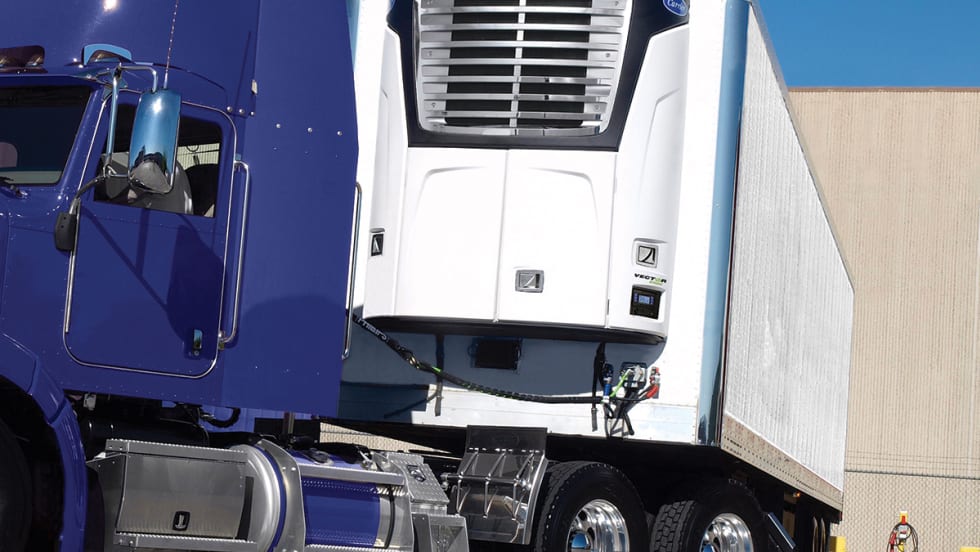
CARB Comes for Reefer Trailers
A new round of emissions control regulations decreed by the California Air Resource Board will begin affecting refrigerated trailer and TRU design and operations next year.
Read More →
5 Ways Data Analysis Maximizes the Value of Trailer Telematics
Are you getting the most out of your trailer telematics investment?
Read More →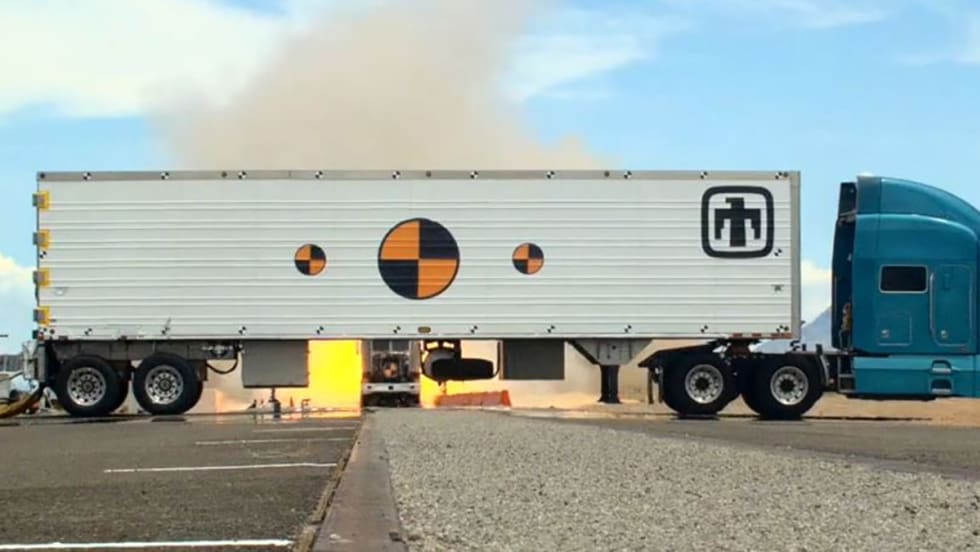
Can You Guess What's in That Trailer?
You don’t always know what’s in the trailers that pass you on the road. But some of those trailers are carrying something a little more dangerous that frozen food or new bedding…like, maybe, a nuclear weapon. But this isn’t an ordinary trailer; this is a trailer specifically made to not only carry this type of payload, but protect it at all costs.
Read More →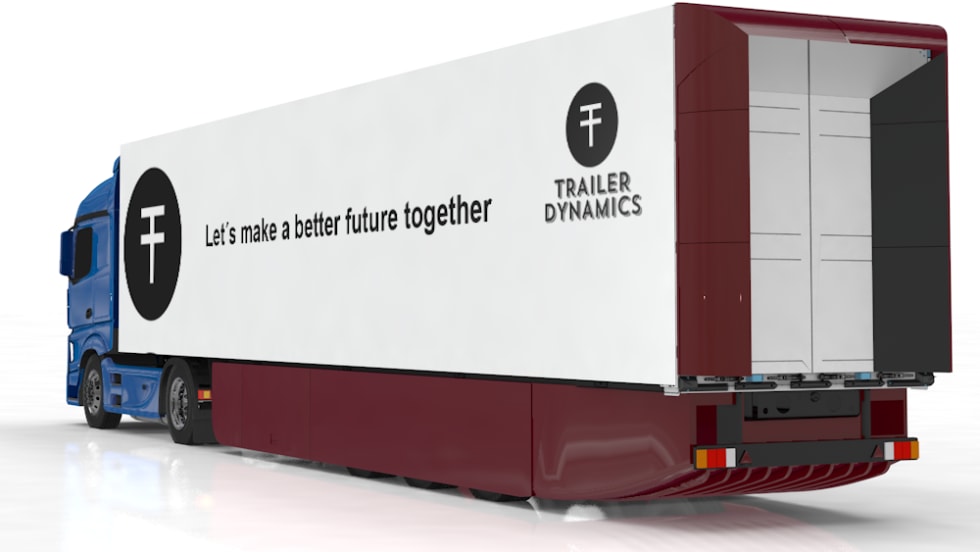
How Trailers Are Harnessing 'Free' Energy
Can trailers play a more active role in sustainable transport beyond aerodynamic add-ons or low-rolling-resistance tires? Some companies think so.
Read More →
Wrapping a Trailer for COVID’s Everyday Heroes
“We don’t only deliver freight. We deliver awareness.” That’s what Jim Barrett, president and CEO of Road Scholar Transport, likes to say about the Dunmore, Pennsylvania-based carrier’s “awareness fleet.” Its latest trailer wrap honors the everyday heroes of the pandemic.
Read More →
How a Tanker Fleet is Using Unorthodox Trailer Lighting to Fight Rear-End Collisions
Groendyke Transport watched the number of rear-end collisions with its trailers rise steadily until it tried an unorthodox and then unapproved method of alerting following drivers that its trucks were applying brakes and slowing down.
Read More →
The Role Trailers are Playing in COVID-19 Funerals
In places such as New York City and Detroit, overwhelmed hospitals and mortuaries are using refrigerated trailers to store the bodies of people killed by COVID-19.
Read More →
Reefer Trailer Aims to Help Reach Zero Emissions
Wabash National is partnering with C&S Wholesale Grocers to test a new type of zero-emissions refrigerated trailer.
Read More →