




Times and Wars Have Changed, But Military Vets Still Need Jobs
The “Hiring Military Veterans” feature in the current issue of Heavy Duty Trucking was an easy assignment for me to take on, because I was in the Army from 1965 to ’67 and afterwards went to work “in the real world” – anywhere outside the service. Jobs were plentiful for a while, so no complaints from me. And I appreciate the service and experience of millions of other vets, then and now.

The “Hiring Military Veterans” feature in the current issue of Heavy Duty Trucking was an easy assignment for me to take on, because I was in the Army from 1965 to ’67 and afterwards went to work “in the real world” – anywhere outside the service. Jobs were plentiful for a while, so no complaints from me. And I appreciate the service and experience of millions of other vets, then and now.
Unlike in the Vietnam era, people these days praise veterans to the skies. However, the jobs front is still shaky, and today’s vets are about twice as likely to be unemployed as those who never served. The HDT article covered some of the reasons for that, and quoted executives and educators who testified that trucking is one of the places where vets fit in well. A couple of guys I interviewed didn’t make it into print, but deserve some attention.
One is John Storey, 24, a former U.S. Marine now working as a diesel mechanic for Ryder System in Baton Rouge, La. Like many in the profession, he took a boyhood interest in mechanical things. He joined the Marines out of high school in Mississippi and ended up at Camp Pendleton, Calif., where he was an armored vehicle mechanic. He worked on heavy tactical wheeled vehicles with powertrains similar to those in commercial trucks.
“I did engines, tires, steering, differentials, axles,” Storey said. “It was repair and replace, not overhaul. It was all mechanical, so I was amazed when I saw that you could shut down three cylinders of an engine electronically from 20 feet away,” which he learned in the Ryder shop.
“I left the Marines in January 2012, but I actually had this job in October 2011,” thanks to a job fair and Ryder recruiters, he said. “I researched other employers and Ryder really stood out as a veteran-friendly company, and one that’s been around since 1933. They want people who are strong-willed, proactive, and able to work with minimal supervision. I picked those things up in the Marines.
“I got first pay check from Ryder before I got my military severance pay,” he continued. “I went to work seven days after I got out.” He caught onto electronics and computer-based maintenance pretty easily.
“Ryder offers a substantial amount of training in everything,” Storey said. “Unlike many other truck shops, Ryder pays hourly, so even if we’re not working on something we’re still on the clock. I use my spare time with on-line training or keeping things clean, like in the military.
“Squared away?” I asked (remembering the term from my days in the Army).
“Yes, sir - squared away,” he answered (so it’s still in use).
Another former military man now making a good go of it in civilian life is Justin Ashton, vice president of business development and co-founder of XL Hybrids, a developer of a low-cost hybrid electric system for Class 1 to 3 cargo vans (see September HDT). As an officer he had a management perspective.
“In the Air Force I managed troops,” he said. “At age 24, you really learned that managing and leadership are focused on people. It helps me in my current profession; the fleet industry is all about relationships, with other employees and with customers.”
Veterans coming back to the States should take advantage of the GI Bill to train in high-tech manufacturing and transportation fields, as people with those skills are in high demand, he believes. He thinks Congress should improve the GI Bill “to incentivize veterans to get a degree that markets well in this economy.”
XL Hybrids is a small company that’s very engineering-oriented, he said.
“Currently I’m the only veteran here” among 16 full-time employees. “We’re a very specialized company, and veterans come out with specialized knowledge” that so far hasn’t aligned with XL’s needs. “We have hired hard-core engineers, pretty specialized automotive powertrain engineers. We’re just starting to hire in logistics, and that’s where we expect to hire some veterans.”
Hoo-rah, fellas. Here’s hoping that more guys and gals like you find similar success.
More Blog Posts

Beyond the Central Transport Settlement: Lessons on Hiring and Risk
The $5.5 million discrimination settlement raises broader questions about hiring practices, safety performance, and the hidden risks that can lurk in a fleet's recruiting process.
Read More →
Are Diesel Shortages Something to Worry About Again?
There’s a certain déjà vu when tensions flare in the Middle East and diesel price spikes can give you panic attacks. What parallels are there between the current situation and the 1970s energy crisis?
Read More →
NOx Isn’t Laughing Gas. Let’s Clear That Up.
A recent EPA reference mixed up NOx and nitrous oxide. It’s an easy mistake. Just not one you expect to see in emissions policy. Let’s look at the difference.
Read More →
TMC 2025 Takeaway 2: Buy... or Subscribe?
TaaS. Does that mean trucks as a service, trailers as a service, or tires as a service? HDT's Deborah Lockridge has another takeaway from the Technology & Maintenance Council meeting in her blog.
Read More →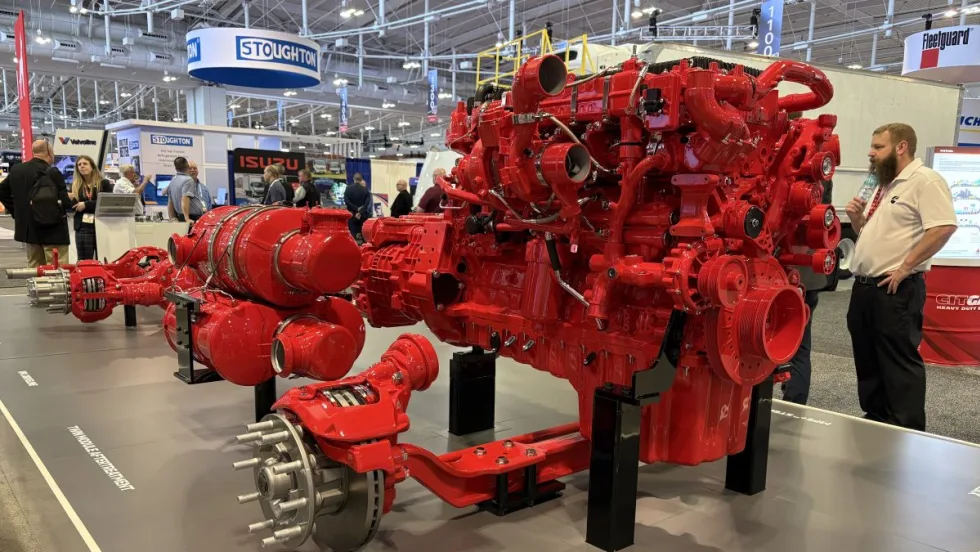
TMC 2025 Takeaway: The Journey Toward Vertical Integration
HDT's Deborah Lockridge on how the trucking industry has moved toward "vertical integration" over the past 25 years.
Read More →
Trucks Are For Girls!
HDT Editor and Associate Publisher Deborah Lockridge is a longtime Girl Scout leader and loves to connect her passion for inspiring girls with her love of the trucking industry.
Read More →
Trucking Advocacy: Impact Beyond the 2024 Elections
No matter who wins the election, trucking continues to work to educate the people who pass the laws and make the rules that affect the industry. HDT's Deborah Lockridge shares insights from two major trucking associations in her All That's Trucking blog.
Read More →
Recharge Your Brain for Better Business
Skimping on vacation may be the worst thing you can do for your business, your career, and your mental health. In her All That's Trucking blog, Deborah Lockridge writes about the importance of giving your brain what it needs to be innovative.
Read More →
Trucker Pre-Trip Leads to Mission 'Im-paw-sible'
See what happened when a truck driver found an unexpected stowaway during his pre-trip inspection.
Read More →
HDT Editor: 2023's Most Important Trucking Topics
Read Deborah Lockridge's picks for the most significant stories we covered at HDT in 2023: freight recession, zero-emission trucks, drivers and marijuana, and more.
Read More →