




Thirty-five years' experience or one year's experience 35 times?
Equipment Editor Jim Park has had a CDL for 35 years. But does he know how to really drive a truck? We may never know until the day comes when he has to put his skills to the test.


The case for basic driving skills should be clear because truck drivers have milliseconds to react to problems. Pilots sometimes have several minutes. Photo: Jim Park
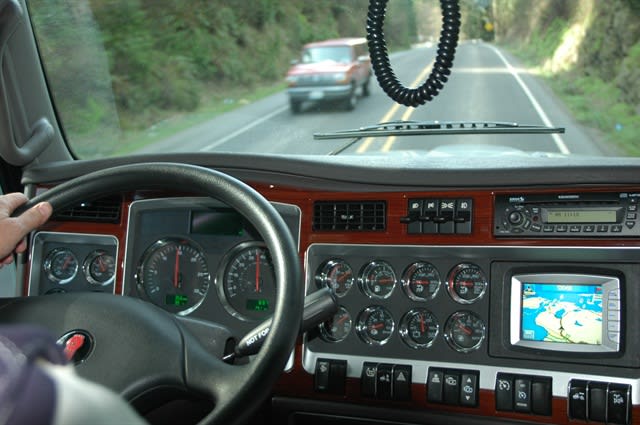
The case for basic driving skills should be clear because truck drivers have milliseconds to react to problems. Pilots sometimes have several minutes. Photo: Jim Park
Where I live, commercial drivers are required to rewrite their CDL test every five years in order to renew the license. I wrote my renewal test today and aced it. I wrote almost exactly the same test in 1978 when I first earned the privilege to drive big trucks.
Rewriting virtually the same test eight times over 35 years makes little sense. Despite all the discussion over the years that the test should be strengthened to demonstrate actual knowledge rather than a memory exercise following cursory re-reading of the drivers handbook the night before, most of the questions have not changed.
The written test consists of 55 questions: 20 on road signs, 20 on air brakes, and 15 on truck driving theory and practice. I'd be lying if I said that I didn't like the fact the test was a cakewalk, but I really do wonder what today's exercise proved to the issuers of my CDL. I've had the license for 35 years. I should know about road signs. Even the trucking theory and practice questions were barely relevant.
I kid you not; this is an actual question from the test: "What should a driver look for when inspecting an air compressor drive belt? The choices were: fraying; cracks; cuts; all of the above. In all the years I've been driving, I've never seen a drive belt on an air compressor, but I guessed correctly.
I think it's safe to say I know a lot more than any written test could ever reveal, but I've run across drivers with several years in the left seat who still do not know, for example, how to slide their fifth-wheel or trailer axles, or load a trailer to balance the weight across the axles.
And that begs the question, how do drivers progress in their knowledge of the craft of trucking? Most of what they should have learned in driving school, or over the hours in the cab riding along with Dad or Uncle Floyd, could safely be called "the basics." There's little if any advanced driver training out there, and even if there was, return on the investment would be poor because it wouldn't improve your pay grade or discount your insurance.
You might not need to ask as many embarrassing questions, like how much weight shifts when you slide the fifth wheel, or how to unstick a frozen brake drum. But that's stuff you're somehow just supposed to know.
I'm glad pilots don't rely on the grapevine to learn stuff like how to restart a flamed-out engine or how to determine the glide slope when the instruments fail.
I've met a few drivers over the years with several million miles behind them. That in itself suggests they are doing something right, but I have found that more than a few of these fellows don't "know" a lot about trucks and trucking. They may have managed to avoid knocking anything over in their 20 years of driving, but they don't seem to have 20 years worth of accumulated knowledge about trucking or the expertise you might expect from a veteran in some other profession.
It's also hard to say whether good judgment, good skill or good luck kept them out of trouble all that time. It's quite likely that many of them have simply never found themselves in a situation that called for any, all or either of the above. Does that driver have 20 years of experience of a year's worth of experience 20 times?
Driver by Wire
It's interesting that many of the so-called soft skills that the best drivers had years ago are fading into irrelevance, like downhill braking, collision avoidance, traffic and speed management, traction management in slippery conditions, fuel efficient driving techniques, etc. Most of those skills are now automated today. Sure, automation makes it easier bring entry-level drivers up to a point where they can handle most of what the world will toss at them today, but where will they be if they had to think for themselves?
The question being asked in commercial aviation circles today is whether today's pilots are real aviators or just systems management people with a couple of stripes on their shoulder. Several recent incidents (over the past decade) have called pilots' actual flying skills into question. For example, the crash of the Bombardier Q400 aircraft near Buffalo, N.Y. and the very well publicized disappearance of the Air France flight 447, a highly-automated Airbus A330 that literally fell out of the sky into the Atlantic ocean while the pilots watched their computer systems unravel right before their eyes. In both cases, investigators cited a lack of pilot knowledge and skill contributed to the crashes.
Luckily for the folks aboard the USAir flight that landed in the Hudson River a few years ago, that pilot still knew how to fly an airplane.
There's talk in aviation circles now about requiring pilots to make a certain number of manual landings and take-offs each month just so they will maintain their basic stick-and-rudder flying skills.
With trucking on the verge of a similar wave of automation -- we're told it's about enhancing safety but we can't ignore the fact that it's simply cheaper to not to so extensively train new drivers -- I'd urge caution in allowing those basic driving skills to atrophy.
Unfortunately, officials in North America don't do a very thorough job of investigating truck crashes. If they did, I believe we'd see driver error attributed to a lot more incidents where the truck driver is deemed at fault. It would be very revealing to discover what the driver did wrong, or didn't do at all. This, I believe, would make a very strong case for better basic and advanced driver training rather than just heaping more automation into truck cabs.
If you have a few minutes, check out the two clips below to learn how much pilot error contributed to the Air France crash. The allegedly atrophied skills referred to are skills that every pilot learns within the first five hours of pilot training. Apparently, those skills are seldom called upon anymore. The consequences of forgeting the basics can be tragic.
More Blog Posts

Truck Driver’s Dilemma: Click, Twist or Swipe?
Whether 'tis safer to twist a knob or press a button than to swipe right then swipe down to scan the menu for your favorite playlist...? That's a question for the age.
Read More →
Even the Swedes are Doing Turnpike Doubles
The government doesn't seem to mind asking trucking to invest a trillion dollars toward a greener future. But they won't let us pull turnpike doubles making 30% less CO2. Which is insanity, says HDT's Jim Park in his On the Road blog.
Read More →
Is Your Recruiting Message on Point?
How does your recruiting and retention messaging compare with the reality at your company? Would your drivers agree with your own assessment? Jim Park explores those questions in his On the Road blog.
Read More →
You Can’t Blame Trucks for the Highland Rest Area Bus Crash [Commentary]
The causes of the Highland Park rest area crash go far beyond the parking shortage and the need for flexibility in hours of service — but those issues must be addressed, too, says Jim Park in his On the Road blog.
Read More →
Electric Trucks Seem Far Down the Road for Fleets Dealing with Today's Maintenance Challenges
While the push for zero-emissions trucks rings clear for regulators, advocates and even a small crowd of suppliers, ZEVs seem to have run out of steam down on Main Street, says HDT Equipment Editor Jim Park in his latest On the Road blog.
Read More →
Guinea Pigs 2.0: Can Trucking Comply with a Near Impossible NOx Reduction?
The EPA’s Final Rule on NOx reduction will be incredibly difficult if not nearly impossible for trucking to comply with. Rather than endure another round of equipment failures, downtime and loss of customer faith, industry needs to rally ‘round the OEMs and seek a solution to this wrong-headed rule.
Read More →
Is Downspeeding Bad for Brakes?
Is there a connection between downsped drivetrains and increased brake wear? There shouldn’t be. Downsped fleets seeing increased brake wear are probably not letting the technology do its job, explains HDT Equipment Editor Jim Park.
Read More →
Dig for the Gold Behind CVSA’s Out-of-Service Numbers
Published out-of-service rates don’t mean much until you dig into the why. With brake problems consistently placing in two of the top five spots, maybe we’re missing something in brake maintenance, writes HDT Equipment Editor Jim Park.
Read More →
Things That Go Poof in the Night
We’re in electric-truck heydays now. But like another famous heyday, the 1849 California Gold Rush, there will be a lot fewer winners than losers, says Jim Park in his On the Road blog.
Read More →
Do Your Truck Drivers Know How to Descend a Mountain Grade?
Where do drivers learn mountain-driving techniques? It's sure not from the typical state CDL manual. Jim Park shares what he learned following a deadly 2019 Colorado crash.
Read More →