




The Growth of Rail Intermodal
An article in DC Velocity says domestic intermodal "appears to have come of age." Deborah Lockridge looks at the issue in her "All That's Trucking" blog.

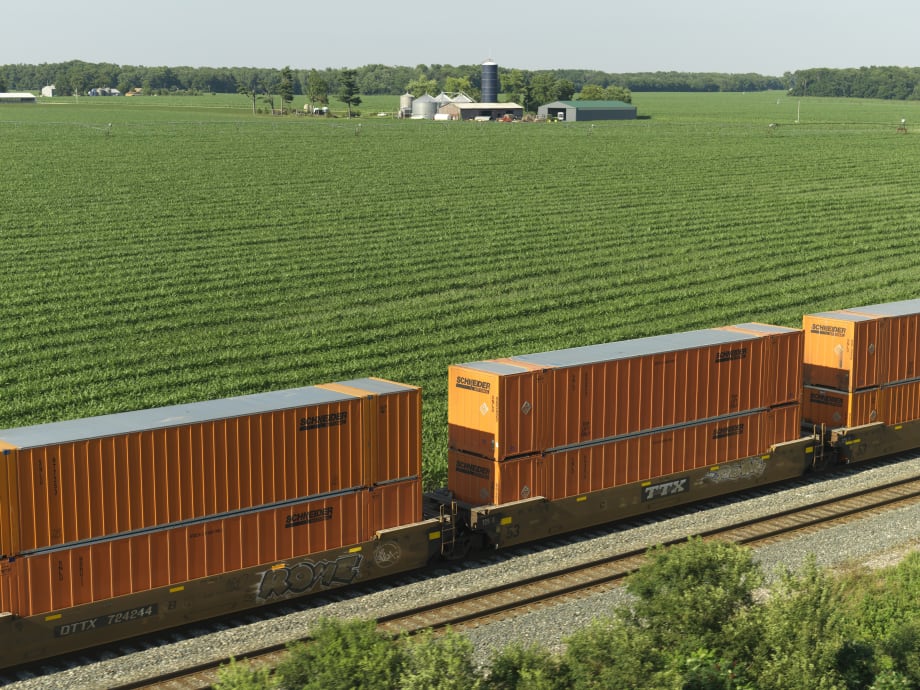
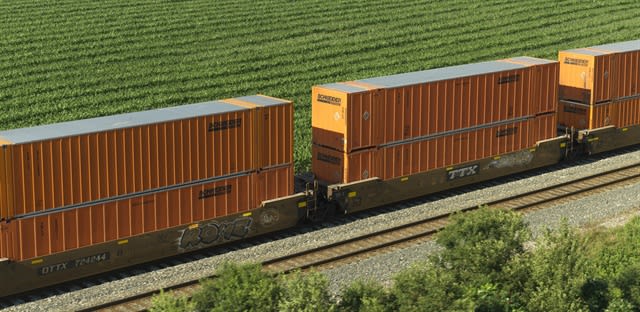
"On April 27, 1984, a train operated by the Southern Pacific Transportation Co. left Los Angeles for South Kearny, N.J. This wasn't just another train, however. On board were containers stacked two-high on specially designed 'wellcars.' The lower boxes rested in a depression built into each car's center area, allowing the train to clear bridges and tunnels despite the higher cube."
So begins a great article on the growth of intermodal, "Getting Religion," in the shipper/logistics magazine DC Velocity.
"It's been a prolonged adolescence, but 30 years on, domestic intermodal—70 percent of which today moves in double-stack configuration—appears to have come of age."
The past 10 years have seen dramatic changes in how intermodal is marketed. In a move to attract freight brokers, railroads have made intermodal available on the spot market, the world brokers live in. In addition, the rails now offer brokers door-to-door services by bolting drayage operations onto the traditional ramp-to-ramp business. While this has benefited all brokers, it has been a particular boon to smaller players, which had to find their own dray services but often lacked the scale or network contacts to do it economically....
Rail intermodal folk contend that the ability to sell a door-to-door product has demystified intermodal service for many shippers and has opened doors previously closed.
Author Mark Solomon notes that intermodal's growth rate is currently about four times that of over-the-road truck. FTR's Larry Gross is cited as saying the the year-over-year increase through 2014's first quarter is significant, with conversion from over-the-road making up an estimated 15% of that growth.
Indeed, as we reported this week, after hitting record high levels for two straight weeks, intermodal rail traffic set another new record during June.
However, it's still not an easy sell for those in intermodal, Solomon writes:
Intermodal executives aware their industry has a spotty track record of operational consistency focus more time these days on education than anything else. To newcomers, they tout intermodal's benefits (economies of scale, fuel efficiency, environmental friendliness, etc.). To former users that may have been burned years ago, they say that multibillion dollar investments in ramps and terminals have brought intermodal close to being cost and service competitive with single-driver truck operators, mostly in the East.
There are indeed many large fleets who are putting everything that makes sense on intermodal, as they try to reduce the irregular long-haul routes that are hard to find drivers for.
But railroads don't go everywhere, so despite the growth and continuing growth of intermodal, it still will only make up a very small percentage of the freight shipped in this country, the American Trucking Associations points out. It takes trucking nine days to move as many loads as move via rail intermodal in all of 2013, ATA says.
Read the full DC Velocity article here.
Related Stories:
More Blog Posts
The Diesel Price Crisis Has No Easy Fix
Washington is trying everything from oil-reserve releases to longer driving hours for fuel haulers. None addresses all the forces keeping diesel prices high.
Read More →
Beyond the Central Transport Settlement: Lessons on Hiring and Risk
The $5.5 million discrimination settlement raises broader questions about hiring practices, safety performance, and the hidden risks that can lurk in a fleet's recruiting process.
Read More →
Are Diesel Shortages Something to Worry About Again?
There’s a certain déjà vu when tensions flare in the Middle East and diesel price spikes can give you panic attacks. What parallels are there between the current situation and the 1970s energy crisis?
Read More →
NOx Isn’t Laughing Gas. Let’s Clear That Up.
A recent EPA reference mixed up NOx and nitrous oxide. It’s an easy mistake. Just not one you expect to see in emissions policy. Let’s look at the difference.
Read More →
TMC 2025 Takeaway 2: Buy... or Subscribe?
TaaS. Does that mean trucks as a service, trailers as a service, or tires as a service? HDT's Deborah Lockridge has another takeaway from the Technology & Maintenance Council meeting in her blog.
Read More →
TMC 2025 Takeaway: The Journey Toward Vertical Integration
HDT's Deborah Lockridge on how the trucking industry has moved toward "vertical integration" over the past 25 years.
Read More →
Trucks Are For Girls!
HDT Editor and Associate Publisher Deborah Lockridge is a longtime Girl Scout leader and loves to connect her passion for inspiring girls with her love of the trucking industry.
Read More →
Trucking Advocacy: Impact Beyond the 2024 Elections
No matter who wins the election, trucking continues to work to educate the people who pass the laws and make the rules that affect the industry. HDT's Deborah Lockridge shares insights from two major trucking associations in her All That's Trucking blog.
Read More →
Recharge Your Brain for Better Business
Skimping on vacation may be the worst thing you can do for your business, your career, and your mental health. In her All That's Trucking blog, Deborah Lockridge writes about the importance of giving your brain what it needs to be innovative.
Read More →
Trucker Pre-Trip Leads to Mission 'Im-paw-sible'
See what happened when a truck driver found an unexpected stowaway during his pre-trip inspection.
Read More →