




The 1.6 MPG Epiphany, Part II
This story is a follow up to a blog Jim Park wrote a little over a year ago about a fellow, Carlos Cruz, who was a struggling lease-purchase driver. He wasn't making any money and was about to walk away from the truck when he decided to try some of the fuel saving tips he had read about and heard about on the radio. Today, his 90-day average is over 8 mpg, and his personal loaded best at 75,000 GVW is 9.7 mpg.

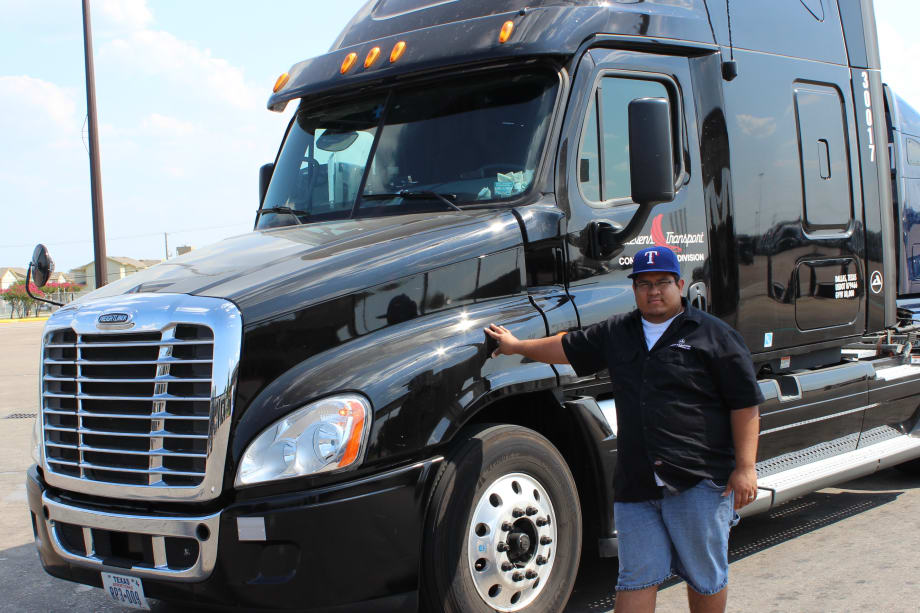
Carlos Cruz and is 2013 Freightliner Cascadia.
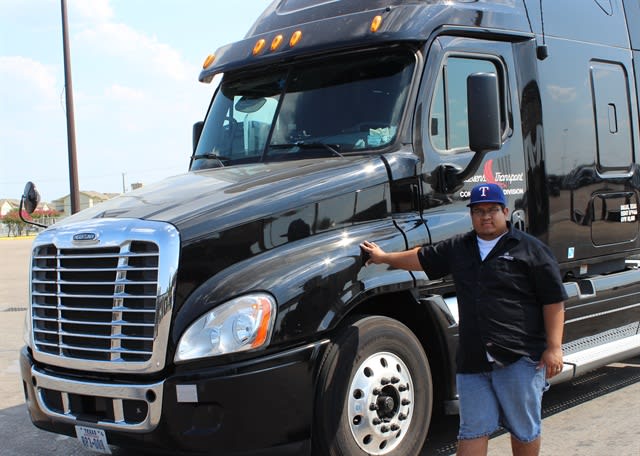
Carlos Cruz and is 2013 Freightliner Cascadia.
I should probably update the title of this blog, but that would make it seem like a new story. It should now read "The 3.5 mpg Epiphany."
This is actually a follow up to a blog I wrote a little over a year ago about a fellow, Carlos Cruz, who was a struggling lease-purchase driver. He wasn't making any money and was about to walk away from the truck when he decided to try some of the fuel saving tips he had read about and heard about on the radio. In a single cross-country trip, operating properly, his fuel economy jumped from about 6.2 mpg to the low-seven range. After a month of running like that, he maintained and often topped 7.8 mpg.
Today, his 90-day average is over 8 mpg, and his personal loaded best at 75,000 GVW or more is 9.7 mpg. He says the difference in fuel costs now compared to a year ago is about $300 to $400 per week or about $15,000 to $20,000 a year in additional revenue. Needless to say, he's now a very happy and -- dare I say -- prosperous owner-operator.
Much has happened to Cruz since that first story appeared in this space in May of 2012. While he's not the fame-and-glory type at all, he has graciously and very willing accepted the role of go-to-guy at the company for helping struggling owner-operators with better fuel economy. He is mentoring several drivers already, and he thinks nothing of spending many hours helping other drivers achieve what he has accomplished.
And he got a new truck in the deal. He's now driving a 2013 Cascadia, which is ironic because it was Daimler's reported fuel economy results from such a truck that originally prompted Cruz to contact me. I had reported the results Daimler provided on the cross-country fuel test last year -- 9.31 mpg on a cross-country trip averaging 62 mph. Cruz was incredulous, and sent me an email with the subject line, "Cascadia Scamulation." Based on his experience, he obviously did not believe the reported results were possible.
While Cruz, in his new Cascadia, is not yet averaging 9.31 mpg, he has exceeded that mark a few times, and it remains his goal.
Going Against the Grain
In his fuel economy presentation to new recruits, he talks about the transition from barely making it financially to setting and reaching fuel economy goals. He describes how he had to get over the usual old devils of ego and peer pressure to get what he really wanted -- a better income.
"Slowing down was the hardest part," he says. "I had to get my ego over the fact that everybody on the road was passing me, and I was fighting with the incorrect notion that I had to get more miles to make more money. At first it was hard to fight the urge to put my foot down. Even my dispatchers were telling me 55 was too slow."
Cruz says he has never been late for an appointment because he took too long to get there. His calculations revealed that most trips allowed an average road speed of 45 mph.
"There was plenty of time to meet my appointments, so why was I driving at 62? I started planning my trips for 55 and still arrived early," he says. "At 62, I was just throwing away money."
He described one particular trip where he had a new-hire with him as a trainee. He had noticed over a period of time another truck with a coach and trainee passed them three or four times during the day. Cruz was humming along at 55 mph while the other truck was doing 66. They wound up together at the Petro in Kingman, Az. late in the day and they started ribbing Cruz about going so slow.
"I said, well, we're here at the same time and I'll bet my fuel mileage is a lot better than yours," Cruz recalls. "We compared number and sure enough, I was 8.3, he was 7.6. I spent some time talking with the trainee and the trainer about fuel economy and now they both have my phone number and they are both 55 mph drivers."
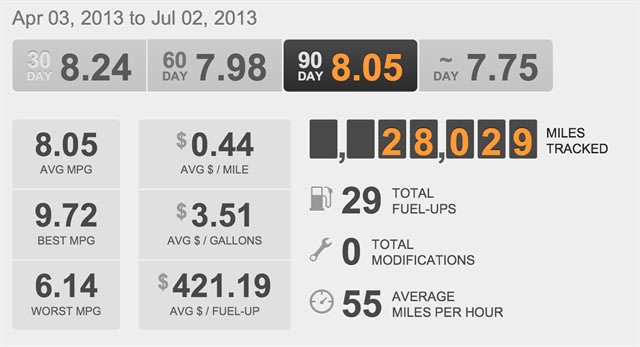
Here's where Cruz stands, best and worst fuel economy, over a three-month this year.
The truck has a 560-hp DD15 engine which is set at 460 horsepower. He runs a 9-speed overdrive through 0.336:1 rear ends on knobby dual tires, which are a company policy, not his. He's waiting for the day when the truck is his and can be refitted with wide-single tires.
With that drivetrain, Cruz says he has no problem taking the revs down to 800 rpm on some hills when a down shift just isn't quite necessary. And because of the large step between gears on the 9-speed, he's become quite adept at progressive shifting running very low engine rpm at cruise speed.
"Freightliner technicians have told me I've very easy on the truck and because of that my maintenance costs are likely to stay really low, he says. "I could probably push out my oil drain intervals too, but I'm not going to push that one yet."
Rethink Old Norms
What fascinates me about Carlos Cruz is that he was just like a lot of other owner-operators or lease-purchase drivers at one time; ruing the fact that he wasn't making any money and all set to blame the program rather than look at the mistakes he was making. In part one of our story, he admitted that he didn't know why it took him so long to try a few of the suggestions that are so readily offered to owner-operators today.
When he did finally come around, he admits to being stunned by the difference it made. Today, he's almost evangelical about fuel economy. He says a lot of owner-operators need to rethink what the business is all about, and forget what they have been told about running miles. "That's for company drivers," he says.

A two-week sample of Cruz's fuel mileage, taken from his My Gauges fuel ledger.
"A lot of guys in the lease-purchase program are worried about making the truck payment and they still think they need more miles to make money," Cruz observes. "Let me tell you, the thing to worry about is not miles or the truck payment or the maintenance escrow. It's fuel economy. If you sweat the fuel economy, everything else will take care of itself."
Cruz is already thinking out loud about the day the truck is paid for when he can start building a small fleet -- with really well-trained drivers. He has such plans and he'll likely see them through. That's quite a turnaround over just one year for a guy who was 2,000 away from handing in the keys and becoming a construction worker.
I can't wait to bring you The 1.6 MPG Epiphany, Part 3.
More Blog Posts

Truck Driver’s Dilemma: Click, Twist or Swipe?
Whether 'tis safer to twist a knob or press a button than to swipe right then swipe down to scan the menu for your favorite playlist...? That's a question for the age.
Read More →
Even the Swedes are Doing Turnpike Doubles
The government doesn't seem to mind asking trucking to invest a trillion dollars toward a greener future. But they won't let us pull turnpike doubles making 30% less CO2. Which is insanity, says HDT's Jim Park in his On the Road blog.
Read More →
Is Your Recruiting Message on Point?
How does your recruiting and retention messaging compare with the reality at your company? Would your drivers agree with your own assessment? Jim Park explores those questions in his On the Road blog.
Read More →
You Can’t Blame Trucks for the Highland Rest Area Bus Crash [Commentary]
The causes of the Highland Park rest area crash go far beyond the parking shortage and the need for flexibility in hours of service — but those issues must be addressed, too, says Jim Park in his On the Road blog.
Read More →
Electric Trucks Seem Far Down the Road for Fleets Dealing with Today's Maintenance Challenges
While the push for zero-emissions trucks rings clear for regulators, advocates and even a small crowd of suppliers, ZEVs seem to have run out of steam down on Main Street, says HDT Equipment Editor Jim Park in his latest On the Road blog.
Read More →
Guinea Pigs 2.0: Can Trucking Comply with a Near Impossible NOx Reduction?
The EPA’s Final Rule on NOx reduction will be incredibly difficult if not nearly impossible for trucking to comply with. Rather than endure another round of equipment failures, downtime and loss of customer faith, industry needs to rally ‘round the OEMs and seek a solution to this wrong-headed rule.
Read More →
Is Downspeeding Bad for Brakes?
Is there a connection between downsped drivetrains and increased brake wear? There shouldn’t be. Downsped fleets seeing increased brake wear are probably not letting the technology do its job, explains HDT Equipment Editor Jim Park.
Read More →
Dig for the Gold Behind CVSA’s Out-of-Service Numbers
Published out-of-service rates don’t mean much until you dig into the why. With brake problems consistently placing in two of the top five spots, maybe we’re missing something in brake maintenance, writes HDT Equipment Editor Jim Park.
Read More →
Things That Go Poof in the Night
We’re in electric-truck heydays now. But like another famous heyday, the 1849 California Gold Rush, there will be a lot fewer winners than losers, says Jim Park in his On the Road blog.
Read More →
Do Your Truck Drivers Know How to Descend a Mountain Grade?
Where do drivers learn mountain-driving techniques? It's sure not from the typical state CDL manual. Jim Park shares what he learned following a deadly 2019 Colorado crash.
Read More →