




Some Aero Details Not So Obvious
SmartTruck has posted a YouTube video depicting how its UnderTray and other devices work. One item alters air behavior at the "ICC bumper."

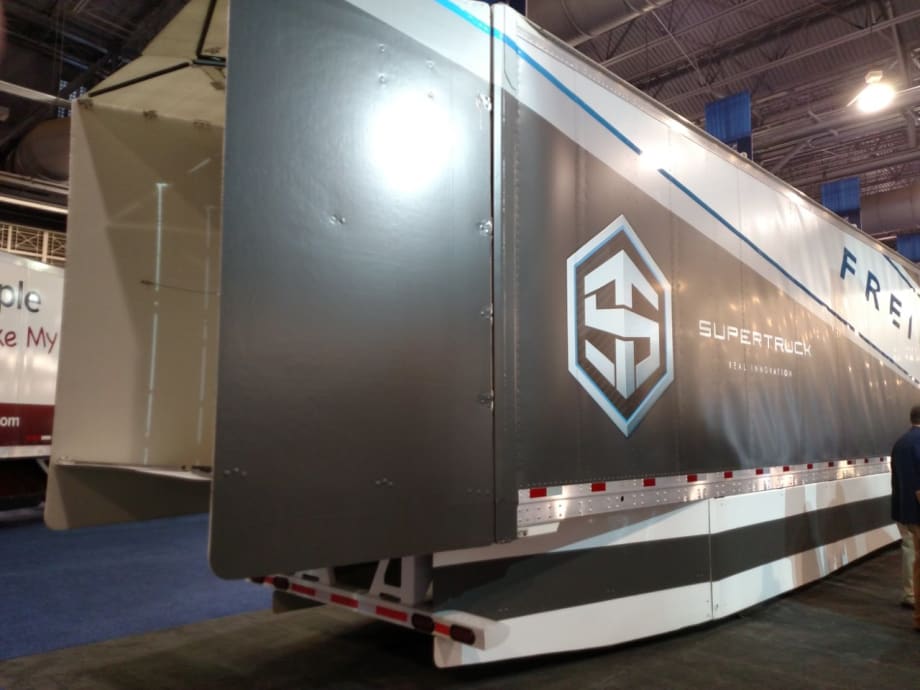
Trailer portion of Freightliner's SuperTruck, displayed at the ATA expo last month, has large aero fairings and another so small you might not notice.
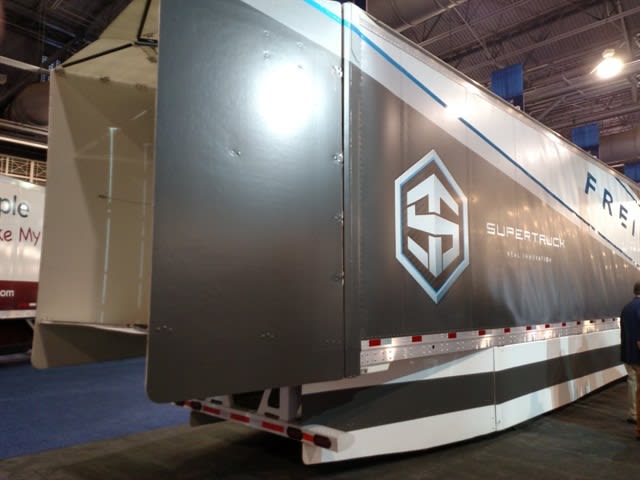
Trailer portion of Freightliner's SuperTruck, displayed at the ATA expo last month, has large aero fairings and another so small you might not notice.
Trailer aerodynamics have become increasingly important in recent years as truck operators see that they can save fuel money. They’re so important that the federal government is paying several teams of truck and trailer makers to design concept rigs that show what’s possible in this area of science.
As far back as the 1980s I’ve written about various types of trailer aero fairings, from Nose Cones to TrailerTails and many brands of skirts and other appendages in between.
Here’s one I don’t recall writing about, at least not lately: the UnderTray and other products from SmartTruck. The company has posted a YouTube video depicting a tractor-trailer moving through the air at highway speed, with streamlines showing how the devices smooth air flow over the vehicle. Check it out here.
This video leads to others on YouTube which further explain how the products work. In one of them, you’ll see lettering on a trailer proclaiming that the UnderTray was among HDT’s Top 20 picks in 2011. Of course I should’ve known that, but evidently my memory doesn’t reach back that far.
Also note the Diffuser, SmartTruck’s device mounted ahead of the rear underride guard that redirects air away from its vertical and horizontal members. These otherwise grab at the air and create drag. (Old timers still call this the “ICC bumper” because the old Interstate Commerce Commission required them, something I definitely don’t recall being a fact, but it’s part of trucking vocabulary.)
The trailer portion of Freightliner’s SuperTruck of course got large panels that improve air flow around corners, deep skirts to keep air away from the Strick van’s undercarriage and tandem, and a boat tail similar to a Trailer Tail, but home-made. One would expect all of those.
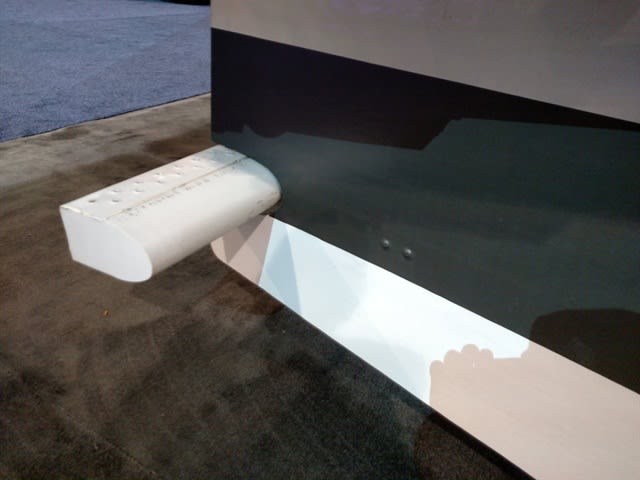
Leading edge of the rear underride guard's horizontal member has been curved to reduce air drag. Each corner of the member got this treatment.
But, the underride guard also got attention. Daimler engineers affixed a piece of rolled sheet metal to each of the outer leading edges of the guard’s horizontal member. Those are not responsible for a whole lot of aerodynamic improvement, but represent the amount of detail work that went into the rig during its development. As the old saying goes, every little bit helps.
More Blog Posts

Pulsing Back-of-Trailer Lamps Aim to Prevent Crashes
Can the addition of a pulsing brake lamp on the back of a trailer prevent rear-end collisions? FMCSA seems to think so, if its exemptions are any indication.
Read More →
Designing a 14-Foot Trailer
Trailers are 13 feet, 6 inches high, right? Not for Hub Group, which developed a special 14-foot-high trailer spec for a dedicated customer based in California. Learn more in the Trailer Talk blog.
Read More →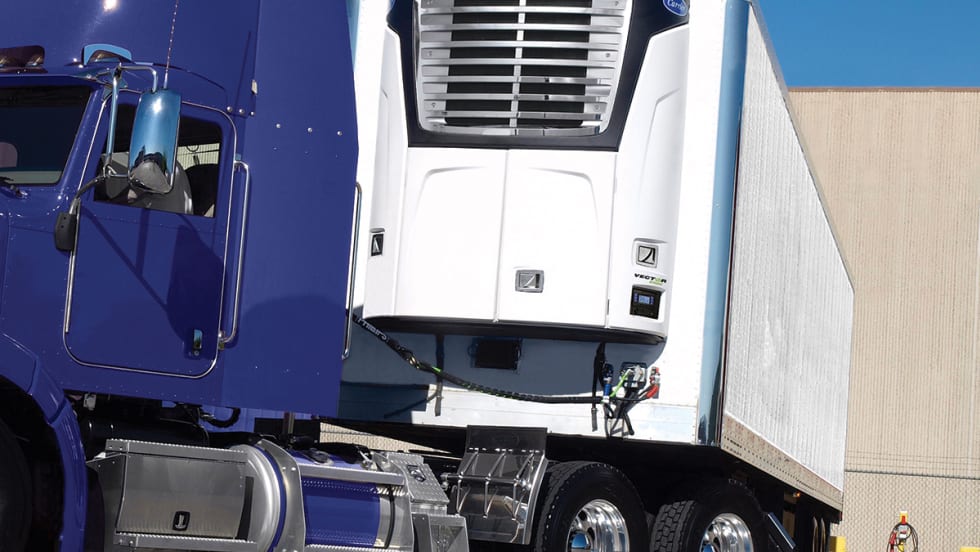
CARB Comes for Reefer Trailers
A new round of emissions control regulations decreed by the California Air Resource Board will begin affecting refrigerated trailer and TRU design and operations next year.
Read More →
5 Ways Data Analysis Maximizes the Value of Trailer Telematics
Are you getting the most out of your trailer telematics investment?
Read More →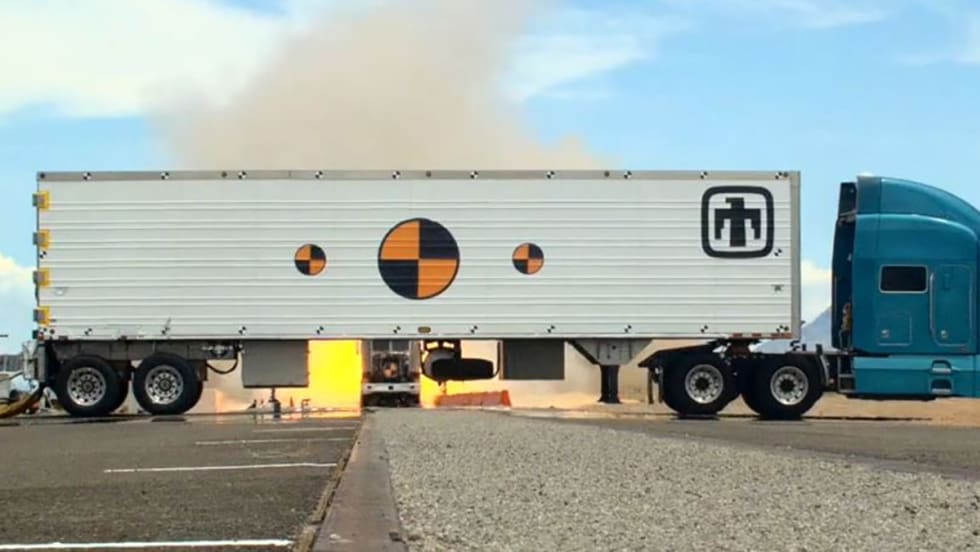
Can You Guess What's in That Trailer?
You don’t always know what’s in the trailers that pass you on the road. But some of those trailers are carrying something a little more dangerous that frozen food or new bedding…like, maybe, a nuclear weapon. But this isn’t an ordinary trailer; this is a trailer specifically made to not only carry this type of payload, but protect it at all costs.
Read More →
How Trailers Are Harnessing 'Free' Energy
Can trailers play a more active role in sustainable transport beyond aerodynamic add-ons or low-rolling-resistance tires? Some companies think so.
Read More →
Wrapping a Trailer for COVID’s Everyday Heroes
“We don’t only deliver freight. We deliver awareness.” That’s what Jim Barrett, president and CEO of Road Scholar Transport, likes to say about the Dunmore, Pennsylvania-based carrier’s “awareness fleet.” Its latest trailer wrap honors the everyday heroes of the pandemic.
Read More →
How a Tanker Fleet is Using Unorthodox Trailer Lighting to Fight Rear-End Collisions
Groendyke Transport watched the number of rear-end collisions with its trailers rise steadily until it tried an unorthodox and then unapproved method of alerting following drivers that its trucks were applying brakes and slowing down.
Read More →
The Role Trailers are Playing in COVID-19 Funerals
In places such as New York City and Detroit, overwhelmed hospitals and mortuaries are using refrigerated trailers to store the bodies of people killed by COVID-19.
Read More →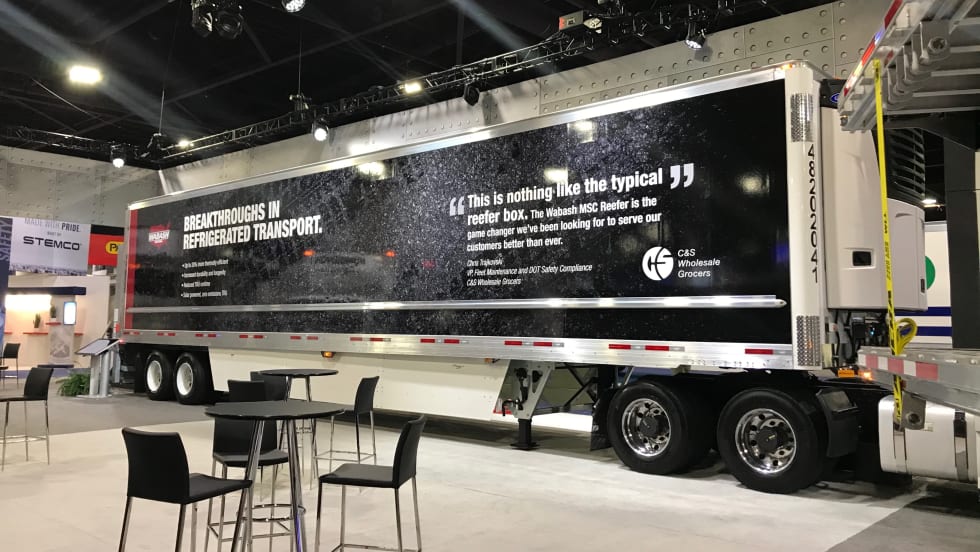
Reefer Trailer Aims to Help Reach Zero Emissions
Wabash National is partnering with C&S Wholesale Grocers to test a new type of zero-emissions refrigerated trailer.
Read More →