




Screwed if you don't. Screwed if you do.
The firing of a Texas-based flat-bedder for refusing to haul an improperly secured and unsafe load illustrates how CSA and the courts are failing truck drivers
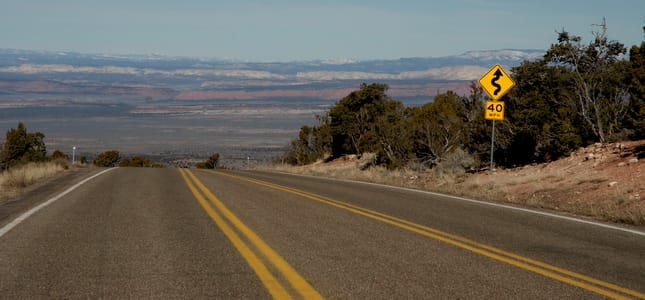
Drivers who choose to do the right thing could be driving their careers off a cliff. Photo by Jim Park
The firing of a Texas-based flat-bedder for refusing to haul an improperly secured and unsafe load illustrates how CSA and the courts are failing truck drivers.
There but for the grace of God, goes the expression, because you apparently aren't going to get any help from the system. A story coming from Austin, Texas says a truck driver fired from his job for refusing to haul unsafe loads filed suit against the company, claiming wrongful termination. At trial, a jury awarded him $7,569 in lost wages, $10,000 in mental anguish damages and $250,000 in exemplary or punitive damages.
The latter was later reduced to $200,000 to comply with a statutory cap. Sometime later, a lower appeals court threw out the $10,000 award, and more recently, the Texas Supreme Court tossed out the $200,000 award, ruling the driver did not qualify for punitive damages, either.
There are all sorts of probably perfectly good reasons why he shouldn't qualify for punitive damages, but the sad part is, the company gets off pretty well scott-free for firing a guy who was diligent enough not to put the public or himself at risk by hauling the load -- not once, but on several occasions, court records say.
Reports from several sources say the driver had, on as many as five occasions, reported safety violations to the company but was ordered to haul loads of metal shelving and other hardware that was stacked too high and improperly secured -- with broken straps.
Court records show that on a day in October, 2007 he had been issued several citations for safety violations. A day later, he was asked to drive the same truck again before the problems had been repaired. He refused to drive the truck and was given a choice, drive it or go home.
According to an account in Austin's American-Statesman, the driver eventually agreed to drive the truck after pointing out his concerns, but soon returned to the terminal after feeling the load shift, the court said, adding that he was fired after refusing an order to return to the road.
In an account on the driver's lawyer's website, the attorney says the employer found someone else to drive the truck, and sure enough, the cargo broke free and crashed through the rear window of the cab.
I don't want to get into the finer points of law that define eligibility for punitive damages, or even mental anguish, but I do want to question where a driver might turn for protection when the consequences of his morally correct actions result in his termination. Over and above the immediate losses, there are the negative consequences of an employment record showing a firing.
CSA Fails to Protect Drivers
CSA could have addressed such situations, but it lets drivers down in a big way here. A driver, faced with a no-go situation, is forced to duke it out with the employer and hope for a satisfactory outcome. As this case illustrates, that isn't always a foregone conclusion.
We've seen how spectacularly unsuccessful whistle-blower legislation has proven. And there's no mechanism I know of where a driver can report a "potential" violation, i.e., one that hasn't yet occurred. With the load sitting in the yard and still sitting on the truck, what's the DOT to do?
The irony here, as noted by Chuck Lindell of the American-Statesman, is that the driver may have fared better in the courts had he followed his employer's demand, driven the truck and had an accident.
We ask much of truck drivers, and we foist a great deal of responsibility onto their shoulders, but we fail to give them good authority to say no. What's worse; we offer no protection whatsoever for those who do the right thing in refusing unsafe or illegal work.
The driver is this case reportedly found another job within two months (Two months to find a driving job today? I wonder how his firing affected his job search?), and his $7,569 lost-wages settlement seems about right for two months off the job. If that's the best a driver can hope for when refusing to do something unsafe and/or illegal, then we have failed our workforce.
For an additional point of view, read this account of the case found on BusinessInsurance.com. It argues the court was correct in letting the company off the hook for firing the driver.
More Blog Posts

Truck Driver’s Dilemma: Click, Twist or Swipe?
Whether 'tis safer to twist a knob or press a button than to swipe right then swipe down to scan the menu for your favorite playlist...? That's a question for the age.
Read More →
Even the Swedes are Doing Turnpike Doubles
The government doesn't seem to mind asking trucking to invest a trillion dollars toward a greener future. But they won't let us pull turnpike doubles making 30% less CO2. Which is insanity, says HDT's Jim Park in his On the Road blog.
Read More →
Is Your Recruiting Message on Point?
How does your recruiting and retention messaging compare with the reality at your company? Would your drivers agree with your own assessment? Jim Park explores those questions in his On the Road blog.
Read More →
You Can’t Blame Trucks for the Highland Rest Area Bus Crash [Commentary]
The causes of the Highland Park rest area crash go far beyond the parking shortage and the need for flexibility in hours of service — but those issues must be addressed, too, says Jim Park in his On the Road blog.
Read More →
Electric Trucks Seem Far Down the Road for Fleets Dealing with Today's Maintenance Challenges
While the push for zero-emissions trucks rings clear for regulators, advocates and even a small crowd of suppliers, ZEVs seem to have run out of steam down on Main Street, says HDT Equipment Editor Jim Park in his latest On the Road blog.
Read More →
Guinea Pigs 2.0: Can Trucking Comply with a Near Impossible NOx Reduction?
The EPA’s Final Rule on NOx reduction will be incredibly difficult if not nearly impossible for trucking to comply with. Rather than endure another round of equipment failures, downtime and loss of customer faith, industry needs to rally ‘round the OEMs and seek a solution to this wrong-headed rule.
Read More →
Is Downspeeding Bad for Brakes?
Is there a connection between downsped drivetrains and increased brake wear? There shouldn’t be. Downsped fleets seeing increased brake wear are probably not letting the technology do its job, explains HDT Equipment Editor Jim Park.
Read More →
Dig for the Gold Behind CVSA’s Out-of-Service Numbers
Published out-of-service rates don’t mean much until you dig into the why. With brake problems consistently placing in two of the top five spots, maybe we’re missing something in brake maintenance, writes HDT Equipment Editor Jim Park.
Read More →
Things That Go Poof in the Night
We’re in electric-truck heydays now. But like another famous heyday, the 1849 California Gold Rush, there will be a lot fewer winners than losers, says Jim Park in his On the Road blog.
Read More →
Do Your Truck Drivers Know How to Descend a Mountain Grade?
Where do drivers learn mountain-driving techniques? It's sure not from the typical state CDL manual. Jim Park shares what he learned following a deadly 2019 Colorado crash.
Read More →