




Right Place, Right Railroads Help ‘Cool’ Intermodal Shipments
Senior Editor Tom Berg explores why one intermodal refrigerated operation is expanding, in contrast to another that is suing railroads in blame for its demise, in his Trailer Talk blog.

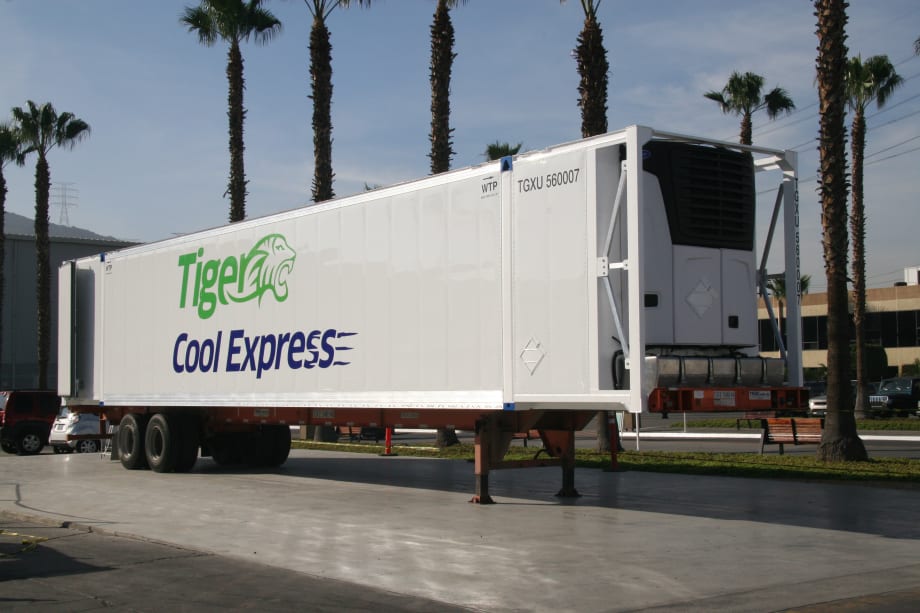
Photo courtesy Tiger Cool Express
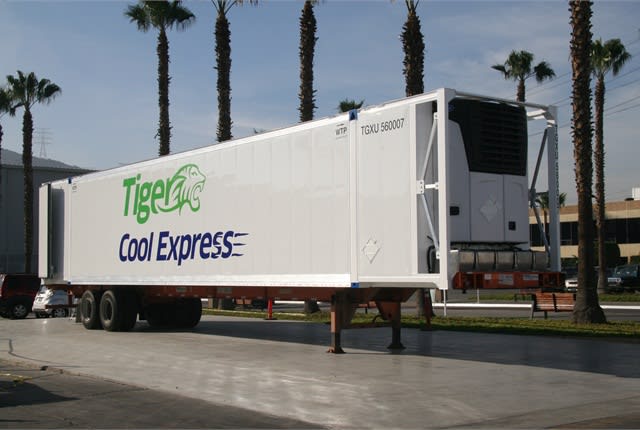
Photo courtesy Tiger Cool Express
Sometimes intermodal shipping works and sometimes it doesn’t. Last week I wrote about one that didn’t: Cold Train Express, which is suing BNSF Railway for failing to keep its delivery promises because it was clogged with oil and coal traffic and couldn’t handle the refrigerated containers of Pacific Northwest produce that Cold Train wanted to ship.
In contrast, here’s one that’s apparently doing well: Tiger Cool Express, which moves perishables in 53-foot reefer containers from southern California to points east, mostly via Union Pacific Railroad.
Where you are and which railroad you can use evidently makes a huge difference.
Tiger Cool Express LLC, headquartered in Overland Park, Kan., started with 200 containers and is acquiring more, expanding its fleet to 435. It just announced that an ownership stake was taken by Wood Creek Capital, which will allow adding another 200 containers.
There’s quite a bit to the business, which includes truck carriage – drayage – at both ends of each shipment, and sometimes midway, too. And its executives seem to have their eyes wide open, as indicated by comments from Tom Finkbiner, the company’s CEO, on rail and dray service.
“We use Union Pacific primarily in the West, although we have also used BNSF on occasion,” he said in an email. “In the East we use both CSX and NS [Norfolk Southern]. We have not had much success with either CN [Canadian National] or CP [Canadian Pacific] in terms of service.” Finkbiner continued:
“In terms of service compliance:
“1. We try to promise only what the railroads can deliver based on our experience, not on their schedules. Current [mid April] railroad compliance to their own schedules is about 50% on time.
“2. We are very picky about which intermodal trains that we use. We try to use those scheduled for UPS, JB Hunt or other large service-sensitive providers.
“3. On transcontinental loads we rarely use steel wheel [railroad-to-railroad] connections because they are notoriously unreliable. We rubber-tire cross town for most loads.
“4. We make use of all of the latest telematics technologies relative to location of the box, temperature control, security (door opening), fuel supply and impact measurement.
“5. We use a ‘core carrier concept’ with our draymen, trying to concentrate volume on a few proven carriers.
“6. We keep constantly communicating to the customer, especially when there is some deviation from the scripted service.”
What’s Tiger Cool’s transit time from southern California to, say, Chicago? “We should be able to do it in under 100 hours,” Finkbiner said, and that sounds realistic. A good driver team that stays on the road (and doesn’t dawdle in truckstops, etc.) should be able to do that in 50 to 60 hours. But at what cost compared to intermodal? We’re going to look into that.
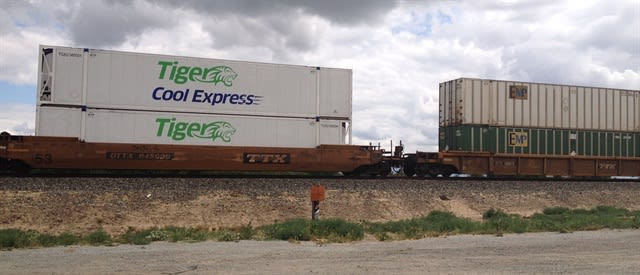
Photo courtesy Tiger Cool Express
More Blog Posts
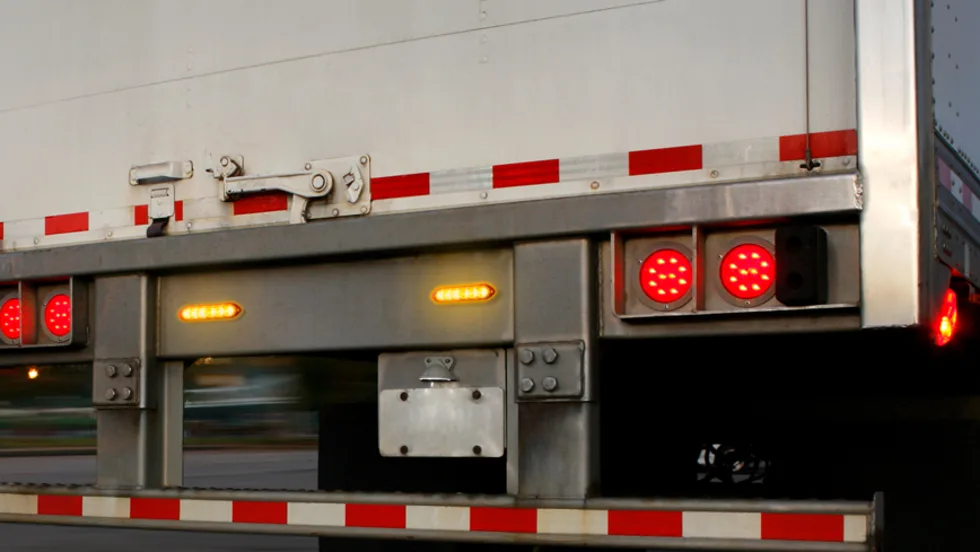
Pulsing Back-of-Trailer Lamps Aim to Prevent Crashes
Can the addition of a pulsing brake lamp on the back of a trailer prevent rear-end collisions? FMCSA seems to think so, if its exemptions are any indication.
Read More →
Designing a 14-Foot Trailer
Trailers are 13 feet, 6 inches high, right? Not for Hub Group, which developed a special 14-foot-high trailer spec for a dedicated customer based in California. Learn more in the Trailer Talk blog.
Read More →
CARB Comes for Reefer Trailers
A new round of emissions control regulations decreed by the California Air Resource Board will begin affecting refrigerated trailer and TRU design and operations next year.
Read More →
5 Ways Data Analysis Maximizes the Value of Trailer Telematics
Are you getting the most out of your trailer telematics investment?
Read More →
Can You Guess What's in That Trailer?
You don’t always know what’s in the trailers that pass you on the road. But some of those trailers are carrying something a little more dangerous that frozen food or new bedding…like, maybe, a nuclear weapon. But this isn’t an ordinary trailer; this is a trailer specifically made to not only carry this type of payload, but protect it at all costs.
Read More →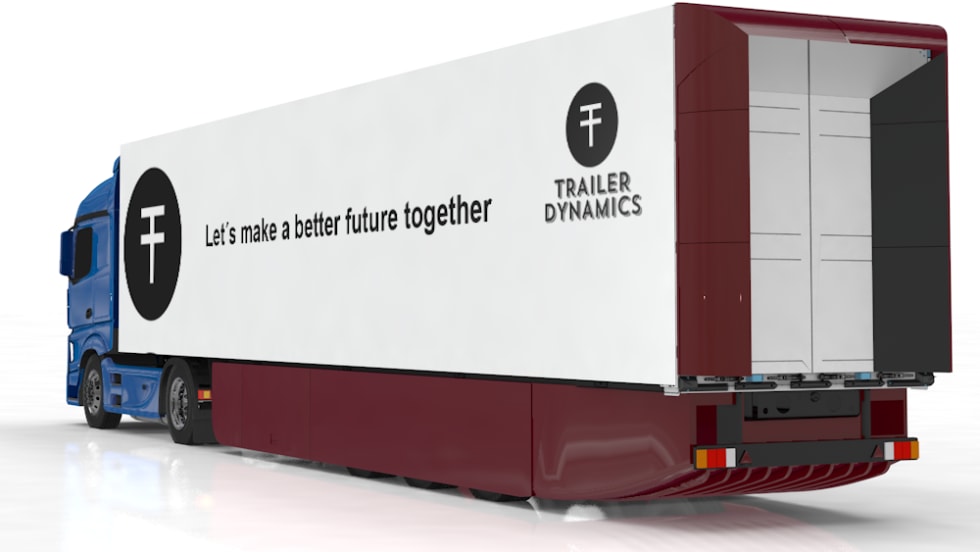
How Trailers Are Harnessing 'Free' Energy
Can trailers play a more active role in sustainable transport beyond aerodynamic add-ons or low-rolling-resistance tires? Some companies think so.
Read More →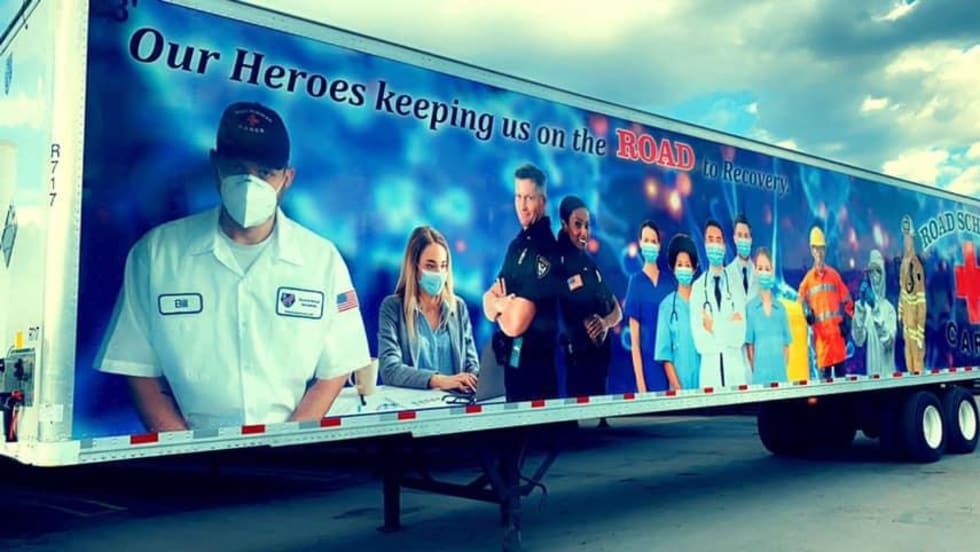
Wrapping a Trailer for COVID’s Everyday Heroes
“We don’t only deliver freight. We deliver awareness.” That’s what Jim Barrett, president and CEO of Road Scholar Transport, likes to say about the Dunmore, Pennsylvania-based carrier’s “awareness fleet.” Its latest trailer wrap honors the everyday heroes of the pandemic.
Read More →
How a Tanker Fleet is Using Unorthodox Trailer Lighting to Fight Rear-End Collisions
Groendyke Transport watched the number of rear-end collisions with its trailers rise steadily until it tried an unorthodox and then unapproved method of alerting following drivers that its trucks were applying brakes and slowing down.
Read More →
The Role Trailers are Playing in COVID-19 Funerals
In places such as New York City and Detroit, overwhelmed hospitals and mortuaries are using refrigerated trailers to store the bodies of people killed by COVID-19.
Read More →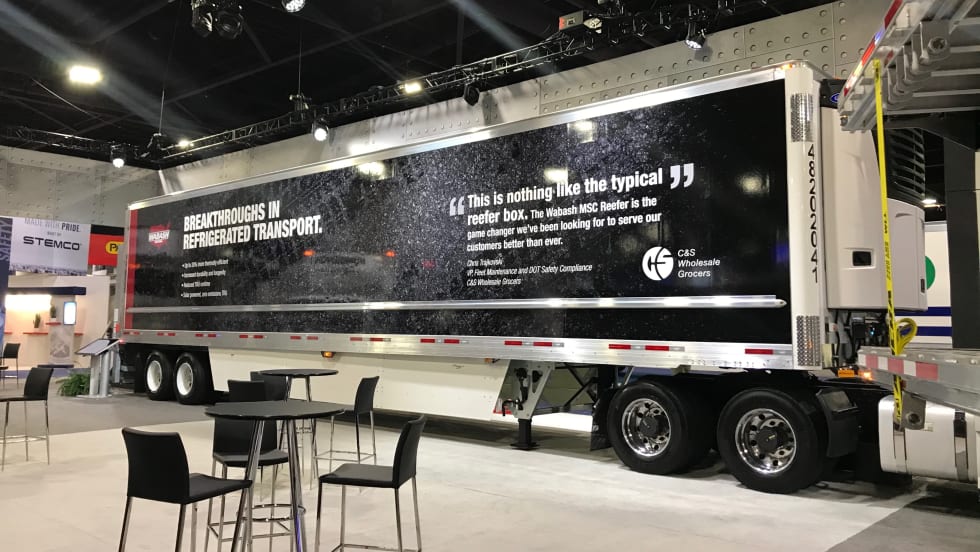
Reefer Trailer Aims to Help Reach Zero Emissions
Wabash National is partnering with C&S Wholesale Grocers to test a new type of zero-emissions refrigerated trailer.
Read More →