




Redeploying Drivers and Assets for Dedicated Fleets During COVID-19
Stepping outside of its normal dedicated carriage mode, Transervice Logistics was able to provide additional resources to one customer during the COVID-19 crisis.
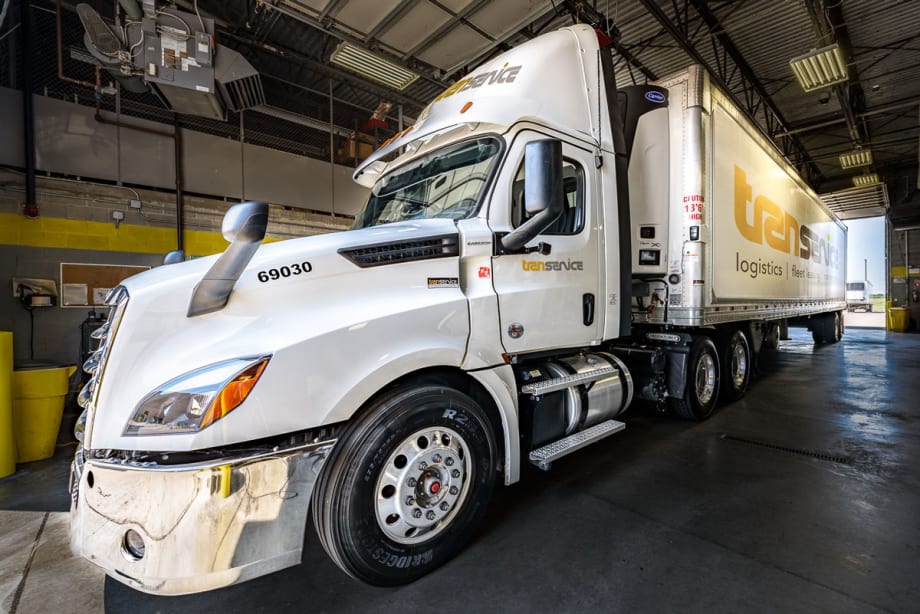
The normal mode of operation at Transervice Logistics is pure dedicated carriage. But these times aren't normal.
Photo: Transervice
The normal mode of operation at Transervice Logistics is pure dedicated carriage, where we assign equipment and resources to each individual customer we service. In essence, we become the company’s private fleet and we don’t normally share drivers between accounts on a regular basis. However, COVID-19 took the word “regular” out of our vocabularies, and we, like many other carriers, made some changes to accommodate the needs of our customers.
For example, one of the nation’s largest grocery retailers by revenue is also a Transervice customer at multiple locations. During the COVID-19 pandemic, it saw shipping volumes setting records, so we had to employ additional resources.

John Walker has 36 years’ experience with dedicated contract carriage, but he's never faced a situation like COVID-19 before.
Photo: Transervice
On the other hand, a combination of COVID-19 and a very mild winter had a serious impact on another client. Normally when a customer’s freight volume slows down, we go out on the spot market to find loads to keep our drivers on the road. We would use Transervice Integrated Solutions, our own brokerage division, and other brokers to keep our drivers busy.
It happens that one of this customer’s routes takes our drivers through one of the key markets of the grocery account. So we repositioned the fleet to help our customer. Once we agreed on a rate for the additional work, our fleet manager was able to find loads that would get the drivers routed through the required markets. At any one time we had five to 10 drivers from the account with the slowdown working for our other account, hauling groceries rather than commodities.
We rotated drivers in and out over the course of four weeks based on their needs to be home on certain days. We were able to do this because we have regular loads between the two affected markets all the time.
The management of the drivers did not present any real challenges. The managers at both locations worked together to coordinate which drivers were going to be in which place on any given day. If a driver needed to get back home, the managers would rotate in someone else. We set a few ground rules covering what we wanted to do during this period, including making accommodations for drivers. We controlled and dispatched all the freight ourselves out of one main location.
This was a win for everyone involved. The grocery client got its goods delivered at a lower rate than it would have had to pay another carrier. Transervice got a rate that was higher than what was available on the spot market. And the drivers were able to keep driving.
We are pleased with the results and are considering doing the same thing with a customer that hauls hardware. Spring and summer are traditionally a busy time for them, and given the stay-in-place orders being enforced in many states, that market has heated up more than usual as people turn to home-improvement projects instead of vacations.
While we maintain our focus on dedicated carriage, this flexibility of redeploying drivers and power units allowed us to help out a customer in very chaotic times while still maintaining our own profitability.
John Walker is senior vice president of logistics for Transervice Logistics. He has 36 years’ experience with dedicated contract carriage, 20 of those at Transervice. Transervice Logistics,Lake Success, New York, provides customized transportation solutions, including logistics, dedicated contract carriage, fleet leasing, contract maintenance, and material handling equipment leasing and maintenance. The company maintains more than 120 facilities and manages over 24,500 pieces of equipment. This article was authored and edited according to HDT editorial standards and style to provide useful information to our readers.
If you're interested in sharing your fleet's COVID-19 story or other insights in our Guest Voices blog, contact Editor in Chief Deborah Lockridge at dlockridge@truckinginfo.com.
More Blog Posts

Fragmented AI: Why Trucking Must Take Security More Seriously
As AI becomes embedded throughout transportation operations, the result can be a tech environment that looks more advanced on paper, but isn't necessarily more efficient, secure, or manageable in practice.
Read More →
We've Been Thinking About Truck Uptime Backward
The truck repair operations that minimize downtime aren’t necessarily the ones with the fastest technicians. They’re the ones who have the part.
Read More →
The Real Cost of Trailer Tires: Why It's Not Just a Maintenance Problem Anymore
Tire wear isn't random. The trucking fleet with a tire program that knows which trailers, positions, and routes are punishing tires the hardest is the one that buys fewer of them.
Read More →
A New Argument for Electrification: Managing Fuel Volatility
As oil prices surge amid Middle East conflict and a blocked Strait of Hormuz, fleets are feeling the squeeze in real time. In this guest column, Geotab's Neil Cawse argues electrification is no longer just about sustainability or ROI — it’s about insulating operations from what he calls a "volatility tax."
Read More →
The Time is Now to Expand Longer Combination Vehicles [Opinion]
The reauthorization of the federal highway bill offers a rare chance to advance double 53-foot LCVs. Industry leaders shouldn’t miss it, says a longtime trailer industry professional in this Guest Voices blog post.
Read More →
The Hidden Costs of 'Free' Smart Trailer Tech Installations [Commentary]
Free installation of smart trailer technologies may sound good on paper, but you could end up paying down the road.
Read More →
Protecting Small Trucking Fleets from Scammers: Lessons from the Insurance Frontlines
Hijacked DOT numbers, fake invoices, and high-tech cargo theft are on the rise. A veteran trucking insurance broker shares how to spot trouble early — and why a trusted advisor may be your strongest defense.
Read More →
Tire Retreading Makes Sense for Trucking Fleets. H.R. 3401 Could Make It Even Smarter.
Retreaded tires offer trucking fleets cost savings, sustainability gains, and supply chain security. New legislation, H.R. 3401, could make retreads even more attractive and support U.S. jobs.
Read More →
Hydrogen Fuel Cell Trucks Are Ready for the Long Haul. Now Policymakers Must Act
Accelerating the growth of hydrogen-fuel-cell-truck adoption would help make zero-emission trucking is not only possible, but practical and profitable, argues the Center for Transportation and the Environment in this Guest Voices blog.
Read More →
A New Definition for Long-Haul Heavy-Duty Trucking
Understanding the various routes that make up long haul is important as we move through trucking’s Messy Middle — a time when fleets have a variety of powertrain solutions to choose from, writes NACFE's Mike Roeth.
Read More →