





Related: Seven Truck Fleets Sign on for Run on Less MPG Roadshow
Ray of Hope: Trucking's Beacon of Fuel Efficiency
David Cullen lets you in on why Sir Richard Branson is so excited about trucks these days.
September 20, 2017
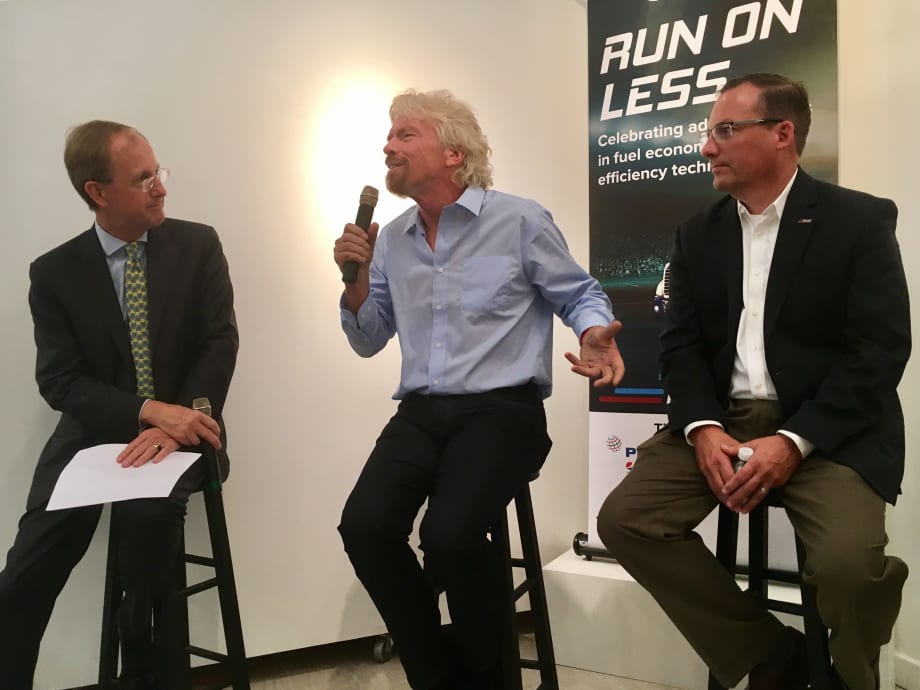
Richard Branson (center) expounds on how trucking's mpg efforts are a "ray of hope" in the global campaign to save fuel and protect the planet from climate change. Looking on (right) is NACFE's Mike Roeth. Photo: David Cullen
3 min to read
Richard Branson (center) expounds on how trucking's mpg efforts are a "ray of hope" in the global campaign to save fuel and protect the planet from climate change. Looking on (right) is NACFE's Mike Roeth.Photo: David Cullen
NEW YORK CITY – Speaking here on Sept. 19 at a Run on Less media briefing, billionaire entreprenaur Richard Branson touched on why he is so committed to fighting climate change (and climate change deniers) and why he sees trucking as a leader in the effort to massively reduce carbon output across the globe.
Recounting what he and his staff saw when they emerged briefly from their wine-cellar shelter on his private island in the British Virgin Islands during the eye of Hurricane Irma, Branson said that "outside it looked just like an atomic bomb [had hit]. Everything was just flattened [including] 200-year-old trees; nothing was left standing."
Branson, who co-founded the Carbon War Room global nonprofit in 2009 that's teamed up with the North American Council for Freight Efficiency to put on Run for Less, is calling for a disaster-recovery plan on the scale of the post-WWII Marshall Plan to help restore the various Caribbean islands devastated by Irma.
According to the founder of multinational conglomerate Virgin Group, what the region needs is nothing less than a massive effort that will "aid in recovery, sustainable reconstruction, and long-term revitalization of the local economy."
Having ridden out Irma and witnessed its historic destruction, Branson said he could not have been anywhere else but in New York for this year’s Climate Week NYC, a global summit taking place in town from Sept. 18-24 alongside the United Nations General Assembly meeting.
The table-thumper
“Scientists tell us the storms are only going to get stronger and more intense,” said Branson. “That’s why I’m here for the climate talks — to thump the table and try to get people to realize we all have got to do something about it.
“And to be here at this trucking event and to see a ray of hope in one so important industry,” he continued. “Because you know, it won’t be just America that will benefit from the [fuel-efficiency] breakthroughs being talked about here. This is a global benefit to be shared with the global community. The amount of carbon [that’s going to be eliminated] is just gigantic. So, I’m here to congratulate the [Run on Less] team working on this.”
That “ray of hope” was the impressive early results for the ongoing Run on Less fuel-efficiency demo run released at the briefing: Over the first 10 days of the planned three-week run, the seven trucks and their drivers scored an average of 10.1 mpg while covering 31,492 “real-world” miles.
In other words, in just 10 days, the trucks and drivers taking part in the program were responsible for consuming 1,800 fewer gallons of diesel and saving $4,500.
What’s more, reported Mike Roeth, NACFE operations lead for Run on Less, the highest one-day average for a truck in those early days was 12.1 mpg. The lowest was 7.4 mpg.
He pointed out that if the 1.7 million trucks in the U.S. and Canada today achieved the same level of efficiency as the trucks in the Run, there would be annual cumulative savings of 9.7 billion gallons of fuel, $24 billion and 98 million tons of CO2.
Taking it on the road
Run on Less, billed as a first-of-its-kind nationwide “fuel efficiency roadshow,” kicked off from multiple locations across the country in the second week of September and is slated to wrap up at the upcoming inaugural North American Commercial Vehicle Show in Atlanta Sept. 25-28.
The demo program aims to show how Class 8 trucks can leverage various technologies—as well as driver skill – to achieve the highest fuel efficiency possible in real-world operation.
With the program’s stated goal of achieving 9.0 mpg in mind, the trucks have been fitted with different technologies, including 6x2 setups, automated transmissions, aerodynamic devices, wide-base tires and idling-reduction equipment.
The daily mpg performance for all the participants, expressed in gallons and dollars, is being posted on the Run on Less website.
The participating fleets are Albert Transport, PepsiCo/Frito-Lay, Hirschbach, Mesilla Valley Transportation, Nussbaum Transportation, Ploger Transportation, and U.S. Xpress.
Subscribe to Our Newsletter
More Blog Posts

Congress Dancing on the Ceiling. Again.
It’s time once more on Capitol Hill to battle over the debt ceiling, rather than conduct the nation’s urgent business, says HDT Business/Washington Contributing Editor David Cullen.
Read More →
Infrastructure on Capitol Hill: On Two Tracks to Somewhere
It’s likely an infrastructure bill will pass. But how big it will be, and who will pay for it, rides on lots of politicking.
Read More →
Gaming Out The Biden Infrastructure Proposal on Capitol Hill
The Biden Administration's American Jobs Act, the core of which is infrastructure funding, is on a long road to becoming law – replete with more twists and turns than a mountain highway.
Read More →
4 Ways Washington May Change Trucking Laws and Regulations
As the balance of power in Washington has shifted, trucking likely will see changes in laws and regulations. But how that happens isn't just like the Schoolhouse Rock version of "I'm Just a Bill."
Read More →
Regulatory Outlook 2020: Keep an Eye on Hours of Service
What's in store for trucking from the regulators in Washington, D.C., this year? Executive Editor David Cullen says the government wheels move slowly, but hours-of-service is among those to watch in 2020.
Read More →
Logistics Ain't What it Used to Be
You can no longer expect to run a motor carrier of any size without at least a glancing appreciation for the impact logistics— in one way or another-- has on every link in the supply chain.
Read More →
Will Dustup over Cleanup of Car Emissions Gut Truck GHG Rules?
What does Trump's revocation of California's vehicle emission waiver mean for the federal Phase 2 GHG emission rules already in place for commercial vehicles? Commentary by Executive Editor David Cullen.
Read More →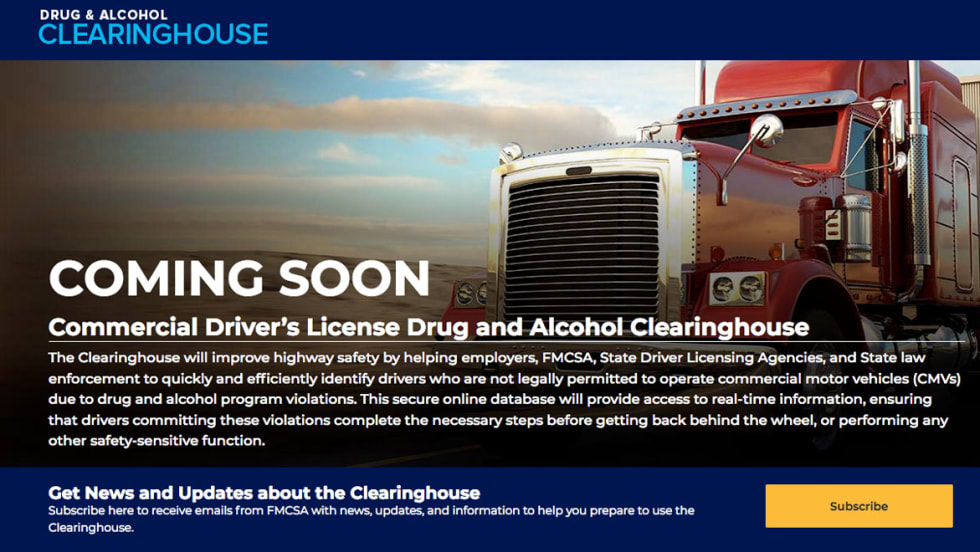
Some Sober Advice on the Drug & Alcohol Clearinghouse
The Federal Motor Carrier Safety Administration's prep work for the Drug & Alcohol Clearinghouse includes amassing an impressive amount of informational guidance online that can be accessed at a dedicated website. Commentary by Executive Editor David Cullen.
Read More →
Here's to Our Winners
The managers, executives, and owners of truck operations who are honored each year by Heavy Duty Trucking with our Truck Fleet Innovator awards so often seem to be moving at a fast clip in how they think about things. Blog Commentary by Executive Editor David Cullen.
Read More →
ATA Takes Madison Avenue to Pitch Highway Funding on Capitol Hill
A new advertising and grassroots campaign by ATA might just sell Congress on fixing our roads. Commentary by David Cullen, Executive Editor.
Read More →