




Let's Trade our Lead-Acid Batteries for Ultracapacitor Systems
Ultracapacitor engine starting systems represent a sea-change in how we view a truck's electrical systems. The only thing standing in the way of this apparently game-changing technology is our inherently conservative nature regarding new technology.


Drivers and fleet managers will sleep easier at night as Ultracapacitor engine starting systems will take the worry out of running electric HVAC for extended periods.

Drivers and fleet managers will sleep easier at night as Ultracapacitor engine starting systems will take the worry out of running electric HVAC for extended periods.
The North American trucking industry has to be one of the most conservative on the planet. It takes years, sometimes decades, for widespread change to permeate layers of tradition and familiarity. We have been traditionally slow to embrace emerging technologies, so we're always looking to backward compatibility. The new stuff has to work with the old stuff, just in case the new stuff doesn't work as well as the old stuff. Thus it becomes extremely difficult to integrate new technology into existing truck designs.
I recently wrote about a new engine starting system from Maxwell Technologies; an ultracapacitor device designed solely to start truck engines. The product piece sums up what the product does, and to a limited extent, how it works. What I could not delve into in that particular editorial context is how this device could revolutionize truck electrical systems.
Let me say right up front I'm not endorsing or promoting Maxwell Technologies here, though it may appear that way. To the best of my knowledge, Maxwell is the first company to bring the technology to this particular application. No doubt others will follow. I'm about to share with you where I think these ultracapacitor starting systems could take us, I'm not saying Maxwell is the only company capable of doing it.
To set the stage, consider how long disc brakes have been around and how little demand for them has evolved over the years.
Trucking had a disastrous flirtation with disc brakes about 20 years ago. Anyone who tried them then could hardly be blamed for steering clear of them today - except that the current technology is vastly superior to the old. Trucking has a very long collective memory. The current-generation systems have been available for almost 10 years, but uptake remains slow. Yes, there are a number of valid reasons for not embracing disc brakes, such as cost, weight, parts commonality, operational brake balance on disc-equipped tractors versus non-disc trailers, and more.
But on the plus side, disc brakes have one significant advantage over drum brake systems. They will stop the truck under almost any circumstance where drum brakes might not. Discs do not fade the way drum systems do at high temperatures.
So, we have a technology that is arguably better than existing technology, but industry has not widely embraced it, yet. Maybe in another 10 years? Maybe we wait for a mandate?
Trucking has not been quick to adopt new technology, but I think ultracapacitor starting systems could represent a break with that tradition.
Redesigning the Heart of the System
Traditional lead-acid batteries have forced truck designers into a number of compromises. They have to build the truck with enough physical room to place two, three or four Group 31 batteries somewhere on the chassis. The where is determined by factors such as corrosion and vibration potential, the length of the cable runs, accessibility, etc.
When demand arose from certain hotel loads on electrical systems, lead-acid batteries posed another challenge. They don't respond well to slow, deep discharge. The advent of absorbed glass mat (AGM) batteries changed that, but they don't respond well to deep spikes in current draw, as required by starting systems. And because we're oh so sensitive to weight and chassis real estate, simply adding more lead-acid and AGM batteries to the truck isn't always an option.
So we compromise again; two lead-acid batteries for starting, two AGM batteries for hotel loads. An imperfect solution at best; as just two lead-acid batteries don't provide much of a safety margin for cold-weather starting or poor battery condition. Two AGMs provide a reasonable charge for some hotel loads, but not the emerging electrical HVAC systems, for example.
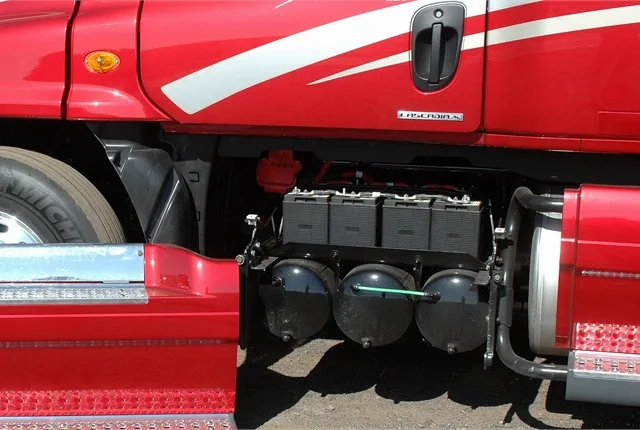
An ultracapacitor ESM could be placed almost anywhere on the chassis, making room in the battery box for additional AGM batteries to power lights, hotel loads, etc
A possible solution is a system with four AGMs and one ultracapacitor "battery" - sorry, the ultracapacitor systems are NOT batteries, but it's hard to avoid using the word in this context.
Maxwell Technologies Engine Starting Module (ESM) currently is the same size and shape as a traditional lead-acid or AGM battery because it has to be. Industry would want to mount it in a traditional location alongside the real batteries. But consider this; ultracapacitor units last almost indefinitely, so access would not be a priority. Truck makers could put them in non-traditional places, such as on the firewall or under the driver's seat. Moved to a different location, they wouldn't have to look like Group 31 batteries, and since they emit no fumes, pose no environmental threat and weigh only about 20 pounds, they could be reshaped and tucked away almost anywhere. And that would open up a spot in the battery box for another AGM battery, thus extending the draw time for electrical HVAC systems without adding much weight.
Rethinking the Possible
Once we rid ourselves of the reliance on lead-acid starting batteries, a whole world of possibilities opens up. In the product piece I wrote on Maxwell's ESM, I explain the charging and discharge cycles, so I won't go into that here, but with an ESM, starting is a non-issue. Free of lead-acid batteries, any number of AGMs could be used (while bowing at the altars of weight and space) to power anything from HVAC systems to power steering, air compressors and water pumps. Suddenly, the engine is driving only the wheels. I'm just guessing here, but if you stripped out the weight of the drive and mounting systems for such components, the weight of another four or even six AGMs might be easily offset.
Along similar lines, if truck makers engineered HVAC systems to be 100% electrical, they could be designed and built more efficiently than current systems where the electric HVAC system is an add-on to the traditional compressor, drier, condenser configurations, and better integrated into the chassis. No more mod-center installation; it could all be built into the back wall of the sleeper, for example, or maybe tucked away in a compartment above the driver's head. The sky becomes the limit when you take away traditional design constraints.
All that and more becomes possible when you take away long-held - and real - fears about no-start situations. By Maxwell's account, the ESM will start the engine every time, barring problems with the engine.
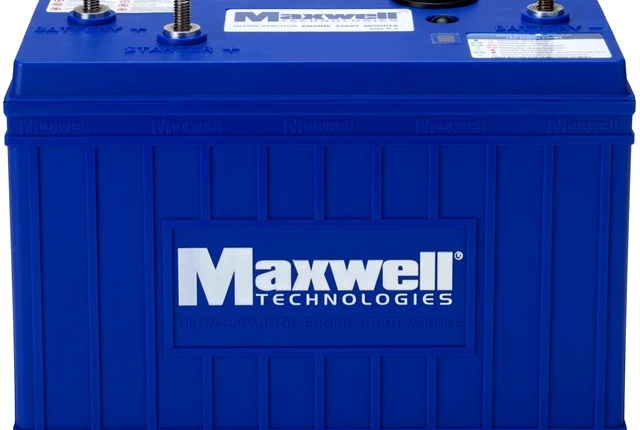
Ultracapacitor starting systems like Maxwell Technologies' ESM open up doors for major reconfiguration of truck electrical systems.
The barrier to progress here would be fleets' reluctance to embrace this new technology. Truck manufacturers are not going to start reengineering trucks on a whim.
Once the ESMs have proven themselves in the application, and if demand is sufficient, we could see some movement at the OE level beyond just listing them as options. Given the potential of the ESM to rid the industry of some of the old challenges surrounding lead-acid batteries, there's room for some really ground-breaking forward movement here. With the combination of AGM batteries for lighting, hotel loads, component drive power and more, and ESMs for starting - these should be viewed as two totally separate systems - a whole new way of looking at electrical systems could emerge, including maybe 24- or 48-volt systems for some applications and 12-volt for others.
As I noted at the beginning, trucking's conservative nature can be a barrier to advancement, but depending on who you talk to, any and all of the above are things I have heard fleet people ask for. It could now be on the doorstep if we're not overly cautious about embracing ultracapacitor technology.
I believe it could be a real game changer.
To learn more about ultracapacitors' potential in transportation, read this overview from Maxwell Technologies.
More Blog Posts

Truck Driver’s Dilemma: Click, Twist or Swipe?
Whether 'tis safer to twist a knob or press a button than to swipe right then swipe down to scan the menu for your favorite playlist...? That's a question for the age.
Read More →
Even the Swedes are Doing Turnpike Doubles
The government doesn't seem to mind asking trucking to invest a trillion dollars toward a greener future. But they won't let us pull turnpike doubles making 30% less CO2. Which is insanity, says HDT's Jim Park in his On the Road blog.
Read More →
Is Your Recruiting Message on Point?
How does your recruiting and retention messaging compare with the reality at your company? Would your drivers agree with your own assessment? Jim Park explores those questions in his On the Road blog.
Read More →
You Can’t Blame Trucks for the Highland Rest Area Bus Crash [Commentary]
The causes of the Highland Park rest area crash go far beyond the parking shortage and the need for flexibility in hours of service — but those issues must be addressed, too, says Jim Park in his On the Road blog.
Read More →
Electric Trucks Seem Far Down the Road for Fleets Dealing with Today's Maintenance Challenges
While the push for zero-emissions trucks rings clear for regulators, advocates and even a small crowd of suppliers, ZEVs seem to have run out of steam down on Main Street, says HDT Equipment Editor Jim Park in his latest On the Road blog.
Read More →
Guinea Pigs 2.0: Can Trucking Comply with a Near Impossible NOx Reduction?
The EPA’s Final Rule on NOx reduction will be incredibly difficult if not nearly impossible for trucking to comply with. Rather than endure another round of equipment failures, downtime and loss of customer faith, industry needs to rally ‘round the OEMs and seek a solution to this wrong-headed rule.
Read More →
Is Downspeeding Bad for Brakes?
Is there a connection between downsped drivetrains and increased brake wear? There shouldn’t be. Downsped fleets seeing increased brake wear are probably not letting the technology do its job, explains HDT Equipment Editor Jim Park.
Read More →
Dig for the Gold Behind CVSA’s Out-of-Service Numbers
Published out-of-service rates don’t mean much until you dig into the why. With brake problems consistently placing in two of the top five spots, maybe we’re missing something in brake maintenance, writes HDT Equipment Editor Jim Park.
Read More →
Things That Go Poof in the Night
We’re in electric-truck heydays now. But like another famous heyday, the 1849 California Gold Rush, there will be a lot fewer winners than losers, says Jim Park in his On the Road blog.
Read More →
Do Your Truck Drivers Know How to Descend a Mountain Grade?
Where do drivers learn mountain-driving techniques? It's sure not from the typical state CDL manual. Jim Park shares what he learned following a deadly 2019 Colorado crash.
Read More →