




Keeping the Supply Chain Moving into 2022
The supply chain has always been dynamic, but these past two years have created a “perfect storm” of challenges. Yet these challenges also create opportunities for growth and improvement.
by Dan Popkin, Trimble Transportation
December 22, 2021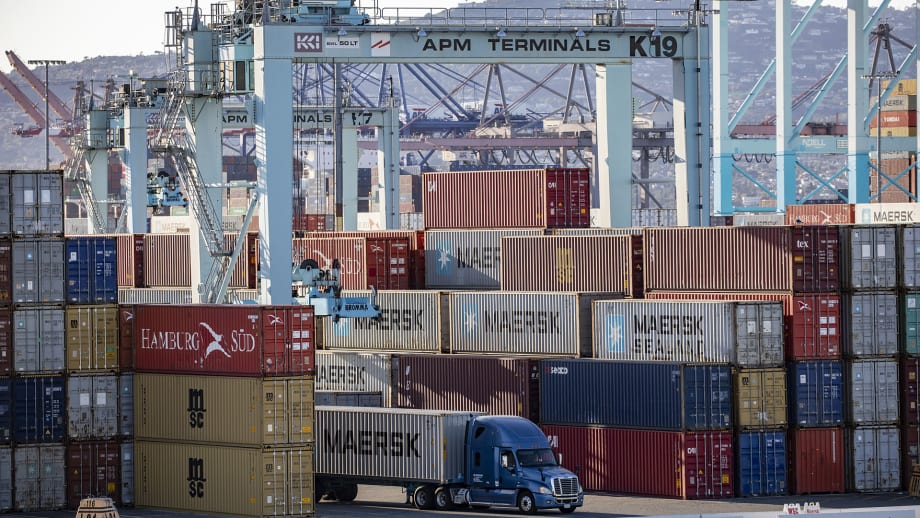
Congestion at coastal ports has been one of the most visible signs of problems in supply chains.
Photo: Port of Los Angeles
5 min to read
Both for the better and for the worse, the global supply chain has been at the front and center of the conversation around the world over the past two years.
For the better: The public’s awareness of the supply chain and their appreciation for essential supply chain workers has perhaps never been higher. For the worse: There are many challenges the industry is grappling with, including extended port delays, labor and product shortages, health concerns and extreme weather events, all at a time when demand is skyrocketing.
Supply chain stakeholders around the world are working around the clock to find ways to adapt. To unlock efficiencies and optimize operations to keep this from happening again, it will take new technologies and new ways of thinking to keep the global supply chain moving.
The supply chain has always been dynamic, but these past two years have created a “perfect storm” of challenges. Yet these challenges also create opportunities for growth and improvement. Here is a look at how recent events and trends are likely to impact the supply chain in 2022 and beyond.
Skyrocketing demand
Consumer demand has increased in pretty much every vertical as people have searched for new things to do at home to fill their time. Generation Z, which is now growing into adulthood with spending power, is particularly embracing e-commerce. The rise of e-commerce is likely to remain dominant for many years to come.
Additionally, consumers are not willing to wait for online orders. They expect them to arrive as quickly and cheaply as possible, with free shipped returns. This puts a lot of pressure on both e-tailers and retailers to deliver fast and at a low cost, and it presents a reverse logistics challenge for many companies.
Many companies have also shifted to new and innovative distribution models to provide options to shoppers, such as online ordering, personal shopping services, curbside or in-store pickup, and even using retail spaces as distribution hubs. Once these methods for expedited and easier shopping experiences have been introduced, it may be difficult to transition away from them in the future.
At the same time, labor shortages caused by the pandemic are also creating challenges, including shortages of in-store employees, truck drivers, port associates, rail workers, maintenance technicians, manufacturing positions and more. Companies of all sizes in every industry have been forced to find new ways to keep up with consumer demand, even when they may not have enough employees, such as new forms of automation, reducing product offerings, extending ship times, and many new recruiting tactics.
Supply chain issues typically sort themselves out in the long run, but there is likely still some time ahead before the current challenges see any significant improvements.
Holiday season brings angst – and returns
This holiday season is likely to be remembered as one of the most difficult in recent history. Manufacturers and shippers have had to make difficult decisions about the breadth of product available to consumers this year – weighing the pros and cons of offering a wide variety of products at lower volumes or streamlining production to focus on a smaller number of products in higher volumes.
In many cases, consumers have simply not had as much choice and variety as they have grown accustomed to. Their retailer or e-tailer of choice may be sold out of an item, with no way to get it back in stock or shipped out in the timeframe needed. Or a manufacturer may decide to discontinue an item that is inefficient to produce, or highly labor intensive, or simply not profitable enough to justify the investment.
As a result, the reverse logistics cycle may come back with a vengeance in early 2022. Many consumers may have “settled” for a product that they ultimately decide they don’t want to keep. Others will likely be sending back items that didn’t arrive in time.
All of this brings both opportunities and challenges to the transportation and logistics industry. That’s why it’s so vital that all supply chain stakeholders have systems and tools in place that can adjust to the constantly changing nature of the marketplace.
Even before the pandemic, there was already a trend toward bringing products to distribution centers closer to where orders were being placed, so shipping times would be faster, ultimately providing better service. This trend is likely to continue driving forward, particularly due to the trending transition from “just in time” deliveries to a “just in case” approach with heightened inventory levels.
Looking ahead
One of the biggest challenges in managing the supply chain is information. It is of utmost importance to close the information and timing gap in the supply chain in order to support its continuous evolution, creating a connected global supply chain focused on connecting entities to drive efficiency and allow seamless partnerships.
There is also a huge opportunity for technology solutions that can analyze the massive amounts of data coming out of the supply chain from many different sources. Being able to dynamically adjust operations and processes in real time, or even automatically, based on new data and analysis coming in will ultimately allow the supply chain to become more flexible and adaptable, creating efficiencies and positively affecting the bottom line.
This connected supply chain allows decisions to be made, not in a siloed environment of each company’s own networks and distribution centers, but at a broader level, bringing in carriers, shippers, warehouses, rail, ports, air and sea. There is still much work ahead to break down those siloes, but it’s getting closer every day.
Subscribe to Our Newsletter
More Blog Posts

Fragmented AI: Why Trucking Must Take Security More Seriously
As AI becomes embedded throughout transportation operations, the result can be a tech environment that looks more advanced on paper, but isn't necessarily more efficient, secure, or manageable in practice.
Read More →
We've Been Thinking About Truck Uptime Backward
The truck repair operations that minimize downtime aren’t necessarily the ones with the fastest technicians. They’re the ones who have the part.
Read More →
The Real Cost of Trailer Tires: Why It's Not Just a Maintenance Problem Anymore
Tire wear isn't random. The trucking fleet with a tire program that knows which trailers, positions, and routes are punishing tires the hardest is the one that buys fewer of them.
Read More →
A New Argument for Electrification: Managing Fuel Volatility
As oil prices surge amid Middle East conflict and a blocked Strait of Hormuz, fleets are feeling the squeeze in real time. In this guest column, Geotab's Neil Cawse argues electrification is no longer just about sustainability or ROI — it’s about insulating operations from what he calls a "volatility tax."
Read More →
The Time is Now to Expand Longer Combination Vehicles [Opinion]
The reauthorization of the federal highway bill offers a rare chance to advance double 53-foot LCVs. Industry leaders shouldn’t miss it, says a longtime trailer industry professional in this Guest Voices blog post.
Read More →
The Hidden Costs of 'Free' Smart Trailer Tech Installations [Commentary]
Free installation of smart trailer technologies may sound good on paper, but you could end up paying down the road.
Read More →
Protecting Small Trucking Fleets from Scammers: Lessons from the Insurance Frontlines
Hijacked DOT numbers, fake invoices, and high-tech cargo theft are on the rise. A veteran trucking insurance broker shares how to spot trouble early — and why a trusted advisor may be your strongest defense.
Read More →
Tire Retreading Makes Sense for Trucking Fleets. H.R. 3401 Could Make It Even Smarter.
Retreaded tires offer trucking fleets cost savings, sustainability gains, and supply chain security. New legislation, H.R. 3401, could make retreads even more attractive and support U.S. jobs.
Read More →
Hydrogen Fuel Cell Trucks Are Ready for the Long Haul. Now Policymakers Must Act
Accelerating the growth of hydrogen-fuel-cell-truck adoption would help make zero-emission trucking is not only possible, but practical and profitable, argues the Center for Transportation and the Environment in this Guest Voices blog.
Read More →
A New Definition for Long-Haul Heavy-Duty Trucking
Understanding the various routes that make up long haul is important as we move through trucking’s Messy Middle — a time when fleets have a variety of powertrain solutions to choose from, writes NACFE's Mike Roeth.
Read More →