





Related: Intermodal Surges in Third Quarter, Volume Hits Record High
Growth in Piggyback Includes Short Trailers
Pups are less efficient than long trailers, but are when the 28-footers are loaded for certain destinations and their parcels avoid multiple handling en route. . .
January 18, 2018
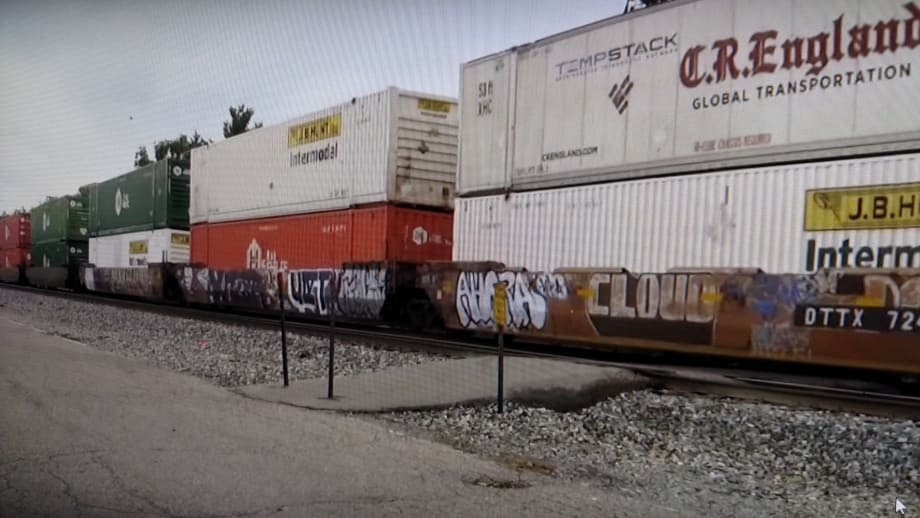
Double-stacked domestic containers make intermodal trains exceptionally productive, but the boxes aren't good for all shipments. Image: A-Train via YouTube
3 min to read
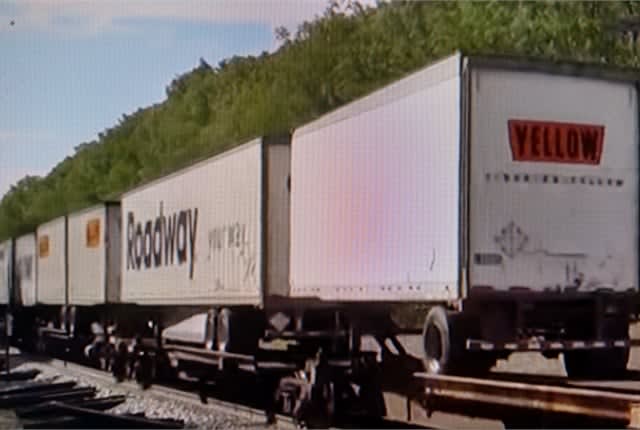
Piggyback trailer growth is particularly strong with 28-foot pups, FTR says. Images: Johnny's Train Videos via YouTube
Internet shopping by consumers and the chronic driver shortage are responsible for part of recent growth in intermodal operations, according to a commentary published last fall by FTR Associates. Part of the surge involves 28-foot pup trailers riding on flatcars, a trend that defies conventional wisdom regarding piggyback efficiency, says researcher Larry Gross.
Fifty-three-foot “pig” trailers carry more cargo per “lift,” the process of picking up a trailer and placing it aboard a special flatcar, then removing it at the other end of the line. Then why use 28s? E-commerce has resulted in the shipment of millions of individual parcels vs. truckload lots, and a merchant’s shipments over a given lane, say, Chicago to Los Angeles, aren’t enough every day to fill a 53, but can fill a 28.
Yes, two or three shipments can be consolidated into a single long trailer, Gross writes. But that would require breakdown of the combined load at the L.A. end. Eliminating the extra parcel handling saves more money than is spent for the extra lifts. (That’s been true of parcel shipping for many years, but e-commerce has added to it, Gross writes.)
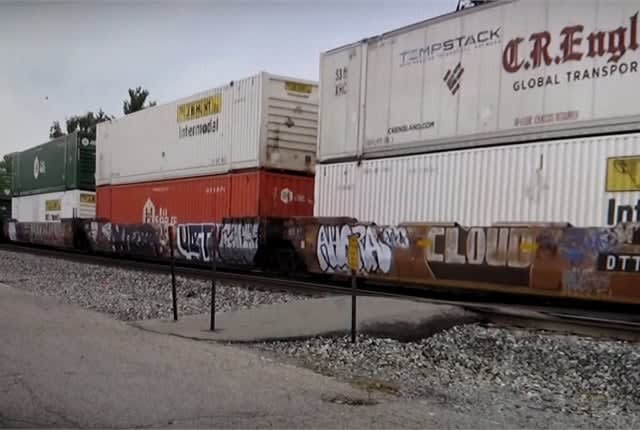
Double-stacked domestic containers make intermodal trains exceptionally productive, but the boxes aren't good for all shipments. Image: A-Train via YouTube
The growth of piggyback, meanwhile, also defies the efficiencies of domestic containers. A big steel box carries about as much as a 53-foot trailer, but doesn’t have the weight of axles, brakes, wheels and tires, suspensions, and landing gear. Moreover, containers can be double stacked, theoretically doubling the amount of cargo carried by a train of a given length, and all the efficiencies that implies.
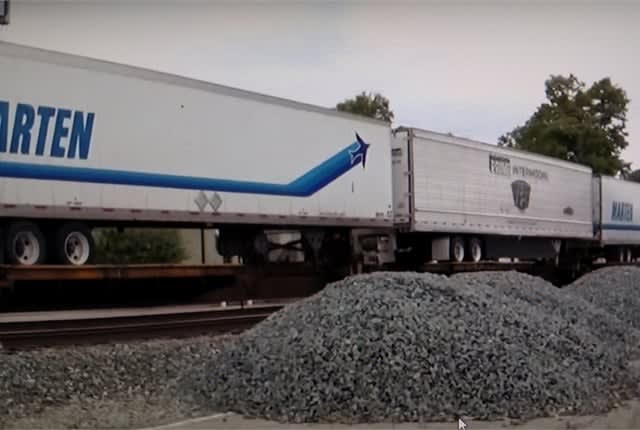
Many large carriers have long been major railroad customers, but more intermodal trailers, like these 53-footers, are reportedly hitting the rails due to the driver shortage. Image: A-Train via YouTube
But piggyback has nonetheless grown because a shortage of drivers forces motor carriers to send trailers – usually 53s – by rail instead of over the road, Gross says. Assuming railroad service is good, transit times can beat even team-driver operations on long hauls. Some of that time is eaten up in the lifts at either end of a haul, and the lifts require expensive machines that eat fuel and need people to operate them.
Of course, that trailer must be pulled to the departure terminal and away from the destination yard, requiring two tractors and drivers instead of one. So there’s still business for truck builders and jobs for truckers.
Then again, daycab tractors used for local and regional service cost far less than the nicely equipped sleeper-cab tractors needed to attract and hold long-haul drivers, the then-president of a major truck manufacturer once complained to me. And because mileage of the daycab unit is often lower than the OTR type, it can be kept longer and, even at an advanced age, can be maintained easier than one that’s thousands of miles from home.
Plus a local or regional driving job gets a guy or gal home frequently, so is more attractive to people who want to have an enjoyable life and not just an all-consuming job and could help out with the driver shortage. Researchers say that’s especially true of millennials, who don’t have the “work ethic” of their elders. (Sorry, but there’s a lot to be said for the young folks’ attitude.)
Subscribe to Our Newsletter
More Blog Posts

Pulsing Back-of-Trailer Lamps Aim to Prevent Crashes
Can the addition of a pulsing brake lamp on the back of a trailer prevent rear-end collisions? FMCSA seems to think so, if its exemptions are any indication.
Read More →
Designing a 14-Foot Trailer
Trailers are 13 feet, 6 inches high, right? Not for Hub Group, which developed a special 14-foot-high trailer spec for a dedicated customer based in California. Learn more in the Trailer Talk blog.
Read More →
CARB Comes for Reefer Trailers
A new round of emissions control regulations decreed by the California Air Resource Board will begin affecting refrigerated trailer and TRU design and operations next year.
Read More →
5 Ways Data Analysis Maximizes the Value of Trailer Telematics
Are you getting the most out of your trailer telematics investment?
Read More →
Can You Guess What's in That Trailer?
You don’t always know what’s in the trailers that pass you on the road. But some of those trailers are carrying something a little more dangerous that frozen food or new bedding…like, maybe, a nuclear weapon. But this isn’t an ordinary trailer; this is a trailer specifically made to not only carry this type of payload, but protect it at all costs.
Read More →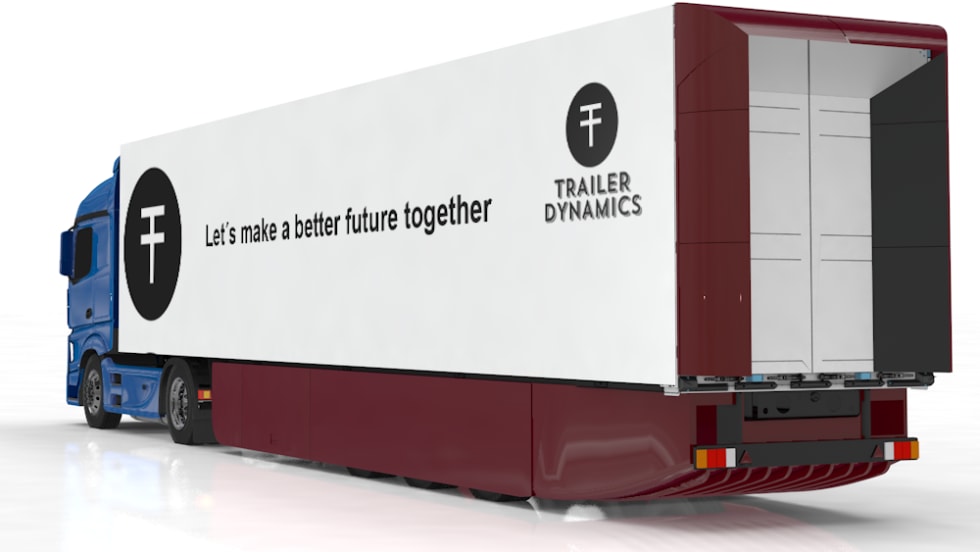
How Trailers Are Harnessing 'Free' Energy
Can trailers play a more active role in sustainable transport beyond aerodynamic add-ons or low-rolling-resistance tires? Some companies think so.
Read More →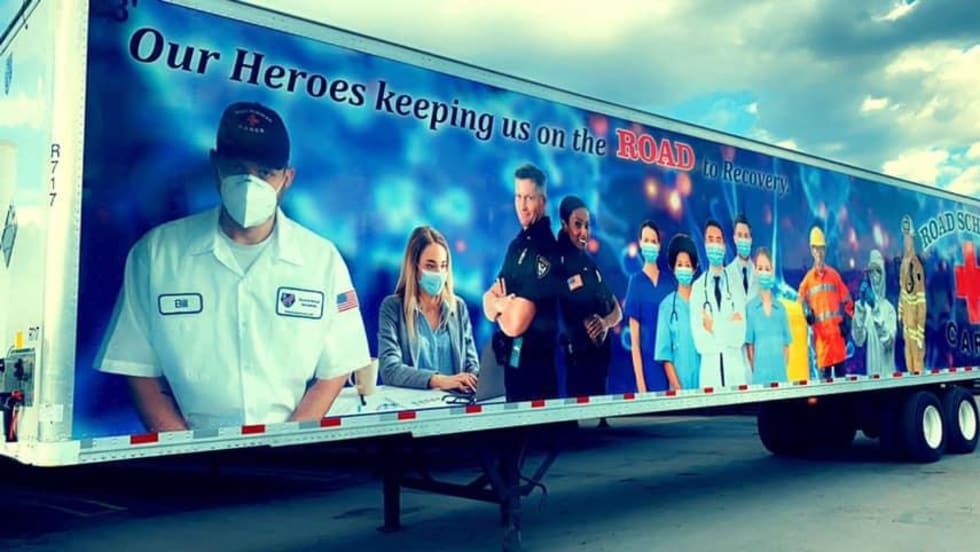
Wrapping a Trailer for COVID’s Everyday Heroes
“We don’t only deliver freight. We deliver awareness.” That’s what Jim Barrett, president and CEO of Road Scholar Transport, likes to say about the Dunmore, Pennsylvania-based carrier’s “awareness fleet.” Its latest trailer wrap honors the everyday heroes of the pandemic.
Read More →
How a Tanker Fleet is Using Unorthodox Trailer Lighting to Fight Rear-End Collisions
Groendyke Transport watched the number of rear-end collisions with its trailers rise steadily until it tried an unorthodox and then unapproved method of alerting following drivers that its trucks were applying brakes and slowing down.
Read More →
The Role Trailers are Playing in COVID-19 Funerals
In places such as New York City and Detroit, overwhelmed hospitals and mortuaries are using refrigerated trailers to store the bodies of people killed by COVID-19.
Read More →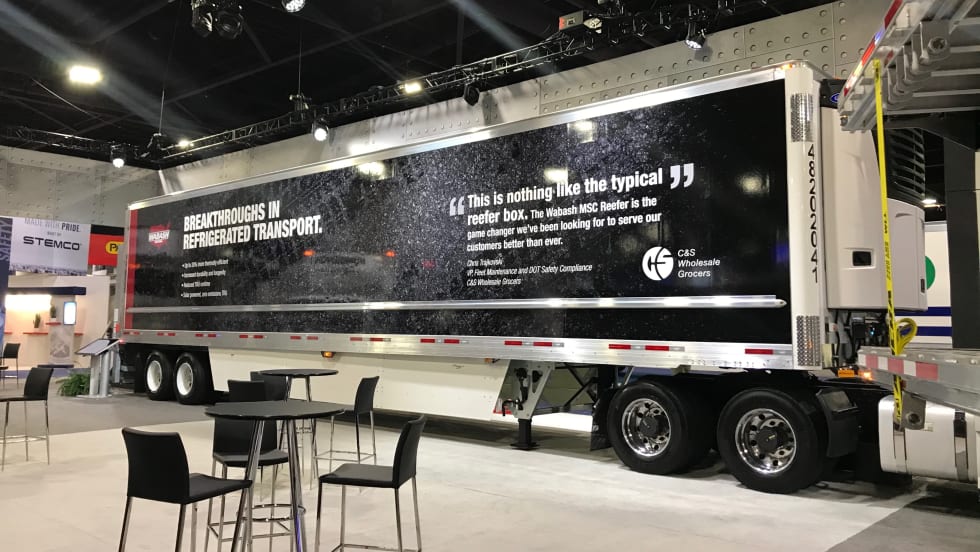
Reefer Trailer Aims to Help Reach Zero Emissions
Wabash National is partnering with C&S Wholesale Grocers to test a new type of zero-emissions refrigerated trailer.
Read More →