





Related: Future Tech Gets Trashed
Great Change and Great Pain in Trucking's Future?
A study focusing on autonomous vehicles says these new technologies could send massive shock waves through our society. Trucking is not immune.
May 22, 2018
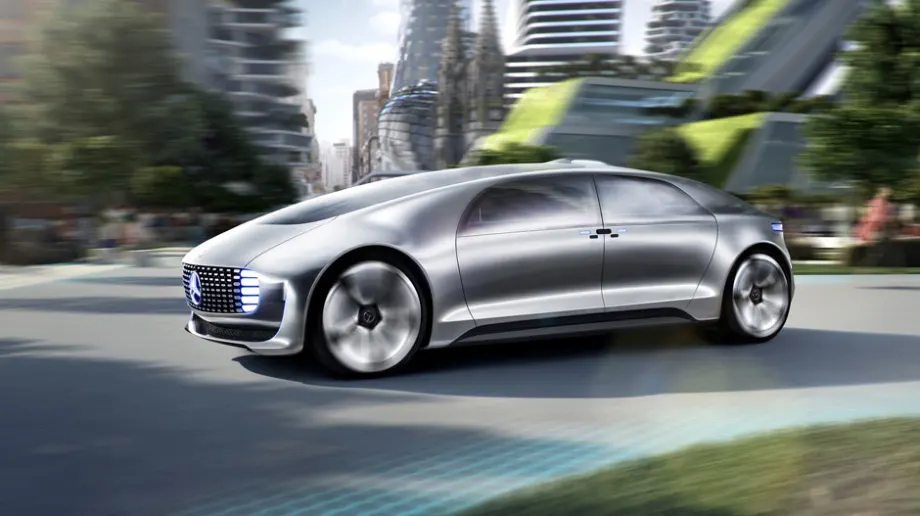
Transportation as a Service, or TaaS, could radically disrupt our society in the near future, a new study says.
Image Mercedes-Benz
4 min to read
The future can be notoriously hard to predict. Even the best-read experts can do no more than offer educated guesses about what life will be like just a few years from now. That exercise gets harder still when you’re on the cusp of a technological revolution as we are today. But there is one thing you can bet on when transformative new tech is about to come on the scene: disruption on a massive scale.
I talk a lot about emerging tech. Usually, when the topic is trucking, drivers are cited as the most likely victims if and when autonomous vehicles reach a tipping point in our society. But a recent study by a group of futurists says the potential for disruption is far greater than just driving jobs.
RethinkX is a think tank made up of forward-looking technology experts. Its recent study, Disruption. Implications. Choices, paints an intense picture of massive social change, coming a lot sooner than most of us envision.
It’s important to note that the study focuses on the passenger car side of the automotive industry (although the group is reportedly working on another study that will specifically address disruption in trucking). But its findings are nothing short of alarming.
The study focuses on a trend we’re already seeing pick up steam: transportation as a service (TaaS), which is a fundamental shift away from the personal ownership of vehicles to a model where people simply pay a subscription or single-use fees to use vehicles – or to have autonomous vehicles ferry them to wherever they need to go. Instead of having a car sitting in your garage, you’ll use an app on your phone to summon an autonomous vehicle when you need to go somewhere – much like hailing Uber or Lyft today, but without the driver. And, the study says, people will want to do that, because eliminating vehicle ownership from their lives would equate to putting $5,600 a year back in their pockets per vehicle, as car payments, and expenses like insurance, gas, oil, and tires, disappear. That’s about the same as getting a 10% raise, the study notes.
If Millennials embrace TaaS with any degree of enthusiasm, the study says, the consequences for the automobile industry are nothing less than dire. The ReThinkX futurists believe the new car market in the U.S. could be gutted by as much as 70% – with collateral damage hitting dealerships, the insurance industry and – yes – driving jobs of all sorts, from cabbies up to gear-jammers. Assuming a loss of 5 million driving jobs at an average annual salary of $40,000, we’re talking about a $200 billion hole being blown in the economy. Add to that a drop in gasoline taxes, which will take a $50 billion annual hit in this scenario. These outcomes will likely require legislative action to manage, the report dryly notes.
And that’s just the start of the bad news. Up to 100 million used vehicles could suddenly become worthless – or even worse than worthless: You may very well have to pay someone to come and haul your old “manually operated” vehicles away and dispose of them.
There is good news, however. While the report barely touches on the trucking industry, it doesn’t begin to suggest that transportation or hauling freight is going to go away. Far from it. In fact, in all the chaos imagined by the RethinkX futurists, they also note that simply taking the cost of vehicle ownership away from a huge portion of the population would mainline $1 trillion a year directly into consumer markets – a figure that the study says would be the largest boom in consumer spending in history. And I don’t have to tell you what that means for trucking fleets, especially in a time where last-mile and home delivery are expected.
The study predicts the decline of car dealerships by as early as 2024, with autonomous vehicles in widespread use and resulting in various disruptive consequences by 2030. That seems a bit soon for me. But, if you add just a few years to those numbers, say adjust everything up by about five years, then I don’t know. Given that once technological changes begin to be accepted, the adoption rate will skyrocket at an exponential rate, that’s certainly possible.
Will all of these things happen? Yes and no. Maybe. But one thing is for certain: Disruption – and new business opportunities – are coming. A lot sooner than most of us expect.
Subscribe to Our Newsletter
More Blog Posts

That Time Mack Trucks Threw Me a Birthday Party
Sometimes the best birthdays are the ones you never planned. Mine happened courtesy of one of America's oldest truck manufacturers, and it reminded me why I still love this industry after more than three decades.
Read More →
Trucking Should Prepare for Long Siege of High Fuel Prices
Many in trucking are treating today's fuel-price surge as a temporary disruption. History suggests they may be making a costly mistake.
Read More →
30 Days on the Road: April 2026
There was a glut of good news for the North American trucking industry. HDT's Jack Roberts takes a look back at our major stories from the month.
Read More →
30 Days on the Road: HDT's Monthly News Roundup for March 2026
HDT's Monthly News Roundup takes a look at the major North American trucking industry news stories from March, 2026.
Read More →
The Major Autonomous News No One is Talking About
Both Aurora Innovation and PlusAI have made under-the-radar announcements that signal a massive game-changer for trucking is coming soon.
Read More →
HDT's Monthly News Roundup: February 2026
February was dreary and dull -- as usual. But the North American trucking industry finally showed some signs of life. But how long that will last is anybody's guess.
Read More →
Like it or Not, The New Year is Here!
HDT's Monthly Trucking Newsletter looks back on the top stories from January, 2026.
Read More →
The Robots are Here
After a bruising year for trucking, CES 2026 felt subdued. Until it suddenly offered a glimpse of trucking's next disruption and reminded everyone that technology never waits for the next freight cycle.
Read More →
Robots and Road Rage
Computers never get angry. And that's a good thing on crowded stretch of interstate.
Read More →
For the Love of Old Trucks
Old trucks generally get ignored in classic car circles. Maybe that's changing.
Read More →