




FMCSA's Ferro Ponders Distraction Potential of On-board Displays
Ann Ferro's curiosity over in-cab distraction is well-founded, but who will decide how much is too much? Equipment Editor Jim Park muses on the topic in his latest "On the Road" blog post.


Drivers automatically sort details from distractions. Alerts just add to the workload. Photo: Jim Park

Drivers automatically sort details from distractions. Alerts just add to the workload. Photo: Jim Park
In some crowded session room at the Mid-America Trucking Show, I found myself standing within earshot of Federal Motor Carrier Safety Administration chief Anne Ferro. I overheard a conversation she was having about on-board displays, warning systems, driver coaching tools, etc. She was wondering out loud whether these devices might be sources of distraction.
She asked a direct question of one particular industry leader about the potential for driver distraction caused by such devices. The answer was a qualified yes, and Ferro pursued the discussion with some interest.
It's interesting that she's asking such a question at a time when truck cabs are filling up with proactive safety systems and on-board driver aids, all supposedly aimed at making drivers safer and more efficient.
Thinking back to simpler times when all drivers had to deal with was an AM/FM radio, those things presented a distraction too, especially with the old rotary tuning knobs. You had to look directly at the radio to find the station you wanted to listen to, thus taking your eyes off the road. I have always felt that radios installed above the windshield were safer because peripheral vision still provided a view of the road while looking up at the radio. Placing them in the dash made us look down and to the right, away from the road.
Then radios went digital and the control buttons became absurdly small. No matter where the radio was, drivers had to stare at the thing simply to find the right button. While it wasn't a problem for me at the time, I now sympathize with drivers that wear bifocal glasses. Adjusting the radio demanded some real contortions.
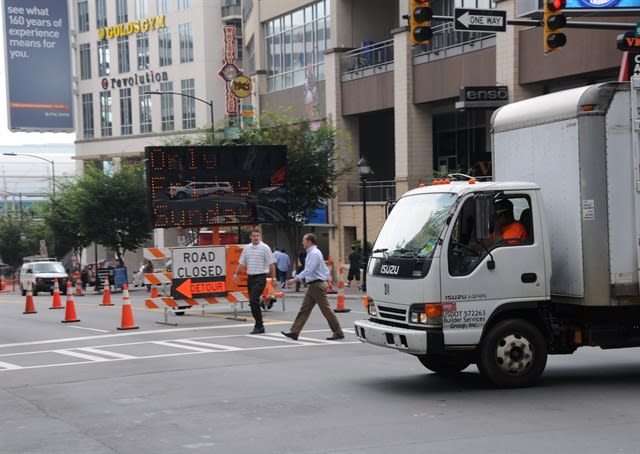
Drivers already have enough to worry about without nuisance alarms and non-critical systems alerts. Photo: Jim Park
Today, we have radios, MP3 players, GPS units, driver information displays and more all demanding some share of our attention. Mostly it's a background level of attention, except when making adjustments to the devices. But with active systems, like GPS voices telling you where to turn and keep left and make a U-turn, etc., it can seem like you're walking past a bunch of carnival hawkers.
Freighteningly Safe
Some of the current generation of active safety systems, in my opinion, cause distractions of a dangerous sort. Most would argue that when one of these warnings goes off it's for good reason. Perhaps in some cases, but in others, nuisance alarms or "misperceptions" by the system can be positively jarring to a driver -- so much so that the driver focuses on determining the cause of the alarm, which distracts from the task at hand.
In those cases, it's not the act of taking your eyes of the road, but the near instant mental transition from one set of problems to another that is distracting.
When it comes to dash displays that purport to help drivers improve fuel efficiency, all I will say is that some OEs do a better job than others. There are displays that show a simple icon that registers instantly with a driver, and others that have a line or two of text for the driver to read and absorb. That kind of help I can do without.
There are more insidious forms of distraction as well, such as company speed limits, in-cab cameras and systems alerts.
I know of a carrier that bases its fuel bonus program on driver behavior, and one of the disqualifying offenses is to exceed the company speed limit of 62 mph. The trucks are governed at 60, but what about coasting downhill? Drivers can become pretty focused on not exceeding 62 to protect their bonus, at the peril of watching what's going on out front.
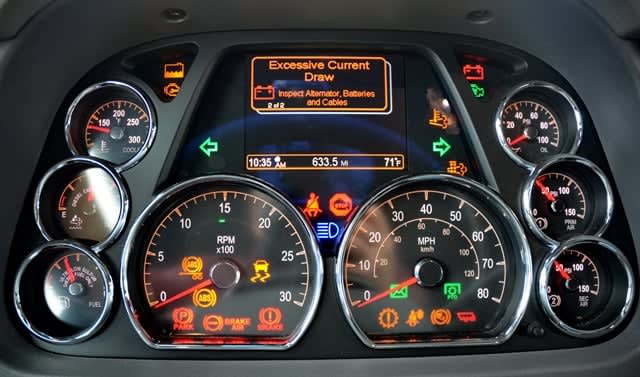
Let's keep the driver information to a need-to-know priority. Photo: Jim Park
And while I realize it's just a little colored light that comes on, what about tire pressure warnings, and check engine lights and brake stroke adjuster warnings and windshield washer low-level warnings and ... All those little lights are cause for worry, some more than others, and the each represents something else the driver has to deal with -- even peripherally.
When the Messenger Becomes the Problem
Robert Waller wrote a story about a World War II pilot flying C47 cargo planes over what was then called the Burma Hump. The planes had to fly high to clear the mountains, but because of the weight and the thinner atmosphere at altitude they needed both engines producing full power. Once, Waller relates, a temperature gauge on an engine showed an abnormally high reading that would require shutting down the engine to save it from destruction. Without the engine, the plane would have crashed -- whether the pilot shut it down or it burned itself up. Faced with two decisions with the same outcome, the pilot chose instead to relieve his anxiety by breaking the gauge -- "throttling the messenger," as Waller put it. In the end, the engine was fine. It was a faulty sensor.
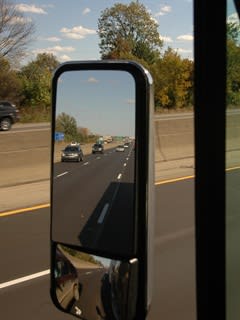
Even glancing through a mirror can be distracting, but drivers have done it safely for decades. Photo: Jim Park
All those things take away from a driver's focus on the principle task, and are in my opinion, unnecessary. Unless the truck is in imminent danger, the warnings can wait until the next stop.
While all these devices and others I haven't mentioned provide some benefit, I wonder where it will stop. Whose system will prove to just one warning light or buzzer too many? When will compliance with some digital directive prove distracting enough to cause some vastly more serious problem?
And at the same time, I maintain that an absurd level of focus on simply driving can be harmful too. We look out the window at the scenery, reach for a coffee, scratch itches in hard to reach places, read billboards, throw things at the radio when whacko talk-show hosts say stupid things ... all these little mental de-stressers are important and necessary to maintain an adequate level of focus.
I think Ferro is right to be thinking about the proliferation of potentially distracting devices and activities in truck cabs. At the same time I worry that the paragons of virtue at FMCSA will over-cam again, and require something like sensors that detect two hands on the steering wheel and eyes focused forward. That would be an equally undesirable outcome.
More Blog Posts
Truck Driver’s Dilemma: Click, Twist or Swipe?
Whether 'tis safer to twist a knob or press a button than to swipe right then swipe down to scan the menu for your favorite playlist...? That's a question for the age.
Read More →
Even the Swedes are Doing Turnpike Doubles
The government doesn't seem to mind asking trucking to invest a trillion dollars toward a greener future. But they won't let us pull turnpike doubles making 30% less CO2. Which is insanity, says HDT's Jim Park in his On the Road blog.
Read More →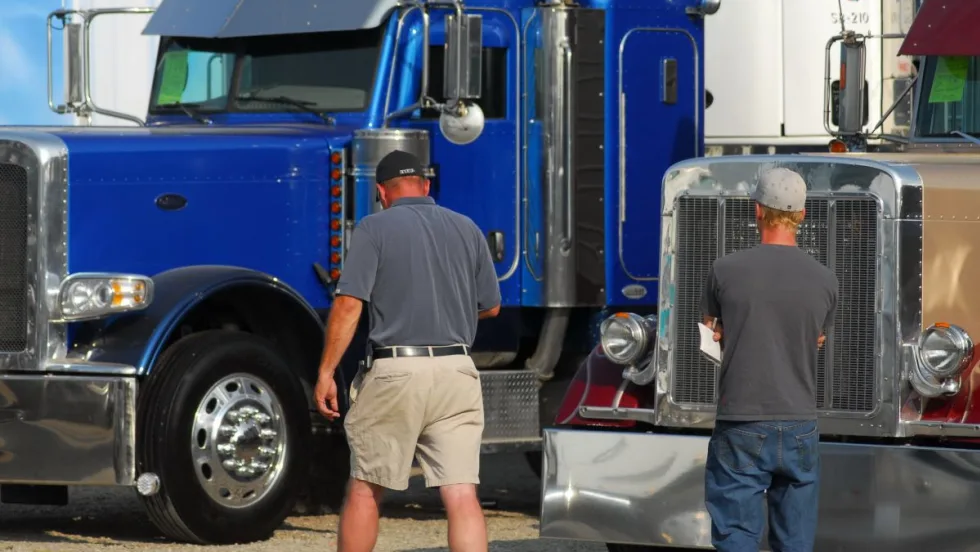
Is Your Recruiting Message on Point?
How does your recruiting and retention messaging compare with the reality at your company? Would your drivers agree with your own assessment? Jim Park explores those questions in his On the Road blog.
Read More →
You Can’t Blame Trucks for the Highland Rest Area Bus Crash [Commentary]
The causes of the Highland Park rest area crash go far beyond the parking shortage and the need for flexibility in hours of service — but those issues must be addressed, too, says Jim Park in his On the Road blog.
Read More →
Electric Trucks Seem Far Down the Road for Fleets Dealing with Today's Maintenance Challenges
While the push for zero-emissions trucks rings clear for regulators, advocates and even a small crowd of suppliers, ZEVs seem to have run out of steam down on Main Street, says HDT Equipment Editor Jim Park in his latest On the Road blog.
Read More →
Guinea Pigs 2.0: Can Trucking Comply with a Near Impossible NOx Reduction?
The EPA’s Final Rule on NOx reduction will be incredibly difficult if not nearly impossible for trucking to comply with. Rather than endure another round of equipment failures, downtime and loss of customer faith, industry needs to rally ‘round the OEMs and seek a solution to this wrong-headed rule.
Read More →
Is Downspeeding Bad for Brakes?
Is there a connection between downsped drivetrains and increased brake wear? There shouldn’t be. Downsped fleets seeing increased brake wear are probably not letting the technology do its job, explains HDT Equipment Editor Jim Park.
Read More →
Dig for the Gold Behind CVSA’s Out-of-Service Numbers
Published out-of-service rates don’t mean much until you dig into the why. With brake problems consistently placing in two of the top five spots, maybe we’re missing something in brake maintenance, writes HDT Equipment Editor Jim Park.
Read More →
Things That Go Poof in the Night
We’re in electric-truck heydays now. But like another famous heyday, the 1849 California Gold Rush, there will be a lot fewer winners than losers, says Jim Park in his On the Road blog.
Read More →
Do Your Truck Drivers Know How to Descend a Mountain Grade?
Where do drivers learn mountain-driving techniques? It's sure not from the typical state CDL manual. Jim Park shares what he learned following a deadly 2019 Colorado crash.
Read More →