




Film Promotes Pennsylvania RR's TrucTrain Service in the 1950s
Trucking is called "a great industry," and footage shows how many trailers were traveling by rail instead of on crowded highways. That's still a good idea.

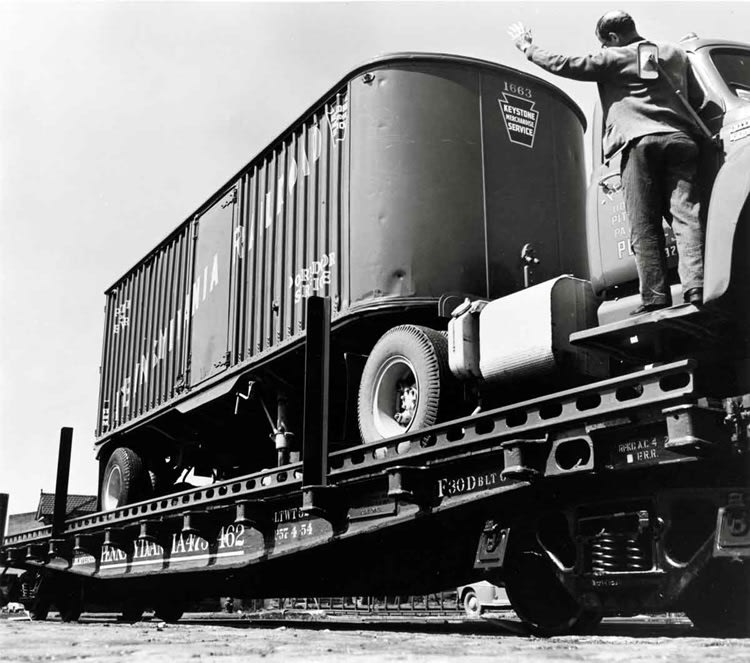
The guy on the running board is there strictly for the camera, because drivers in piggyback terminals were very good at backing trailers onto flatcars. Photo: Pennsylvania Railroad/Classic Trains
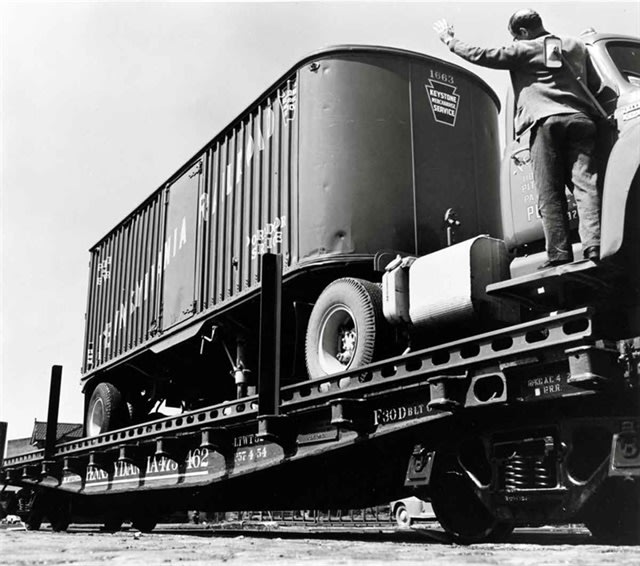
The guy on the running board is there strictly for the camera, because drivers in piggyback terminals were very good at backing trailers onto flatcars. Photo: Pennsylvania Railroad/Classic Trains
Before I was a truck buff, I was a train fan. So, when I got into the truck-writing business, first in 1973 and then for good in ’78, it pained me to hear drivers and executives talk about railroads as “the enemy.” Sometimes they gloated over how they were taking business from the rails, and they could do it because they offered better service.
Meanwhile, railroad people had also come to view the trucking industry as a great threat and an unfair competitor, because taxes were used to build highways while the railroads built and maintained their own tracks and rights-of-way, and paid taxes on all of it. They didn’t acknowledge that truck operators paid plenty of extra taxes to use the highways, and continue to. Books have been written on that subject, so I shan’t go further with it here.
But there was an area where railroads and trucking companies cooperated in the 1950s. That was trailer-on-flatcar (TOFC) service, also known as “piggyback.” I just came across the above photo, shot about 1950, of a short trailer being backed onto a piggyback flatcar in Chicago. That got me searching for more “pig” pictures, and I immediately found a short promotional film produced for the long-defunct but once powerful Pennsylvania Railroad.
The 1955 film is almost pro-trucking, with the narrator calling it “a great industry.” It talks about crowded highways populated by cars and an increasing number of large trucks, and includes one scene of “blocked” traffic (today, we call that gridlock). But, the narrator proclaims, the solution lies with America’s railroads and their “excess capacity” – caused by truckers stealing their freight, though that’s not said. All those empty tracks could support trains that carry trucks!
Then we follow a brand-new van (a 35-footer, it appears) lettered for Mid-States (remember that outfit?). It leaves an appliance factory “without direct rail service” and is pulled to a piggyback terminal in Chicago. There it’s pushed aboard a TOFC car, laborously chained down, and, with many other trailers now aboard other cars, highballs toward the East on a Friday evening.
By Monday, it has passed through five states and is offloaded in another rail terminal near New York City. It's taken into one of the city’s boroughs and backed against a dock. The Pennsylvania’s TrucTrain service, as it was called, lasted into 1968, and there were many others (among the railroads were New York Central and Sante Fe).
Although TOFC involved many steps, it’s now done more efficiently and is still a good idea. Many large motor carriers partner with railroads on various lanes. Fast, flexible trucking gathers and delivers the goods at Points A and B, while the railroads do the long hauling between them. Equipment now is larger and domestic containers substitute for trailers in many instances.
Intermodal – a term that came into use along the way -- is one solution to the continuing driver shortage that, forecasters say, will probably get worse unless autonomous trucks come into use, and I have my doubts about that. As a citizen I’d like to see more intermodal operations, whether with trailers or containers. What do you think?
More Blog Posts
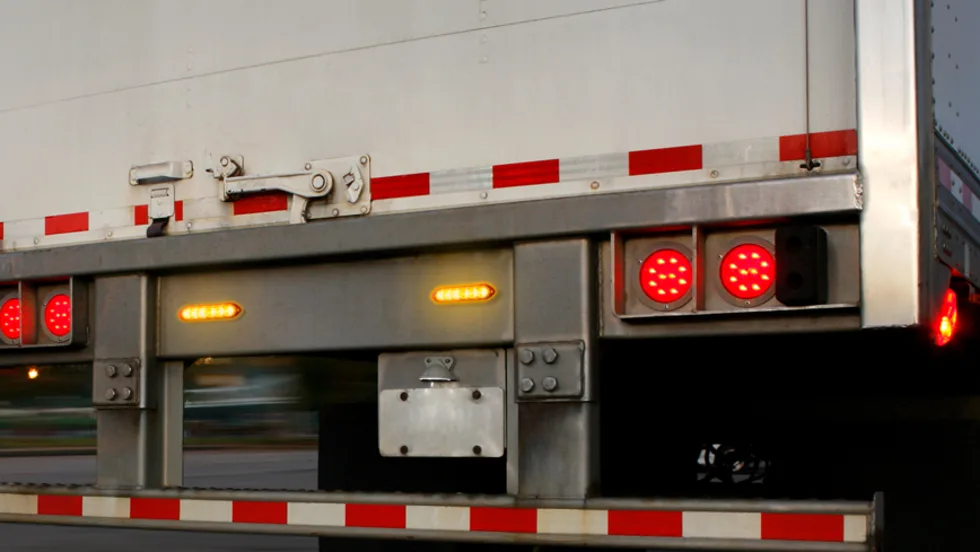
Pulsing Back-of-Trailer Lamps Aim to Prevent Crashes
Can the addition of a pulsing brake lamp on the back of a trailer prevent rear-end collisions? FMCSA seems to think so, if its exemptions are any indication.
Read More →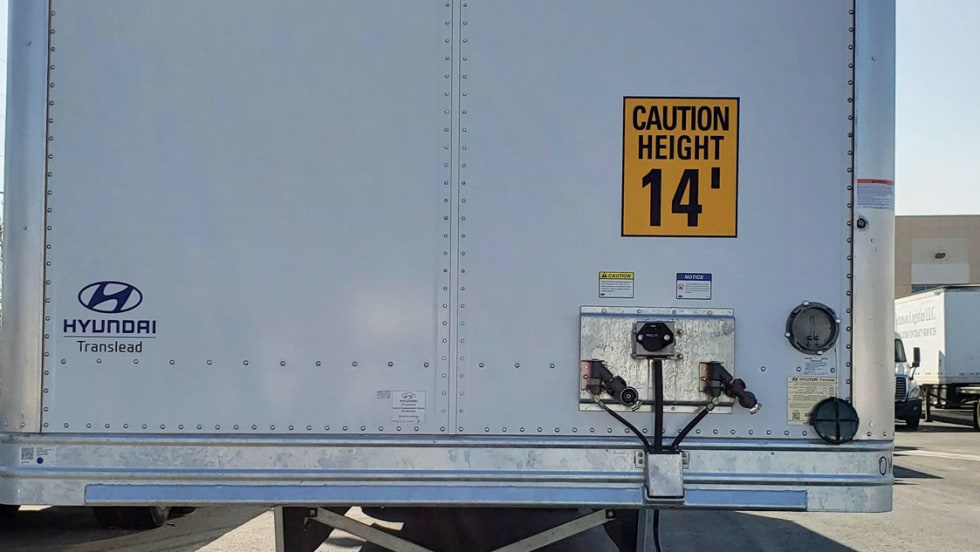
Designing a 14-Foot Trailer
Trailers are 13 feet, 6 inches high, right? Not for Hub Group, which developed a special 14-foot-high trailer spec for a dedicated customer based in California. Learn more in the Trailer Talk blog.
Read More →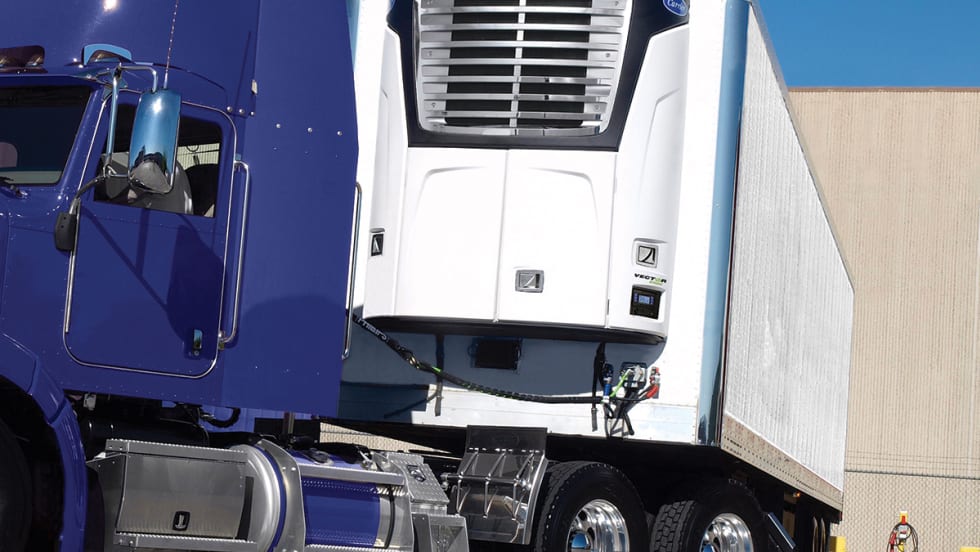
CARB Comes for Reefer Trailers
A new round of emissions control regulations decreed by the California Air Resource Board will begin affecting refrigerated trailer and TRU design and operations next year.
Read More →
5 Ways Data Analysis Maximizes the Value of Trailer Telematics
Are you getting the most out of your trailer telematics investment?
Read More →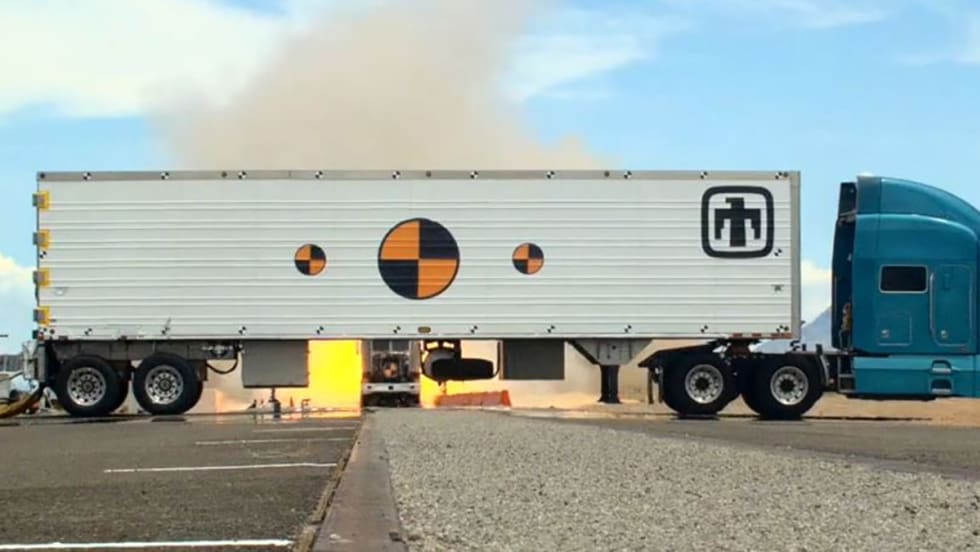
Can You Guess What's in That Trailer?
You don’t always know what’s in the trailers that pass you on the road. But some of those trailers are carrying something a little more dangerous that frozen food or new bedding…like, maybe, a nuclear weapon. But this isn’t an ordinary trailer; this is a trailer specifically made to not only carry this type of payload, but protect it at all costs.
Read More →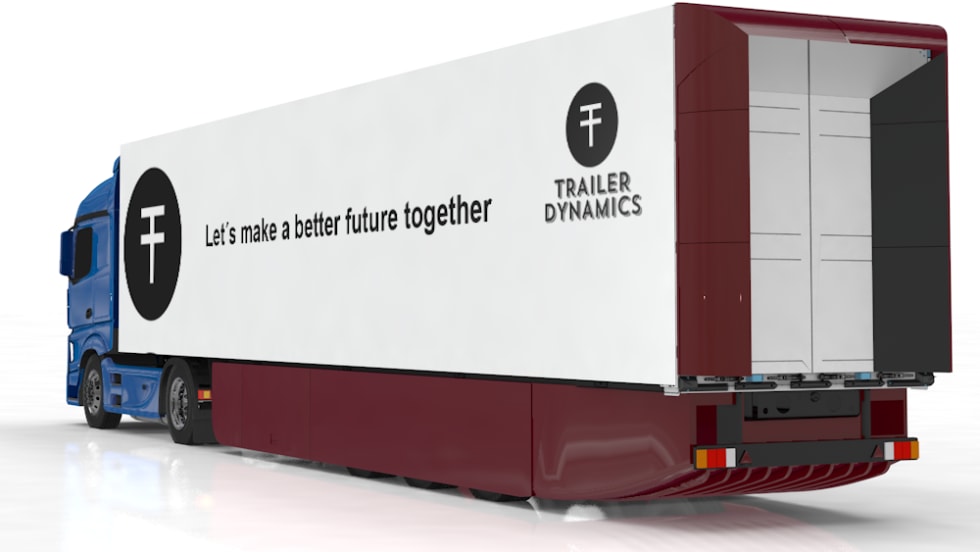
How Trailers Are Harnessing 'Free' Energy
Can trailers play a more active role in sustainable transport beyond aerodynamic add-ons or low-rolling-resistance tires? Some companies think so.
Read More →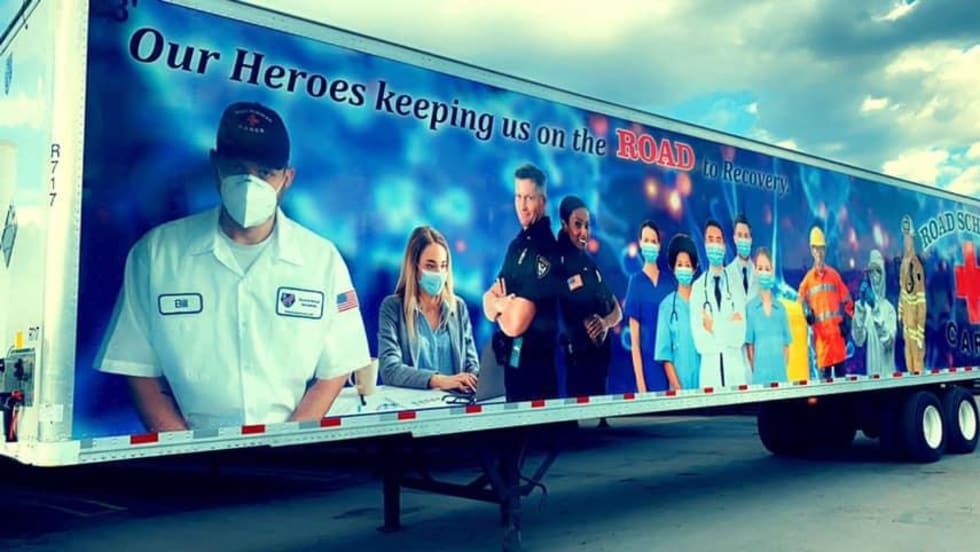
Wrapping a Trailer for COVID’s Everyday Heroes
“We don’t only deliver freight. We deliver awareness.” That’s what Jim Barrett, president and CEO of Road Scholar Transport, likes to say about the Dunmore, Pennsylvania-based carrier’s “awareness fleet.” Its latest trailer wrap honors the everyday heroes of the pandemic.
Read More →
How a Tanker Fleet is Using Unorthodox Trailer Lighting to Fight Rear-End Collisions
Groendyke Transport watched the number of rear-end collisions with its trailers rise steadily until it tried an unorthodox and then unapproved method of alerting following drivers that its trucks were applying brakes and slowing down.
Read More →
The Role Trailers are Playing in COVID-19 Funerals
In places such as New York City and Detroit, overwhelmed hospitals and mortuaries are using refrigerated trailers to store the bodies of people killed by COVID-19.
Read More →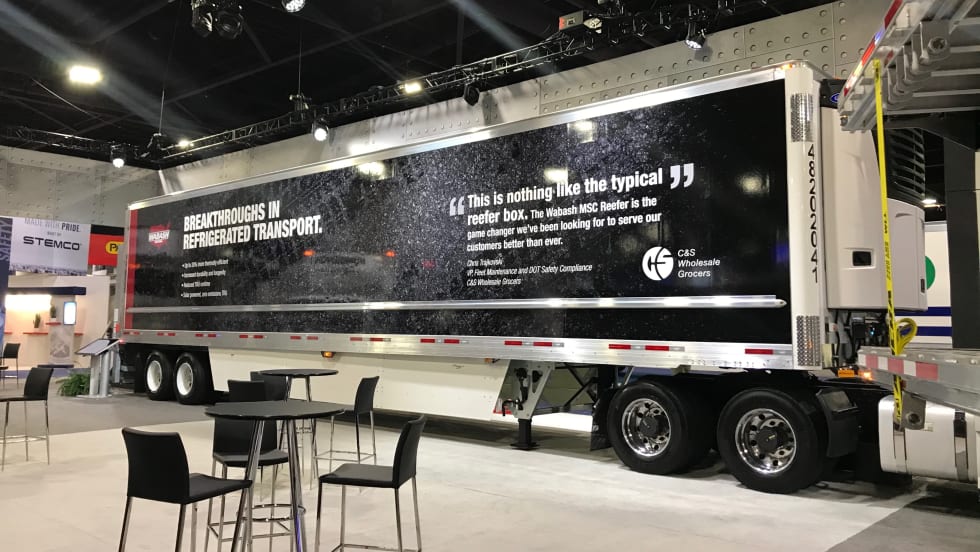
Reefer Trailer Aims to Help Reach Zero Emissions
Wabash National is partnering with C&S Wholesale Grocers to test a new type of zero-emissions refrigerated trailer.
Read More →