





Related: CVSA Offers Roadside Inspection Course for Motor Carriers
Do Your Trailers Have Legal RIGs with Labels That Say So?
Rear impact guards, or RIGs, should have a label attesting to its compliance with federal regulations. But in a recent CVSA inspection blitz, they were the source of several headaches.
September 20, 2018
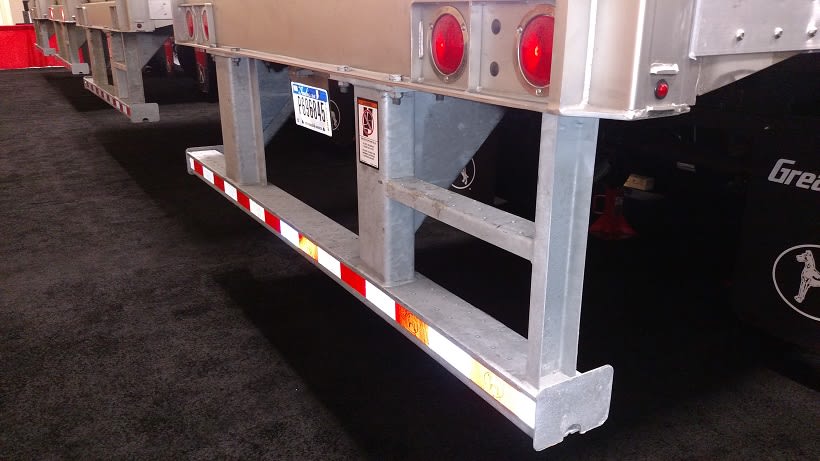
Rear impact guard on this van trailer complies with a 1998 federal safety standard that requires certain energy absorption performance. A special label on the front of the bumper says so by including the letters, “DOT.”
Photos: Tom Berg
4 min to read
Since January 27 of 1998, rear underride guards (aka “ICC bumpers”) on most types of semitrailers have been designed and built to absorb the force of a car slamming into it. They are properly called rear impact guards, or RIGs, and each should have a label attesting to its compliance with the federal regulation that establishes its performance.
In August, those labels were the focus of an inspection and enforcement “blitz” led by the Commercial Vehicle Safety Alliance, which is composed of motor carrier enforcement authorities in North America. That caused anguish for some members of ATA’s Technology & Maintenance Council, who gathered this week in Orlando, Florida, for the fall meeting. They complained that if the sticker was missing from the horizontal portion of the impact guard, or its lettering wasn’t legible, drivers were handed citations.
This was the first item of business in Fleet Talk, a popular session in which fleet managers discuss what irks them about equipment and enforcement issues. Darry Stuart, a fleet management consultant and former TMC general chairman who leads this session, brought the issue up because his manager-friends had called him about it.
“They’re getting citations just for the decal,” he told me when I saw him the day before that session. “And it’s a six-point violation” under the infamous federal Compliance, Safety, Accountability reporting system, better known as CSA.
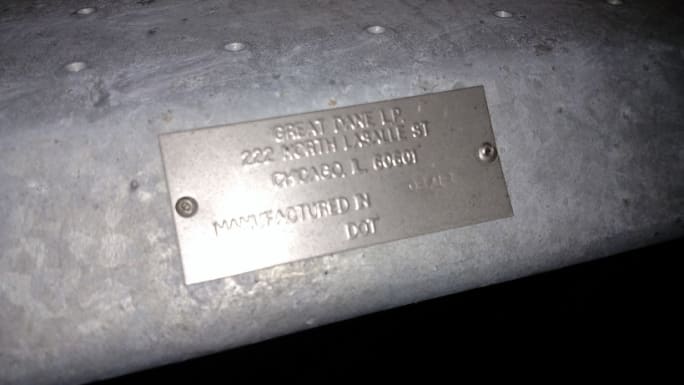
The label must be placed 12 inches inboard of the forward-facing surface of the RIG’s horizontal member, according to Motor Carrier safety regulation 393.86. Aside from “DOT,” the label must include the manufacturer’s name, and the month and year the trailer was built. It’s not clear what an owner should do if the label becomes illegible or goes missing.
“Read 393.86 (of the motor carrier safety code), Sections 1 and 6,” he said. “It defines the ICC bumper and the sticker that the manufacturer is supposed to put on it.” Saying the same thing to people in the Fleet Talk session, he asked how many had received citations for this issue and about a dozen raised their hands.
One was Kevin Tomlinson, maintenance director at South Shore Transportation in Sandusky, Ohio. He said one of his drivers had gotten a ticket in Pennsylvania. “But we run flatbeds with fixed axles — spread axles — and the rear axle is close to the back of the trailer, so under the reg we don’t need the sticker,” or the impact-absorbing guard, for that matter.
“Wheels back vehicles” is what the regulation calls such trailers, and they are specifically exempted from the impact-guard requirement if that axle’s tire surfaces are within 12 inches of the trailer’s rear. Federal authorities recognized that the rear-set wheels and axle would keep a car from underriding a trailer, so they exempted such trailers from the requirement.
South Shore’s safety supervisor pointed that out to authorities in Pennsylvania, and that ticket was dismissed, Tomlinson said.
CVSA launched the blitz to see how many RIGs are actually on trailers, Stuart and others said at the session. Rear impact guards are stout looking things, but the label is the only way for a field inspector to know for sure. And if the label is missing, the inspector can assume that the RIG is not compliant and get out his ticket book.
A properly formatted label lists the trailer manufacturer’s name and where and when the trailer was built. By including the letters “DOT,” the manufacturer certifies that the impact guard complies with performance requirements.
Manufacturers test their guards to be sure they do comply with energy absorption specifications or hire outside laboratories to do so. Thus, only a manufacturer should place a label on a rear impact guard.
However, Stuart related that another fleet manager asked his trailer supplier about the issue, and the builder sent him 500 labels that he could install himself. That might be expedient, but would it be wise?
“Putting that label on means you are certifying that guard,” said a manager in the audience. “That could make you legally liable if there’s an accident” and a lawsuit ensues.
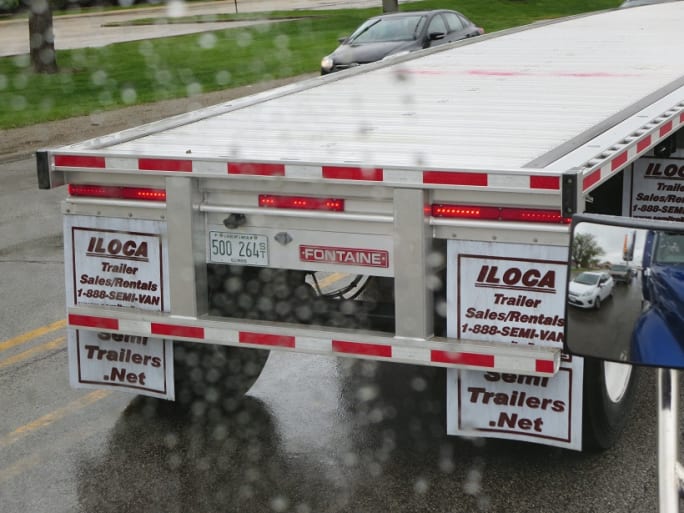
“Wheels back” trailer like this spread-axle flatbed doesn’t legally need a rear impact guard or a label because its tires and rear-most axle would stop a car from plowing under the trailer. In underride accidents, motorists are usually killed or badly injured.
Furthermore, at least one inspector issued a citation because the “DOT” was illegible. That’s not surprising because a label is to be placed on the forward-facing surface of the horizontal member, and toward its right side, just where it gets pelted by road debris and spray from water and ice kicked up by tires. The discussion in this session didn’t solve that problem, but maybe the manager with those 500 extra labels might use them after all (wink-wink).
Moral of this story: If a trailer’s rearmost axle and tires are set well ahead of the trailer’s rear, like those on sliding tandems under 53-foot box trailers, then it needs a rear impact guard that complies with the 1998 mandate, and that guard must have a proper label.
If the trailer is a “wheels back” type with its tires within a foot of the trailer’s rear, then its rear bumper needn’t be a RIG and doesn’t need a label. Tell that to the cop who’s about to write you a ticket. If he doesn’t believe you, just say, “Read 393.86, Sections 1 and 6.”
Subscribe to Our Newsletter
More Blog Posts
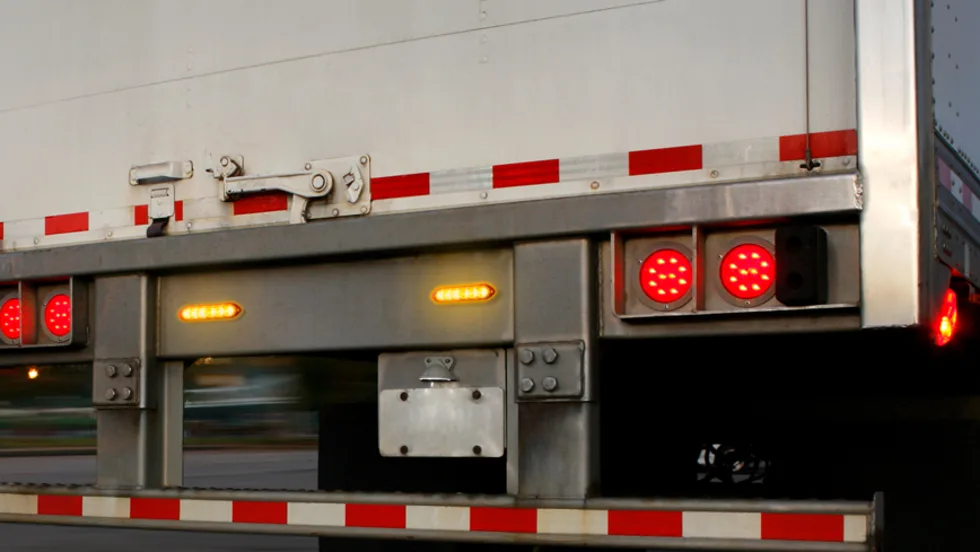
Pulsing Back-of-Trailer Lamps Aim to Prevent Crashes
Can the addition of a pulsing brake lamp on the back of a trailer prevent rear-end collisions? FMCSA seems to think so, if its exemptions are any indication.
Read More →
Designing a 14-Foot Trailer
Trailers are 13 feet, 6 inches high, right? Not for Hub Group, which developed a special 14-foot-high trailer spec for a dedicated customer based in California. Learn more in the Trailer Talk blog.
Read More →
CARB Comes for Reefer Trailers
A new round of emissions control regulations decreed by the California Air Resource Board will begin affecting refrigerated trailer and TRU design and operations next year.
Read More →
5 Ways Data Analysis Maximizes the Value of Trailer Telematics
Are you getting the most out of your trailer telematics investment?
Read More →
Can You Guess What's in That Trailer?
You don’t always know what’s in the trailers that pass you on the road. But some of those trailers are carrying something a little more dangerous that frozen food or new bedding…like, maybe, a nuclear weapon. But this isn’t an ordinary trailer; this is a trailer specifically made to not only carry this type of payload, but protect it at all costs.
Read More →
How Trailers Are Harnessing 'Free' Energy
Can trailers play a more active role in sustainable transport beyond aerodynamic add-ons or low-rolling-resistance tires? Some companies think so.
Read More →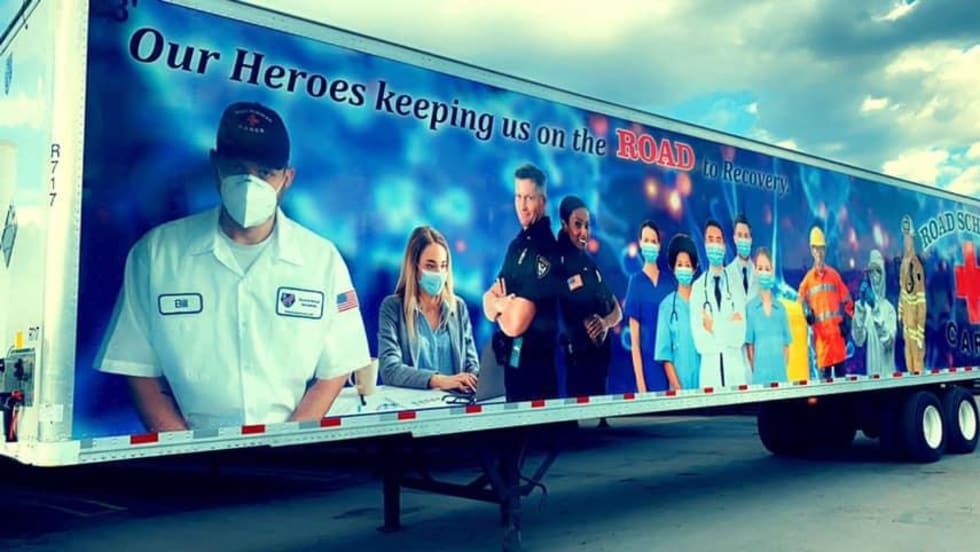
Wrapping a Trailer for COVID’s Everyday Heroes
“We don’t only deliver freight. We deliver awareness.” That’s what Jim Barrett, president and CEO of Road Scholar Transport, likes to say about the Dunmore, Pennsylvania-based carrier’s “awareness fleet.” Its latest trailer wrap honors the everyday heroes of the pandemic.
Read More →
How a Tanker Fleet is Using Unorthodox Trailer Lighting to Fight Rear-End Collisions
Groendyke Transport watched the number of rear-end collisions with its trailers rise steadily until it tried an unorthodox and then unapproved method of alerting following drivers that its trucks were applying brakes and slowing down.
Read More →
The Role Trailers are Playing in COVID-19 Funerals
In places such as New York City and Detroit, overwhelmed hospitals and mortuaries are using refrigerated trailers to store the bodies of people killed by COVID-19.
Read More →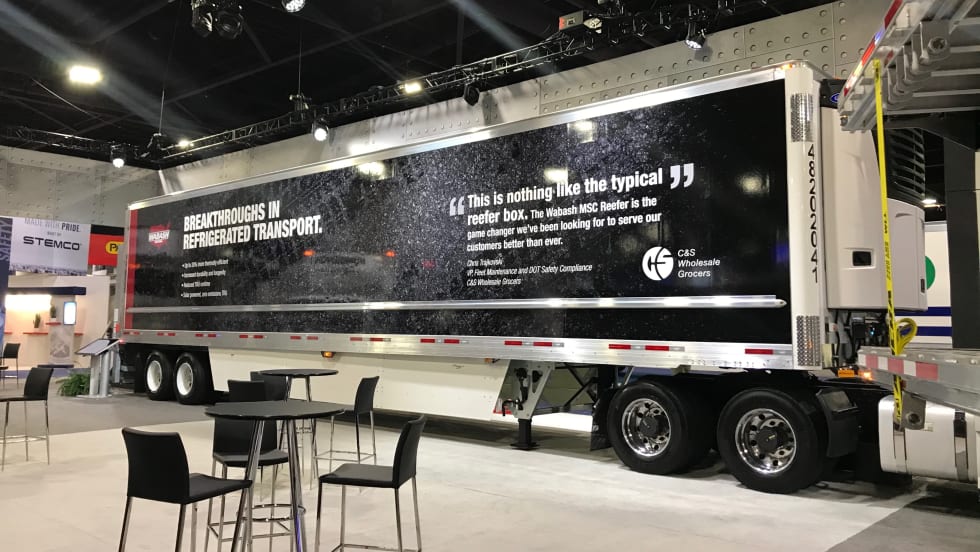
Reefer Trailer Aims to Help Reach Zero Emissions
Wabash National is partnering with C&S Wholesale Grocers to test a new type of zero-emissions refrigerated trailer.
Read More →