





Related: Thoughts on Achieving 11 MPG
Do Your Brain a Favor, Ditch the GPS
GPS is clearly the navigation method of choice in trucking, and amongst the general population, but chronic GPS users might be doing their brains a disservice, and missing out on a lot of excitement by getting lost once in a while, says Equipment Editor Jim Park in his latest blog.
June 24, 2019
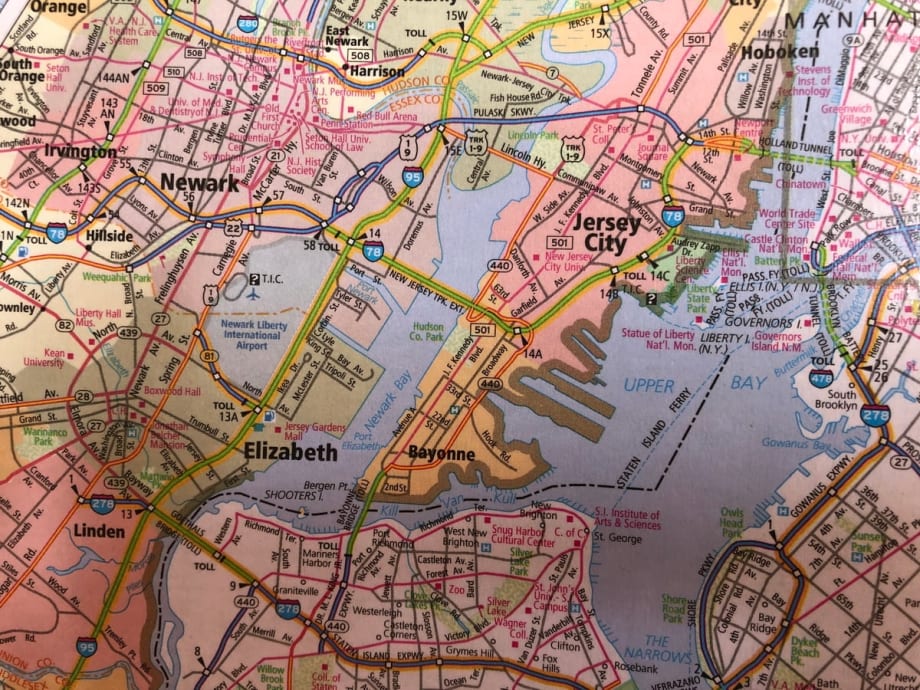
The Rand NcNally Motor Carriers' Road Atlas has been the preferred navigation tool for truckers for decades. It's still popular and better for your brain.
Credit:
Images by Jim Park
6 min to read
The timing on this could not have been better. Earlier this week Rand McNally announced that the 2020 edition of its legendary Motor Carriers' Road Atlas was available. A couple of days later, I came across an opinion piece in the Washington Post postulating that driving with GPS might be ruining our brains. Back when I was driving for a living, GPS wasn't even a twinkle in Rand McNally's eye — or anyone else's for that matter.
I managed to more or less successfully navigate some 2 million miles over my 20 years on the road using a stack of the paper -- and later laminated -- versions of the venerable atlas. Yeah, I found myself off-course a few times, but I never drove off a pier or through the front window of a jewelry store at "her" behest.
And truth be told, more than a few hundred thousand of those miles we over familiar ground. I memorized the routes and left the atlas unopened underneath the passenger seat. Which speaks directly to the point in the WaPo commentary. The author, one M.R. O'Connor, was reporting on a study that found neuroscientists can now see brain behavior changes in people that rely on turn-by-turn directions provided by their GPS units.
According to the scientists that did the research, "when people use tools such as GPS, they tend to engage less with navigation. Therefore, the brain area responsible for navigation is less used, and consequently their brain areas involved in navigation tend to shrink."
Use it or lose it, right?
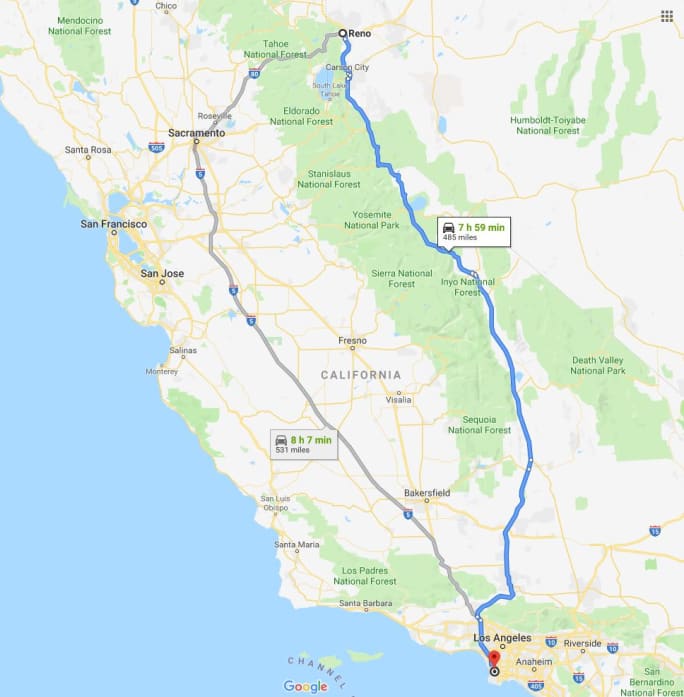
Computer- or tablet-based maps a easier to see, but lack much of the retail found on a paper map.
The part of the brain they refer to is called the hippocampus, and it's crucial to many aspects of daily life. According to O'Connor, "It allows us to orient in space and know where we are by creating cognitive maps. It also allows us to recall events from the past, what is known as episodic memory. And, remarkably, it is the part of the brain that neuroscientists believe gives us the ability to imagine ourselves in the future.
"Meanwhile, atrophy in that part of the brain is linked to devastating conditions, including post-traumatic stress disorder and Alzheimer’s disease," she notes in her commentary.
O'Connor goes on to explain the relationship between the physical size of the hippocampus and the potential for cognitive decline in later years. She suggests that adults with a history of exercising that part of the brain on tasks like navigating and using memory, coupled with visual stimuli to help form a picture of a route or a trip, have greater hippocampal volume, which seems to be a protector against the onset of dementia. Really.
"If we are paying attention to our environment, we are stimulating our hippocampus, and a bigger hippocampus seems to be protective against Alzheimer’s disease," O'connor quotes neuroscientist, Véronique Bohbot. "When we get lost, it activates the hippocampus, it gets us completely out of the habit mode. Getting lost is good!"
Some of Bohbot's research that has shown that "older people who use spatial memory strategies in their everyday lives may have increased gray matter in the hippocampus and enhance their probability of healthy and successful aging."
That's pretty amazing when you think about it. The brain is often likened to a muscle, and there's plenty of evidence that suggests using that "muscle" keeps it fit and tuned for all sorts of tasks.
There was a study done several years ago involving taxi drivers in the city of London, England. It revealed those drivers have greater gray-matter volume in the hippocampus because they have memorized the city’s streets.
Back in my day, remember, I more or less retired from driving in 1998, getting across the country was easy. It was the local road and smaller towns that presented difficulties. The standard routine was to call the customer and get directions off of a major highway, and hope the person you were talking with differentiated between the way they drove to work and the route trucks were supposed to take. There are hundreds of stories of driver dutifully following directions only to find a low bridge or a weight restriction, or worse, either of the above and a local cop staking out the route. Fines for that in places like Pennsylvania have been known to run into the tens of thousands of dollars.
And today's GPS systems do not guarantee success in this matter.
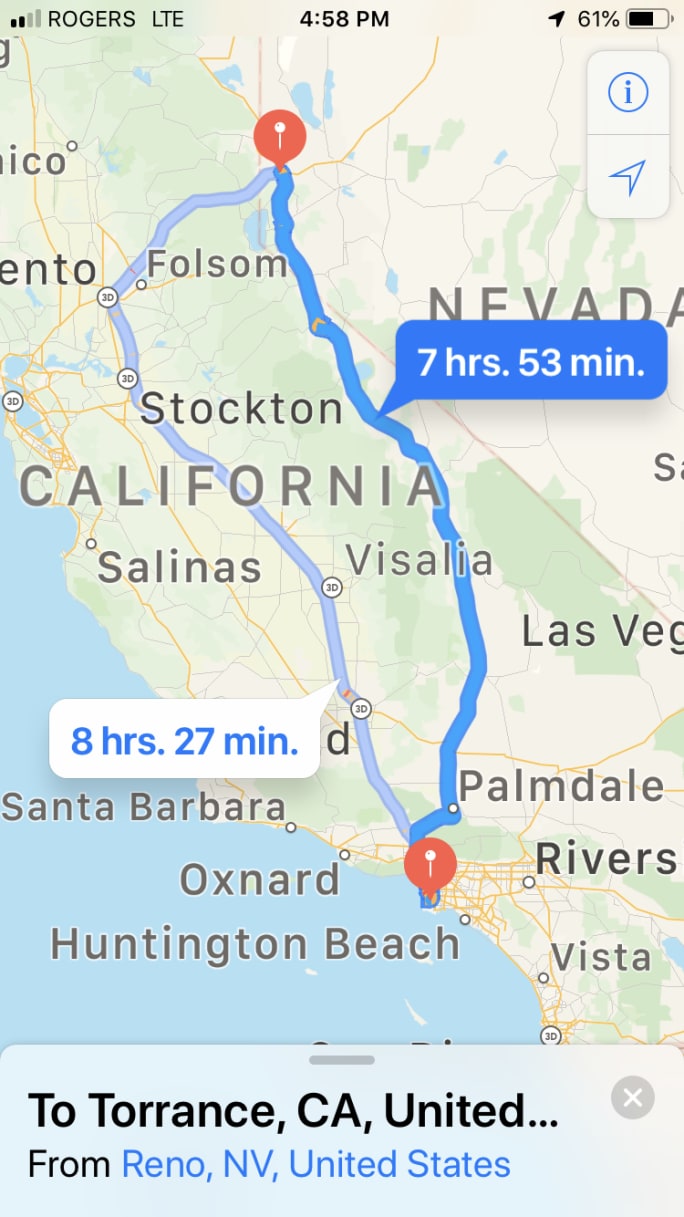
Smartphone mapping is useful if you already know where you're going. There's no room for detail on such a small screen.
It was interesting how quickly we learned those routes, especially for repeat customers. Turn right at the red barn, turn left at the T-intersection and you're there. It was easy until somebody painted the barn.
I have noticed, with GPS, that after arriving at a destination, I usually have no recollection of how I got there. Following the prompts become automatic, and since you don't really need to remember your way out -- like leaving a mental trail of breadcrumbs through the forest -- I don't take notice of landmarks of directions. My hippocampus must be withering on the vine.
On Father's Day just past, I went on a canoe trip with my daughter and her husband. We agreed to meet at the place since we were coming in from different directions. She arrived sheepishly 20 minutes late because she followed her GPS, which she had set sometime earlier to avoid highways. I remembered how to get there from 7 or 8 years ago (she was with me then too, but seated in the backseat and not driving she likely wouldn't have remembered the route anyway). She never leaves home without it and often uses it on routes she drives all the time.
Sometimes she'll ask for a recommendation for a place to stop for lunch on a trip, which I supply from memory, and she'll say she has never seen it before, or has no notion of where it is along the route -- beginning, middle or end.
I always joke that GPS can be extremely useful if you already know where you're going, sort of like a confirmation of the correct route. But my GPS (my phone, actually; I don't own a stand-alone GPS) is often off the mark on the routing.
I'd prefer to visually review the route before pressing the go button but it's quite difficult on those small screens. While an atlas page is much better in that regard, doing such a review while underway can make safety people apoplectic.
Since Rand McNally is still selling the Atlas', I presume there are more than a few drivers who feel the same way I do. GPS has a place, but becoming too reliant on that technology can apparently have some mental health consequences — different mental health consequences than those we experience staring down a low bridge or a weight-restriction sign with a trooper in between.
Subscribe to Our Newsletter
More Blog Posts
Truck Driver’s Dilemma: Click, Twist or Swipe?
Whether 'tis safer to twist a knob or press a button than to swipe right then swipe down to scan the menu for your favorite playlist...? That's a question for the age.
Read More →
Even the Swedes are Doing Turnpike Doubles
The government doesn't seem to mind asking trucking to invest a trillion dollars toward a greener future. But they won't let us pull turnpike doubles making 30% less CO2. Which is insanity, says HDT's Jim Park in his On the Road blog.
Read More →
Is Your Recruiting Message on Point?
How does your recruiting and retention messaging compare with the reality at your company? Would your drivers agree with your own assessment? Jim Park explores those questions in his On the Road blog.
Read More →
You Can’t Blame Trucks for the Highland Rest Area Bus Crash [Commentary]
The causes of the Highland Park rest area crash go far beyond the parking shortage and the need for flexibility in hours of service — but those issues must be addressed, too, says Jim Park in his On the Road blog.
Read More →
Electric Trucks Seem Far Down the Road for Fleets Dealing with Today's Maintenance Challenges
While the push for zero-emissions trucks rings clear for regulators, advocates and even a small crowd of suppliers, ZEVs seem to have run out of steam down on Main Street, says HDT Equipment Editor Jim Park in his latest On the Road blog.
Read More →
Guinea Pigs 2.0: Can Trucking Comply with a Near Impossible NOx Reduction?
The EPA’s Final Rule on NOx reduction will be incredibly difficult if not nearly impossible for trucking to comply with. Rather than endure another round of equipment failures, downtime and loss of customer faith, industry needs to rally ‘round the OEMs and seek a solution to this wrong-headed rule.
Read More →
Is Downspeeding Bad for Brakes?
Is there a connection between downsped drivetrains and increased brake wear? There shouldn’t be. Downsped fleets seeing increased brake wear are probably not letting the technology do its job, explains HDT Equipment Editor Jim Park.
Read More →
Dig for the Gold Behind CVSA’s Out-of-Service Numbers
Published out-of-service rates don’t mean much until you dig into the why. With brake problems consistently placing in two of the top five spots, maybe we’re missing something in brake maintenance, writes HDT Equipment Editor Jim Park.
Read More →
Things That Go Poof in the Night
We’re in electric-truck heydays now. But like another famous heyday, the 1849 California Gold Rush, there will be a lot fewer winners than losers, says Jim Park in his On the Road blog.
Read More →
Do Your Truck Drivers Know How to Descend a Mountain Grade?
Where do drivers learn mountain-driving techniques? It's sure not from the typical state CDL manual. Jim Park shares what he learned following a deadly 2019 Colorado crash.
Read More →