




Are We Near the End of the ICE (Internal Combustion Engine) Age?
The internal combustion engine powered by gasoline and diesel – isn’t vanishing anytime real soon, despite its demise becoming a regular feature in the popular media.
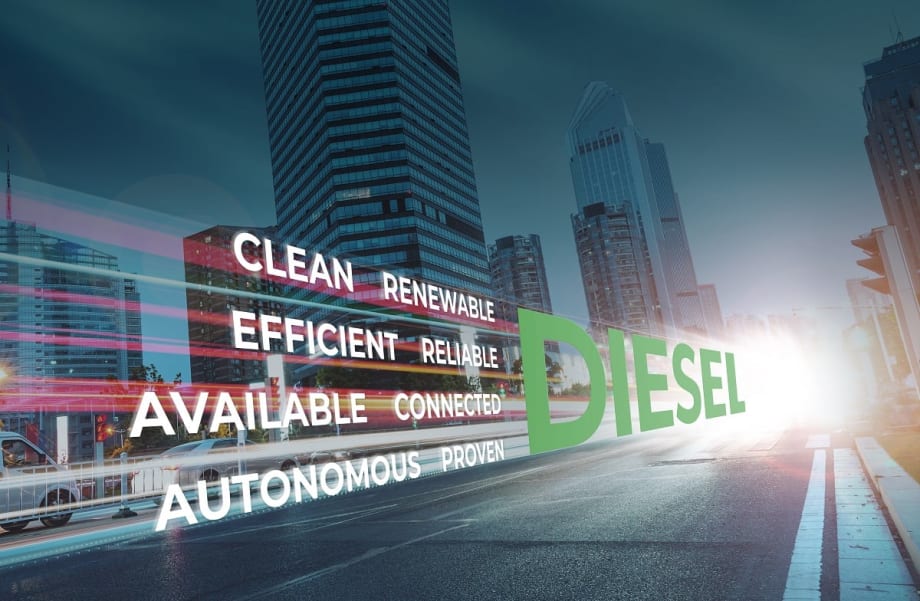
The internal combustion engine powered by gasoline and diesel – isn’t vanishing anytime real soon, despite its demise becoming a regular feature in the popular media.
Images courtesy Diesel Technology Forum
If you dare, flash back to 1990 when rapper “Vanilla Ice” hit the Billboard charts and the hit “Ice Ice Baby” spent seven days at the top. The lyrics, “All right stop. Collaborate and listen. Ice is back with my brand-new invention,” dominated the airways. But then it was gone, a one-hit wonder.
But unlike the “Ice” of the 1990’s, we can boldly predict that the transportation industry's ICE – the internal combustion engine powered by gasoline and diesel – isn’t vanishing anytime soon — despite its predicted demise becoming a regular feature in popular media. In reality, until the time when electrified mobility approaches significant scale, gas and diesel engines will continue to improve. The reasons are simple: customers will continue to demand it, manufacturers are invested in it and society needs it to ensure continued incremental progress on cleaner air and lower CO2 emissions.
Here’s what thought leaders and leading manufacturers have to say on the topic:
“While Cummins has a vigorous electrification program under way, our other key message at IAA is that the diesel engine is not standing still. With our technical developments, we see diesel remaining as the primary source of power in the commercial vehicle sector for the foreseeable future.” (Cummins, Tom Linebarger, Chairman and CEO)
“We expect to see a mix of combustion engines and electric vehicles on the road for a long time to come, despite the current debate about diesel-powered passenger cars in particular, and the decline in new diesel vehicle registrations in Europe. This is because existing powertrain concepts can also play an important role in improving air quality and reducing CO2, especially since the wide-scale adoption of electromobility requires further substantial upfront investments in engineering and infrastructure. Viable diesel and spark-ignition engines that have hardly any effect on air quality even at inner-city air-pollution hotspots are now within reach.” (Bosch, 2018 Annual Report)

Allen Schaeffer, executive director of the Diesel Technology Forum
“We look forward to harnessing the power of both Caterpillar's and Argonne's industry-leading research expertise and world-class facilities to develop ground-breaking solutions for diesel engine design.” The organizations plan to build and test heavy-duty diesel engines that reduce emissions and improve fuel economy. (Caterpillar, Jon Anders, Principal Investigator and Senior Engineering Specialist in the Innovation & Technology Development Division, March 2019)
“Volvo Group acknowledges that there is no single fuel that can meet all needs. Conventional diesel fuel, with increasing renewable or synthetic content, will likely remain the dominant fuel for most types of commercial transport for many years to come.” (Volvo Group, 2018 Annual Report)
“We will continue to build diesel engines. But they will be even cleaner and feature more smart technologies. And we will devote more of our energy to meeting ever-growing demands for hybrid solutions, the electrification of drive systems, and the use of alternative fuels and gas power. With our Green and High-Tech program, we have shown that we have a progressive vision on how to meet the huge challenges of the energy turnaround and new trends in mobility.” (Rolls Royce Power Systems-MTU, Andreas Schell, Chairman of the Board)
“Isuzu and Cummins recognize the advanced diesel engine is, and will continue to be, an important power choice for global customers in commercial vehicle and industrial applications. This is especially true in developed countries where power sources are used for high-intensity operations, as well as in emerging countries where social infrastructure conditions are severe.” (Isuzu, Masanori Katayama, President and Representative Director, announcing power-source partnership agreement with Cummins, May 2019)
“Actually for the diesel engines, we are also continuously working on that in order to achieve the ideal diesel engine. Especially these days, SUVs are quite popular – that means vehicles are bigger and heavier, for those types of vehicles, in terms of reducing CO2, diesel engines still have the advantage... [we have] no plans to phase out diesel.” (Mazda, Ichiro Hirose, Managing Executive Director of Powertrain Development)
“Various projections for the U.S. suggest that by 2030, some 10 to 25 percent of vehicles might be electrified. The question then remains, what about the other 90 to 75 percent? And what about the large trucks and ships that run on diesel fuel? There are, as yet, no convincing electric options for those vehicles. That is why it is still so important to continue working on internal combustion engines and make them as clean and efficient as we can.” (Massachusetts Institute of Technology, John Heywood, Professor of Mechanical Engineering)
“Perkins is focusing on the third incarnation of diesel engines. Power 3.0 will see research and development focus on how to create an engine that is focused on sustainability, as well as capable of delivering more productivity while consuming less fuel. Power 3.0 is the next stage. The hybrids and electrics will be part of that story.” (Perkins, Oliver Lythgoe, Product Concept Marketing)
“I wouldn't see the termination of internal combustion engines on the horizon. We are still working on the next generation of gasoline engines. They will become more fuel efficient. We will have 48-volt start-stop systems and mild-hybrid systems. There is still a lot of improvement going in there. But, on the other hand, the improvement — engine generation after engine generation — will be reduced because there's just not much more [efficiency] in this. The low-hanging fruits are gone. In many countries, you don't have renewable energy available. And then, if you make the counts, diesel is probably still the best option for a low CO2-emission mobility. We are just working on the next generation of diesel engines, becoming even cleaner now, with additional catalytic converters in the car, with additional effort on cleaning, and they become really clean now. We will have a market for these in Europe and many other places. Probably not here, because diesel here always was a niche on the passenger-car side. But also here, the bigger cars, the higher driving distances, diesel becomes more of a rational [choice]. When it comes to big SUVs, diesel still makes sense.” (Volkswagen, Herbert Diess, CEO)
“We expect diesels to survive for at least 20 more years and gasoline for at least 30 more years.” (BMW, Klaus Froelich, BMW group Board Member)

The author see's diesel engines as becoming cleaner and more efficient rather than being killed off by alternatives.
So what will keep ICE at the top of the transport charts for the foreseeable future? Continued gains in efficiency and lower emissions, increased pairing with hybrid powertrains and increased use of advanced renewable fuels. All are factors that will contribute to diesel and gasoline engines playing a key role well into the future.
Allen Schaeffer is the executive director of the Diesel Technology Forum, a non-profit organization dedicated to raising awareness about the importance of diesel engines, fuel and technology. This article has been edited according to the standards of HDT to provide useful information to our readers.
More Blog Posts

Fragmented AI: Why Trucking Must Take Security More Seriously
As AI becomes embedded throughout transportation operations, the result can be a tech environment that looks more advanced on paper, but isn't necessarily more efficient, secure, or manageable in practice.
Read More →
We've Been Thinking About Truck Uptime Backward
The truck repair operations that minimize downtime aren’t necessarily the ones with the fastest technicians. They’re the ones who have the part.
Read More →
The Real Cost of Trailer Tires: Why It's Not Just a Maintenance Problem Anymore
Tire wear isn't random. The trucking fleet with a tire program that knows which trailers, positions, and routes are punishing tires the hardest is the one that buys fewer of them.
Read More →
A New Argument for Electrification: Managing Fuel Volatility
As oil prices surge amid Middle East conflict and a blocked Strait of Hormuz, fleets are feeling the squeeze in real time. In this guest column, Geotab's Neil Cawse argues electrification is no longer just about sustainability or ROI — it’s about insulating operations from what he calls a "volatility tax."
Read More →
The Time is Now to Expand Longer Combination Vehicles [Opinion]
The reauthorization of the federal highway bill offers a rare chance to advance double 53-foot LCVs. Industry leaders shouldn’t miss it, says a longtime trailer industry professional in this Guest Voices blog post.
Read More →
The Hidden Costs of 'Free' Smart Trailer Tech Installations [Commentary]
Free installation of smart trailer technologies may sound good on paper, but you could end up paying down the road.
Read More →
Protecting Small Trucking Fleets from Scammers: Lessons from the Insurance Frontlines
Hijacked DOT numbers, fake invoices, and high-tech cargo theft are on the rise. A veteran trucking insurance broker shares how to spot trouble early — and why a trusted advisor may be your strongest defense.
Read More →
Tire Retreading Makes Sense for Trucking Fleets. H.R. 3401 Could Make It Even Smarter.
Retreaded tires offer trucking fleets cost savings, sustainability gains, and supply chain security. New legislation, H.R. 3401, could make retreads even more attractive and support U.S. jobs.
Read More →
Hydrogen Fuel Cell Trucks Are Ready for the Long Haul. Now Policymakers Must Act
Accelerating the growth of hydrogen-fuel-cell-truck adoption would help make zero-emission trucking is not only possible, but practical and profitable, argues the Center for Transportation and the Environment in this Guest Voices blog.
Read More →
A New Definition for Long-Haul Heavy-Duty Trucking
Understanding the various routes that make up long haul is important as we move through trucking’s Messy Middle — a time when fleets have a variety of powertrain solutions to choose from, writes NACFE's Mike Roeth.
Read More →