




A Bridge Too Low
The Skagit River Bridge has a history of high-load strikes dating back to the 1970s. Probing reporters have found a litany of strikes, including one very similar to the impact that brought it down, have occutred as recently as last October..

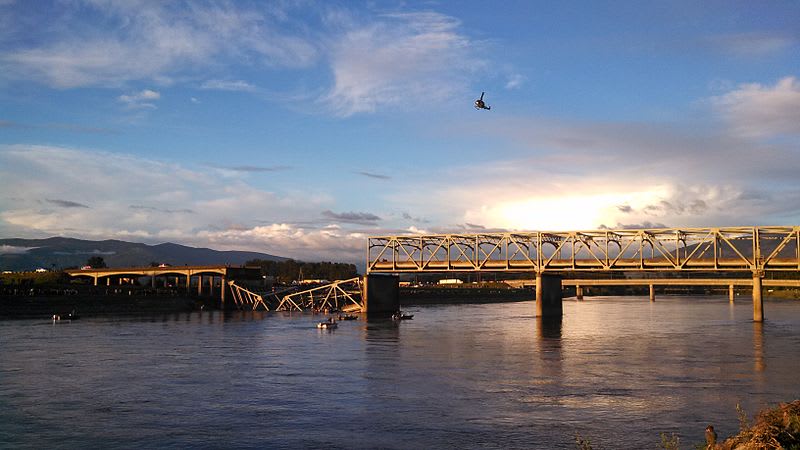
The i5 Bridge over the Skagit River collapsed after a truck hit the trusses. It's far from the first time that has happened. - Creative Commons license
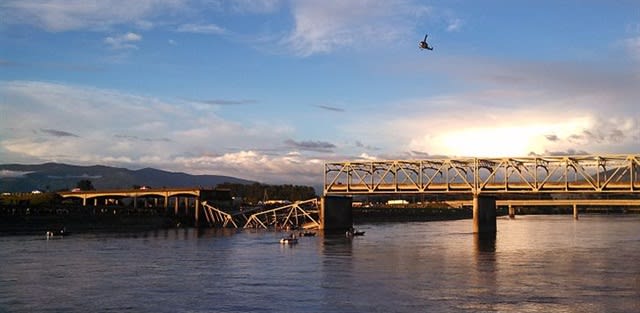
The i5 Bridge over the Skagit River collapsed after a truck hit the trusses. It's far from the first time that has happened. - Creative Commons license
The Skagit River Bridge on Interstate 5 near Mount Vernon has a history of high-load strikes dating back to the 1970s. In a great bit of investigative journalism, Associated Press reporters used Access to Public Records laws to review bridge maintenance and inspection records. Reporters found a litany of strikes, including one very similar to the impact that brought it down on May 23.
A few weeks ago, I shared a few thoughts on the collapse of the bridge caused by such a seemingly innocuous strike by a tall load. I mean, the load -- a shed for a drilling machine -- suffered hardly a scratch. The bridge, as we know, did not fare as well. In the blog, I suggested the state has a duty to mark such structures, instead it places the onus on carriers -- and drivers -- to ensure what they are hauling will fit under or through whatever lies in their path.
After reading the AP story that ran in many major newspapers earlier this week, it seems to me that the Washington State DOT has a little explaining to do.
Quoting the AP story, "By the middle of last year, an inspector identified eight different points on the bridge that had high-load damage, including some portions in which components were deformed by the impact. Then, last fall, inspectors encountered perhaps the worst damage yet: A tall vehicle travelling northbound had struck the overhead bridge structure, ripping a three-inch gash in the steel, causing three portions to distort and tearing off surrounding paint ..."
In 1985, inspectors discovered and noted damage from a high-load strike that turned out to be very similar to the damage done by the Mullen truck in late May. Maybe the bridge's luck -- and that driver's too -- had just run out. Or maybe it's that a series of strikes over the years conspired to weaken the structure. Incrementally, probably. One rivet at a time, its structural integrity seems to have been chiseled away like a beaver gnaws at a tree.
As recently as last October -- just eight months before the collapse -- officials discovered another large gash in the northbound portion of the bridge and the other damage that appeared to accompany it. Images viewed by the AP reporters showed one portion was peeling back "like a torn piece of paper and left pointing down the roadway."
What's even more amazing, is that the WDOT seemed to ignore the previous strike or simply neglected to tell anyone else within the agency of the obvious problem with the bridge. They apparently didn't even tell the people down the hall who issue permits to truckers who haul tall loads over the bridge.
"Even after that, state officials still didn't take precautions to prevent truckers from doing it again," the story notes.
To quote once again from the story, "AP found that Washington state's Department of Transportation (DOT) regularly puts detailed warnings on its trucking permits when routes are projected to encounter potentially problematic areas of low clearance. But despite the history of issues on the Skagit River bridge, the state never added warnings to permits for that span."
Mullen's lawyers will have a field day with that one.
In these days when various departments of transportation are demanding so much of the trucking industry, the performance of the WDOT is sorely lacking. Truckers have a right to expect some diligence on the state's part when it comes to issuing permits and indeed, for marking questionable clearances. A sign advising oversize loads to use the left lane would have done the trick, I think, and probably relieved the state of a huge portion of the liability in the collapse of the Skagit River bridge.
A few thousand dollars for an overhead sign or a few million for a new bridge -- not to mention the massive disruptions cause by the collapse. The evidence the Associated Press has dug up here should be a lesson to all state and federal DOT: they too have some responsibility for highway safety.
More Blog Posts

Truck Driver’s Dilemma: Click, Twist or Swipe?
Whether 'tis safer to twist a knob or press a button than to swipe right then swipe down to scan the menu for your favorite playlist...? That's a question for the age.
Read More →
Even the Swedes are Doing Turnpike Doubles
The government doesn't seem to mind asking trucking to invest a trillion dollars toward a greener future. But they won't let us pull turnpike doubles making 30% less CO2. Which is insanity, says HDT's Jim Park in his On the Road blog.
Read More →
Is Your Recruiting Message on Point?
How does your recruiting and retention messaging compare with the reality at your company? Would your drivers agree with your own assessment? Jim Park explores those questions in his On the Road blog.
Read More →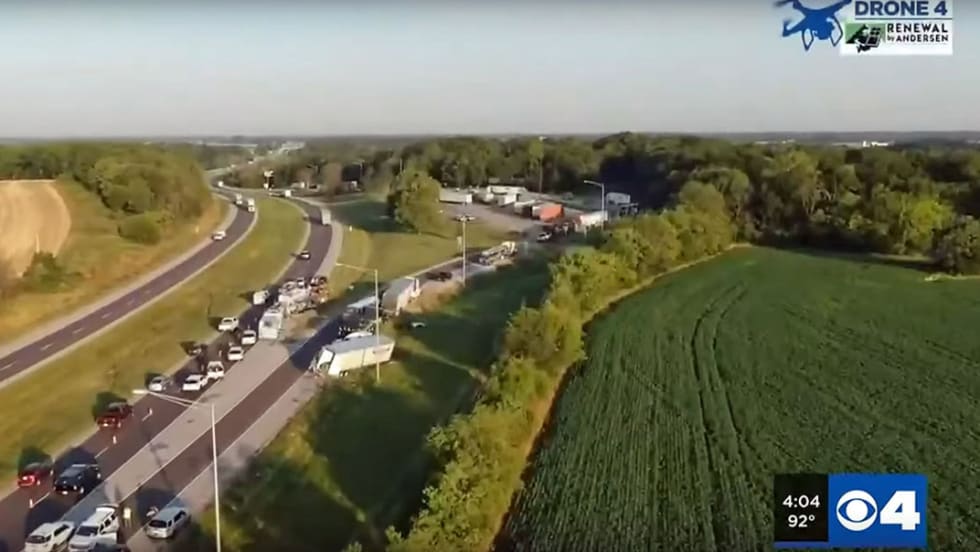
You Can’t Blame Trucks for the Highland Rest Area Bus Crash [Commentary]
The causes of the Highland Park rest area crash go far beyond the parking shortage and the need for flexibility in hours of service — but those issues must be addressed, too, says Jim Park in his On the Road blog.
Read More →
Electric Trucks Seem Far Down the Road for Fleets Dealing with Today's Maintenance Challenges
While the push for zero-emissions trucks rings clear for regulators, advocates and even a small crowd of suppliers, ZEVs seem to have run out of steam down on Main Street, says HDT Equipment Editor Jim Park in his latest On the Road blog.
Read More →
Guinea Pigs 2.0: Can Trucking Comply with a Near Impossible NOx Reduction?
The EPA’s Final Rule on NOx reduction will be incredibly difficult if not nearly impossible for trucking to comply with. Rather than endure another round of equipment failures, downtime and loss of customer faith, industry needs to rally ‘round the OEMs and seek a solution to this wrong-headed rule.
Read More →
Is Downspeeding Bad for Brakes?
Is there a connection between downsped drivetrains and increased brake wear? There shouldn’t be. Downsped fleets seeing increased brake wear are probably not letting the technology do its job, explains HDT Equipment Editor Jim Park.
Read More →
Dig for the Gold Behind CVSA’s Out-of-Service Numbers
Published out-of-service rates don’t mean much until you dig into the why. With brake problems consistently placing in two of the top five spots, maybe we’re missing something in brake maintenance, writes HDT Equipment Editor Jim Park.
Read More →
Things That Go Poof in the Night
We’re in electric-truck heydays now. But like another famous heyday, the 1849 California Gold Rush, there will be a lot fewer winners than losers, says Jim Park in his On the Road blog.
Read More →
Do Your Truck Drivers Know How to Descend a Mountain Grade?
Where do drivers learn mountain-driving techniques? It's sure not from the typical state CDL manual. Jim Park shares what he learned following a deadly 2019 Colorado crash.
Read More →