




12 Points Toward a Trucking Plan to Save the Planet
We need a plan to combat climate change. But expecting the trucking industry to bear the costs of fighting climate change all by itself is not a plan, says Jack Roberts in his Truck Tech blog.

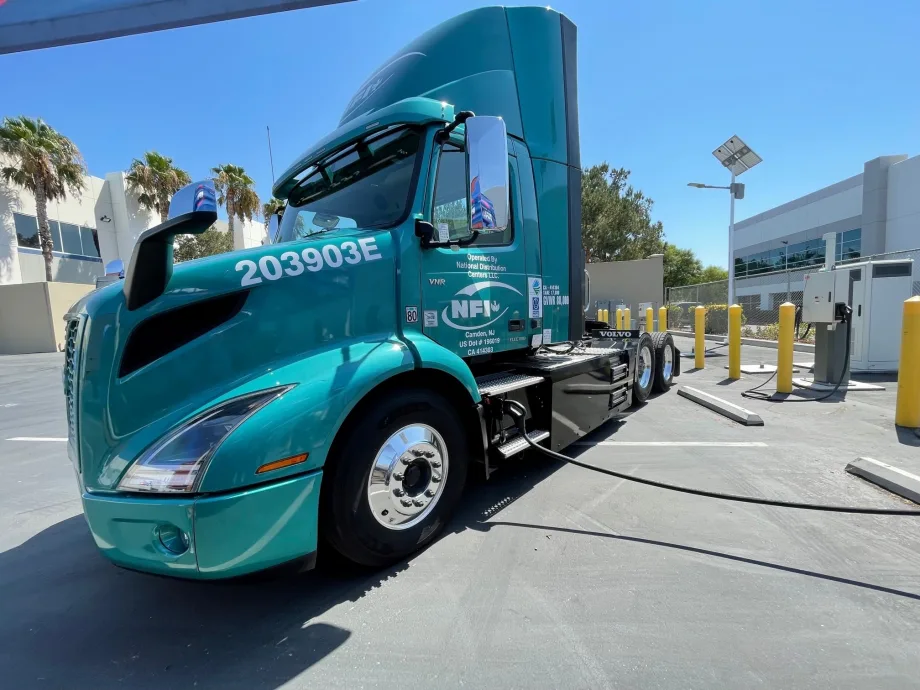
Battery electric trucks like the Volvo VNL Electric are a solid option for fleets going green. But more incentives are needed.
Photo: Jack Roberts
It was hard not to feel a little uneasy coming away from the 2023 Advanced Clean Transportation Expo this year. As I noted last month, it was impossible to ignore the sense of frustration coming emanating from the show — what I called the “Alt Fuel Impasse.”
Trucking’s move toward a net-zero future seems to be practically frozen in time. And, as the thick gobs of smoke smothering the U.S. Eastern Seaboard reminded us in early June, when it comes to climate change, time is a commodity we — as a planet — don’t have.
Yes, the smoke blanketing the East Coast was caused by out-of-control forest fires in Canada — this is one they can’t pin on diesel trucks. But climate scientists generally believe that climate change is a major factor behind worsening wildfires, as well as record droughts, unprecedented heat waves, and worsening storms. There’s no getting away from a growing sense of dread: Things are getting worse. And as Volvo Trucks North America CEO Peter Voorhoeve says repeatedly, everyone needs to do more to combat this crisis. And we are quickly running out of time.
The Planet Needs a Plan
Which brings me to the obvious conclusion: We need a plan.
I don’t mean the trucking industry alone needs a plan.
What I’m saying is we need a plan for the entire nation. We need a plan for the entire continent. We need a plan for the entire planet. And, obviously, having a sensible, realistic — and above all — executable plan for the North American and global trucking industries needs to be a vital component of that plan.
At the moment, we have a lot of plans. In fact, we have a lot of plans in place all over the planet. In the United States, we have a bizarre patchwork quilt of places where there is literally no plan at all in some states, while other states have plans so aggressive and — in the opinion of many industry observers — unrealistic that there are currently lawsuits being filed to bring them to an abrupt halt.
Unfortunately, many of these efforts to push back against unattainable goals — well-intentioned as they may be — are only fueling the public’s perception that the trucking industry simply doesn’t care about the planet, and that environmentalists will have to pry diesel engines out of their cold, dead, hands in order to stop them from polluting.
None of this is helpful. None of this is getting us any closer to taking real actions to solve the problem staring all of this in the face. The planet is literally burning up. And if we don’t act soon, it will soon be too late to act at all.
So, what I’m saying today is that we need a plan. A big, strategic plan that the trucking industry can live with. A plan that helps move not just trucking, but any industry using fossil fuels, as quickly and as painlessly as possible toward a future of net-zero carbon emissions.
But you can’t have a plan unless you set goals. In the coming months, I’ll lay out some ideas and strategies that could help trucking begin to make the most important, and momentous transition in its history. But first, let me propose a few overriding conditions that I feel must be agreed upon first.
6 Things Trucking Needs From Outside the Industry
Let’s start with forces outside the trucking industry, be they local, state or federal governments, government agencies, elected officials, environmental groups, power utilities or even the public at large. These entities must commit to acknowledging the following conditions and pledge to make them an essential component of any large-scale climate plan going forward:
A healthy, efficient trucking industry is critical for any nation’s economic and strategic self-interests.
Trucking is an absolutely essential component of a healthy, vibrant, global economy and the preservation of an effective, reliable global supply chain.
Trucking is a job- and livelihood-creator of massive proportions. Literally millions of people and families all over the planet depend on the trucking industry to feed their families and enable a better future for their children. Those jobs must be protected as much as possible during the transition to a net-zero emissions future.
Although the trucking industry serves the public good, it is not a publicly owned service. The trucking industry is made up of businesses. And it is unreasonable and unfair to expect trucking companies and fleet owners to cut already-tight margins bearing the costs of saving a planet we all live on.
Understand that — like it or not — we have no choice but to continue burning diesel fuel in diesel engines for years to come.
Admitting that the current electric and hydrogen infrastructure issues preventing the mass-adoption of zero-emission commercial vehicles are too massive and expensive for the trucking industry to fund and implement all by itself.
6 Things the Trucking Industry Must Do
Now, what should those entities expect from the trucking industry in return for acknowledging those conditions and using them as a framework to develop a viable plan to move the industry toward a net zero future?
Issue a full-throated acknowledgement that the climate crisis is real and must be dealt with as quickly as possible.
A commitment to support and use cleaner-burning engines and alternative fuels in any way possible during the transition period.
An agreement to support and use hybrid-electric powertrain technologies with diesel and gasoline powertrains to further reduce carbon emissions.
An agreement to support the development and mandated use of cleaner-burning fossil fuels.
A commitment to transition to zero-emissions trucks in appropriate applications as soon as economically feasible.
A commitment to get older diesel trucks, which pollute at unacceptable levels, off the roads as soon as possible.
Now, the question is, can we get concerned parties — from the EPA and CARB down to some small trucking firm running dump trucks outside of Belzoni, Mississippi — to agree to those conditions? If so, I believe we’d have a solid framework in place to move forward on a much larger, more effective emissions reduction plan. Moreover, this would be a realistic plan. A plan that, instead of treating an entire industry like villains, would acknowledge its strategic and economic importance and the fact that people in it have families and employees of their own to support.
We need a plan if we’re going to save this planet. And telling an entire industry, "You need to go out and spend a shit-ton of money, and don’t expect anything in return," is not a plan.
We all need to work together to solve this existential crisis facing our planet. And reaching a compromise and understanding on the points I’ve outlined above would be an ideal place to begin putting that plan together.
More Blog Posts

That Time Mack Trucks Threw Me a Birthday Party
Sometimes the best birthdays are the ones you never planned. Mine happened courtesy of one of America's oldest truck manufacturers, and it reminded me why I still love this industry after more than three decades.
Read More →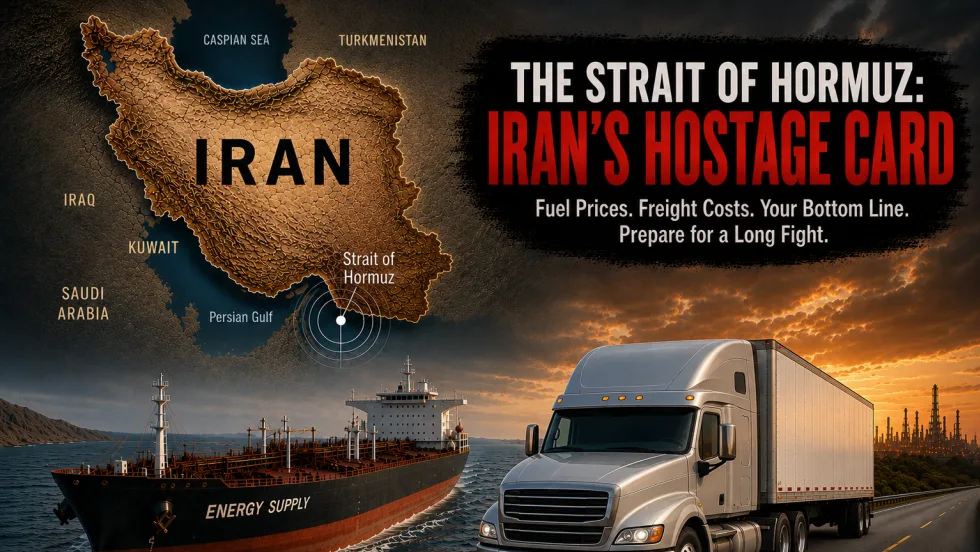
Trucking Should Prepare for Long Siege of High Fuel Prices
Many in trucking are treating today's fuel-price surge as a temporary disruption. History suggests they may be making a costly mistake.
Read More →
30 Days on the Road: April 2026
There was a glut of good news for the North American trucking industry. HDT's Jack Roberts takes a look back at our major stories from the month.
Read More →
30 Days on the Road: HDT's Monthly News Roundup for March 2026
HDT's Monthly News Roundup takes a look at the major North American trucking industry news stories from March, 2026.
Read More →
The Major Autonomous News No One is Talking About
Both Aurora Innovation and PlusAI have made under-the-radar announcements that signal a massive game-changer for trucking is coming soon.
Read More →
HDT's Monthly News Roundup: February 2026
February was dreary and dull -- as usual. But the North American trucking industry finally showed some signs of life. But how long that will last is anybody's guess.
Read More →
Like it or Not, The New Year is Here!
HDT's Monthly Trucking Newsletter looks back on the top stories from January, 2026.
Read More →
The Robots are Here
After a bruising year for trucking, CES 2026 felt subdued. Until it suddenly offered a glimpse of trucking's next disruption and reminded everyone that technology never waits for the next freight cycle.
Read More →
Robots and Road Rage
Computers never get angry. And that's a good thing on crowded stretch of interstate.
Read More →
For the Love of Old Trucks
Old trucks generally get ignored in classic car circles. Maybe that's changing.
Read More →