




"Fleets need good, hard data verifying that new technologies or procedures are going to benefit their bottom line"
Why U.S. Xpress is Getting Help With Fuel Economy Testing
U.S. Xpress hosts a fuel-economy test of the latest high-mpg tractors as the Canadian engineering-consulting firm moves to help American fleets protect their bottom lines.
by Jack Roberts, Contributing Editor
November 8, 2016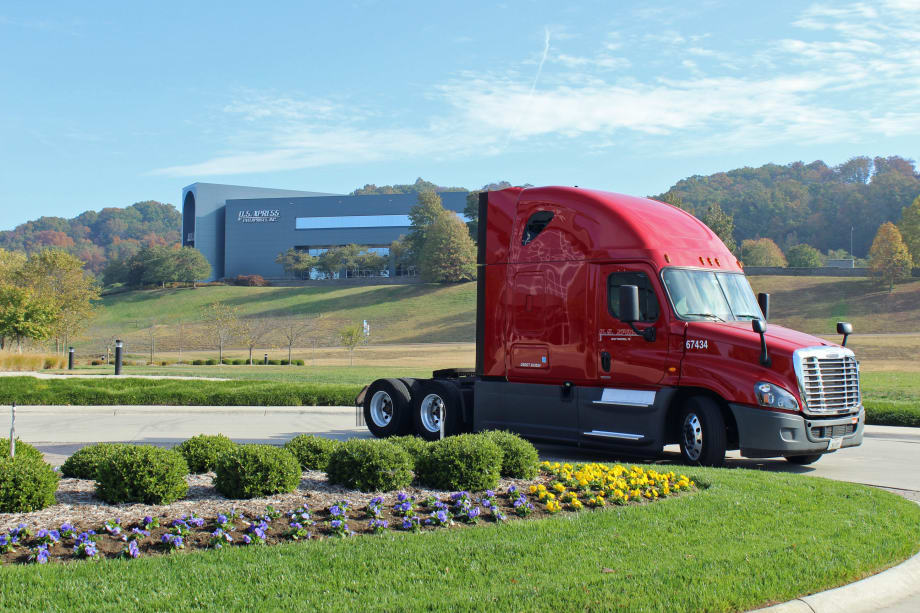
4 min to read
"Spec'ing a truck today is a science," Dwayne Haug says bluntly. "If you just go to a dealer and pick one off the lot, you're doing it wrong."
Haug ought to know what he's talking about. He's a Technology & Maintenance Council Silver Spark Plug honoree who started at a small, Midwestern fleet in 1972 and eventually spent 26 years at Werner Enterprises. Today, Haug is a private fleet consultant who is helping The Pit Group, a Canadian-based engineering and consulting firm, make its first inroads in the U.S. Pit is working with American fleets to test and verify emerging powertrain, fuel efficiency and safety technology, as well as trucking-specific best practices both in the shop and in the cab.
"We're on the cusp of a whole new era in trucking," Haug explains. "Everything is changing. And nothing can be taken for granted. Fleets need good, hard data verifying that new technologies or procedures are going to benefit their bottom line. And the Pit Group are specialists when it comes to helping its fleet members identify ways to run better and boost their bottom line."
"You have to remember that fuel is $4 a gallon in Canada today," explains Yves Provencher, director of the Pit Group. "Many U.S. fleets became very technology focused a decade ago when prices shot up suddenly."
Provencher says that, to a degree, that interest faded over the past few years as fuel prices fell to more manageable price points. "But in Canada, $4 is our everyday reality," he notes, explaining that Pit goes back to 1975. "In 2008 the Canadian trucking industry asked us to help them identify and verify new technologies and best practices so they run more profitably."
The Pit Group is a non-profit, member-driven organization with a team of ready-to-travel engineers. The organization has the ability to carry out verification tests in remote, real-world or track conditions, as well as perform cold room and laboratory testing with the newest equipment and sensors.
Provencher says the group sees itself as a "hub" between technology providers and fleet managers, with a goal toward developing, testing and accelerating the implementation of safe, sustainable and efficient trucking technologies.
The Pit Group is currently working with more than 50 Canadian and U.S. truck fleets. Since 2007 it has conducted 16 different testing campaigns examining approximately 300 technologies and best practices for a price tag of over $3 million.
"Our fleet members set our agenda," Provencher adds. "We have advisory meetings, and they tell us what technologies or practices are important to them and need to be investigated. So we are always working in their best interest."
U.S. Express hosts Tunnel Hill Fuel Test
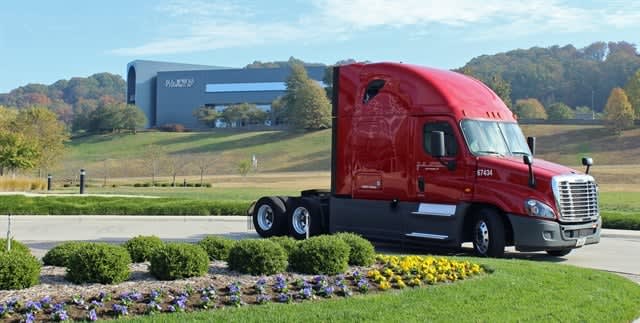
One Pit Group member is Chattanooga, Tennessee-based U.S. Xpress, which this week is hosting a Pit Group Class 8 tractor fuel test out of its Tunnel Hill, Georgia, fleet facility. The test involves nine brand-new, tractors including Peterbilt Model 579s, Kenworth T680s, Navistar LTs and both conventional, and next-generation Freightliner Cascadias.
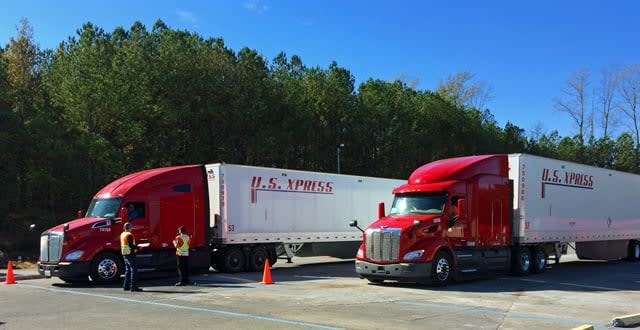
Gerry Mead, U.S. Xpress' senior vice president of maintenance (and a 2016 HDT Truck Fleet Innovator) happily prowled the floor of his shop at Tunnel Hill earlier this week as his techs swarmed over the tractors, preparing them for their 52-mile runs to determine which tractor will turn in the best fuel economy numbers at the test's conclusion.
"This a big deal and I'm like a kid in a candy store," Mead said, gesturing to the Navistar LT behind him. "We had Navistar President Bill Kozek personally sign off on getting this new tractor down here for this test. They've got a lot of confidence in the design and they're anxious to show off its performance. And they understand that the Pit Group is the perfect organization to accomplish that goal."
Provencher says the carefully controlled test will follow TMC's Type III Fuel Consumption Test Procedures on a 52-mile course on both highways and local roads. Drivers will be rotated through the vehicles carefully to eliminate as many variables as possible, eventually winnowing the nine trucks down to three finalists, with a winner declared by week's end.
Each truck is fitted with a 36-gallon temporary fuel tank fitted behind the tractor's cab. The tanks are filled carefully to account for heat and humidity ahead of the run. Upon returning to the Tunnel Hill shop, the tanks are removed and weighed on highly sensitive scales to determine the precise amount of remaining fuel.
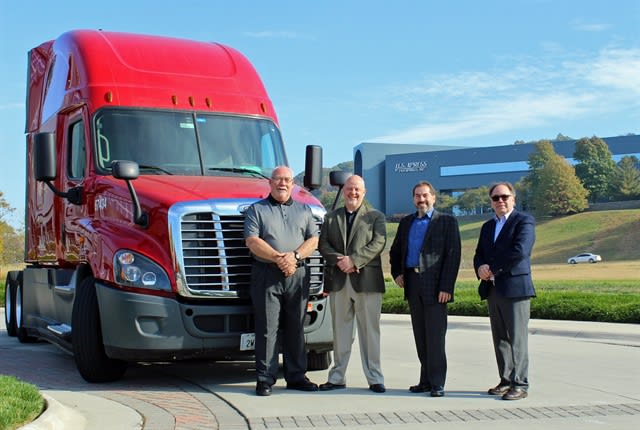
Haug notes that most big fleets today carry on their own testing. "And that's good. But Pit Group can really reinforce those findings and add an extra layer of confidence to your operations," he says. "The more information you have, the smarter you can spec your trucks and run your fleet. And because our findings are ultimately rooted in the return on investment, you can be confident that the money you save goes straight to your bottom line."
It's an approach that Mead finds appealing. "Like most carriers, U.S. Xpress takes fuel economy seriously, and we believe this test will help validate the decisions we've made about our equipment," Mead says. "Using a proven process and a certified, highly experienced team from Pit Group will provide us with solid fuel test results on fuel economy, and we're looking forward to seeing the results."
Subscribe to Our Newsletter
More Fuel Smarts

How Volvo Updated Its D13 for EPA 2027 [Watch]
Volvo’s updated D13 promises lower emissions without sacrificing performance or fuel economy. Take a closer look at what changed inside the engine in this HDT Spotlight video.
Read More →
Diesel Price Spike Shortens Payback for Natural Gas Trucks, Report Says
Energy Vision estimates fleets could recover the higher purchase price of an RNG-fueled Class 8 tractor in 1.3 to 2.8 years under current fuel-price scenarios.
Read More →
Calstart Becomes Catalyst Mobility, Reflecting Broader Focus
Calstart is now Catalyst Mobility, reflecting the nonprofit’s growing national role in clean transportation, including zero-emission trucks, infrastructure and incentive programs.
Read More →

Record Diesel Prices Squeeze Trucking Fleets
Average U.S. diesel prices have climbed to nearly $6 a gallon, surpassing the 2022 record as tight refinery capacity and Middle East disruptions keep fuel costs elevated.
Read More →
Sponsored•September 9, 2026
How Fuel Delivery Shapes Engine Performance
Fuel delivery depends on more than what happens at the injector. For fleet, maintenance and technical professionals, looking at the full path from pump to injector can provide useful context for understanding engine performance.
Read More →
East Coast Port Launches $45M Electric Truck Push
The Port Authority of New York and New Jersey announced millions in incentives for zero-emission drayage trucks, yard tractors, and new charging hubs near the port.
Read More →
California Bill Could Shed Light on Electric Truck Prices
Why do battery-electric Class 8 trucks remain so expensive? A California bill headed to Gov. Gavin Newsom would give fleets and state agencies more visibility into what manufacturers charge.
Read More →
Detroit Opens Orders for EPA 2027 Engines
Detroit isn’t starting from scratch to meet EPA 2027 diesel emissions standards. Its Gen 6 DD13 and DD15 engines keep much of today’s platform while updating the fuel and aftertreatment systems.
Read More →
Zero-Emission Truck Corridor Planned for West Coast
California, Oregon, Washington, British Columbia and Baja California are coordinating plans for truck charging and hydrogen fueling from Canada to Mexico.
Read More →
A Closer Look at Kenworth’s Electric T880E Vocational Truck [Video]
Learn more about Kenworth's T880E battery-electric vocational truck at the Paccar Technical Center, including its range, applications, upfitting considerations, and PTO options, in this HDT Spotlight video.
Read More →