




Why One Company Bucked the Traditional LTL Model
Freight claims are a headache for both shippers and carriers. Hercules addressed the issue of claims for less-than-truckload shipments by chucking out the typical LTL breakbulk/hub-and-spoke model.

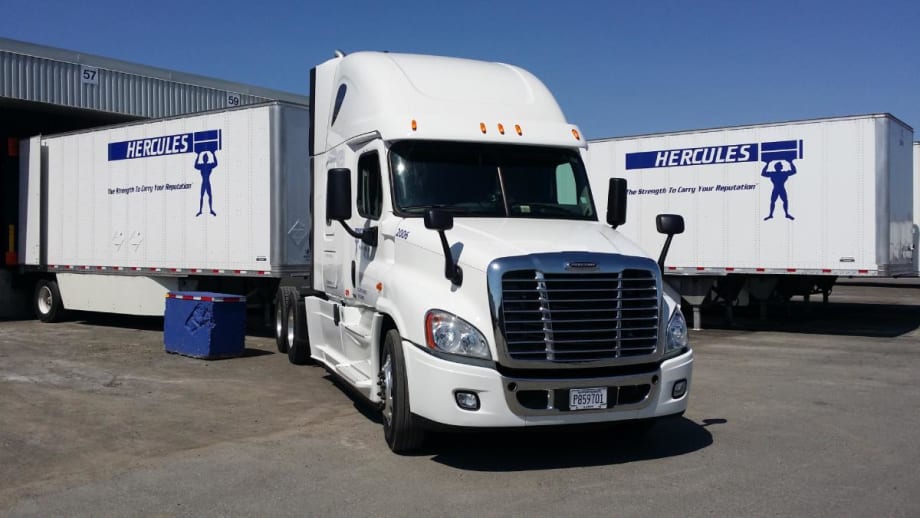
Hercules’ no-breakbulk structure provides faster transit times and less damage compared to LTL carriers that make multiple stops when transporting a load.
Photo: Hercules
Freight claims are a headache for both shippers and carriers. Hercules addressed the issue of claims for less-than-truckload shipments by chucking out the typical LTL breakbulk/hub-and-spoke model.
The company is a fast-growing less-than-truckload motor carrier and customs brokerage, specializing in U.S.-to-Canada and intra-United States shipments.
Hercules’ "no breakbulk" structure allows for nonstop shipments, reducing opportunities for damage by limiting the number of times freight is handled, as well as reducing transit times.
“Claims are a shipper’s worst nightmare,” says Lorenzo Marrone, logistics manager for Hercules’ longtime customer Fleurco.
“It upsets the client for not getting their goods on time, it upsets the carrier as it reduces profitability, and it strains the shipper’s inventory,” he says.
“In nine years of working with Hercules, we’ve only had one claim. Whenever I use other carriers, we have a large number of claims per year,” says Marrone.
Fleurco specializes in high-end shower glass doors and other products for creating dream bathrooms and has been shipping with Hercules for more than a decade.
“Our products are fragile and need proper handling,” Marrone says. “Hercules travels from one terminal to the end destination versus every other common carrier that stops multiple times to get to one little location. Less handling means less damage.”
Hercules' Beginnings: Capitalizing on a Niche in Trucking
Hercules got its start in the early 1980s when it saw a niche it could capitalize on, explains Marie-Christine Bourque, the Hercules account manager who works with Fleurco.
At the time, there was no carrier that was doing cross-border where it was just a single carrier, she says.

When your business involves creating fragile freight such as shower doors, claims can be a big problem, says Lorenzo Marrone, logistics manager for Hercules’ longtime customer Fleurco.
Photo: Fleurco
“It was either a Canadian carrier giving to a U.S. carrier or the opposite. And that's how Hercules saw a niche.”
For example, she said, Hercules might pick up in California and go to Vancouver with a switch in Seattle – but it was just the driver that switched. The trailer continued on, rather than freight being unloaded at a cross-dock facility and loaded into another trailer for the next leg of the journey.
“Very quickly, we realized that much, much, much less damage was happening.”
Big electronics makers became interested because traditional shipping was resulting in a lot of damaged televisions.
On top of that, faster, more consistent transit times have allowed for better on-time delivery, improving customer satisfaction while reducing fines associated with late deliveries. Hercules’ no-breakbulk structure consistently provides faster transit times compared to other LTL carriers that make multiple stops when transporting a load.
A Long-Lasting Partnership Helps Shipper and Carrier Grow
In 2014, Fleurco chose Hercules to transport LTL loads from its New Jersey distribution center to its Montreal facility.
Marrone explains that at the time, the advent of mandatory electronic logging devices was making it hard to find carriers to serve its distribution centers in New Jersey, Chicago and Los Angeles.
“Hercules, luckily for us, had centers in all three locations for us. And when we heard about the driver switch, instead of terminal switches and unloading of products… The more handling, the higher risk of damage you have. We found this to be a perfect fit.
“So we worked out where we can give them about 30 feet of freight every day to go to different terminals. And it's worked out great for both of us.”
FLEET SNAPSHOT
Who: Hercules
Where: Vernon, California, and New Westminster, British Columbia
Fleet: More than 1,000 pieces of equipment
Operations: No-breakbulk less-than-truckload
Fun Fact: Claim ratio is just .0026.
Opportunity: Filling a cross-border less-than-truckload niche that doesn’t use traditional breakbulk LTL strategies.
From there, the two companies grew together.
From a single lane, Fleurco expanded the partnership to include distribution to its facilities and customer locations in California, Illinois, Texas and the Pacific Northwest.
“The way we operate, we don't know how much space we're going to need the following day till 2:00 the day prior,” Marrone says. “Working with Hercules it's like okay, by 2:00, we promise to tell you how many feet we’re going to need so they can do their planning, too.
“Everything just meshed well, for us to grow within their business model.”
But Bourque says Hercules has been conservative in its growth.
“In order to keep our no-breakbulk structure, we need to grow more terminals. But we do it at a pace where we're not in debt.”
Marrone says Fleurco doesn’t have to go shopping for carriers these days unless it needs more than 30 feet.
“Otherwise, the operation is so streamlined that we don't have to worry about the import-export part of it.”
More Fleet Management

Color Match Smarter: Tools That Restore & Perform
For fleet managers and collision repair professionals keeping heavy-duty trucks on the road, getting the color right the first time isn't just about appearance — it's about efficiency, turnaround time, and bottom-line results. Discover how today's digital color tools are transforming the repair process from guesswork to precision.
Read More →
FMCSA Pauses Biennial-Update Enforcement Amid Motus Transition
Carriers whose updates were due on or after June 1 have more time, while FMCSA works to stabilize its new registration system and warns of phishing sites impersonating its new carrier registration system, Motus.
Read More →
2026 Blueprint for Countering Smarter Supply Chain Theft
Cargo theft is no longer just the cost of doing business. It's a multi-billion-dollar criminal enterprise exploiting vulnerabilities across your fleet, drivers, and supply chain.
Read More →


How Telematics Improves Visibility, Control, and Performance in Refrigerated Fleets
Explore how telematics help refrigerated fleets improve visibility, uptime, efficiency, compliance, and cargo protection across connected cold chain operations.
Read More →
What the U.S.-Canada Trade War Means for Trucking
Escalating U.S.-Canada tariffs could disrupt cross-border freight, reduce truck volumes, raise costs, and create new uncertainty for carriers on both sides of the border.
Read More →
What Are Trucking’s Top Concerns for 2026?
The American Transportation Research Institute wants to know what's worrying trucking fleet managers, drivers, and other stakeholders in its annual Industry Issues survey.
Read More →
American Trucking Associations Looks for a New Leader
ATA President and CEO Chris Spear abruptly left his job at the association on August 21, at a pivotal time for the trucking industry.
Read More →
Public Wi-Fi Cybersecurity Risks: How Truck Drivers and Fleets Can Protect Their Data
Public Wi-Fi can expose truck drivers and fleets to credential theft, malware, and other cyber threats. Here’s how to reduce the risk on the road.
Read More →
For Nicky Cupp, Fleet Innovation Starts With Frustration
HDT Truck Fleet Innovator Nicky Cupp turns everyday pain points at Fraley & Schilling into opportunities for better technology and smarter processes.
Read More →
Adam Buttgenbach’s Approach to Electric Trucks: Start With Where They Fit
HDT Truck Fleet Innovator Adam Buttgenbach helped PepsiCo build one of North America’s largest EV fleets by focusing on where electric trucks make operational sense.
Read More →