



How Can Trucking Fleets Keep the Best Drivers?
Why Do Truck Drivers Leave — Really?
Invest in Truck Drivers’ Lives to Improve Retention
 MENU
MENU SEARCH
Drivers change jobs for many different reasons. But money and quality of life tend to be the main issues they leave fleets.
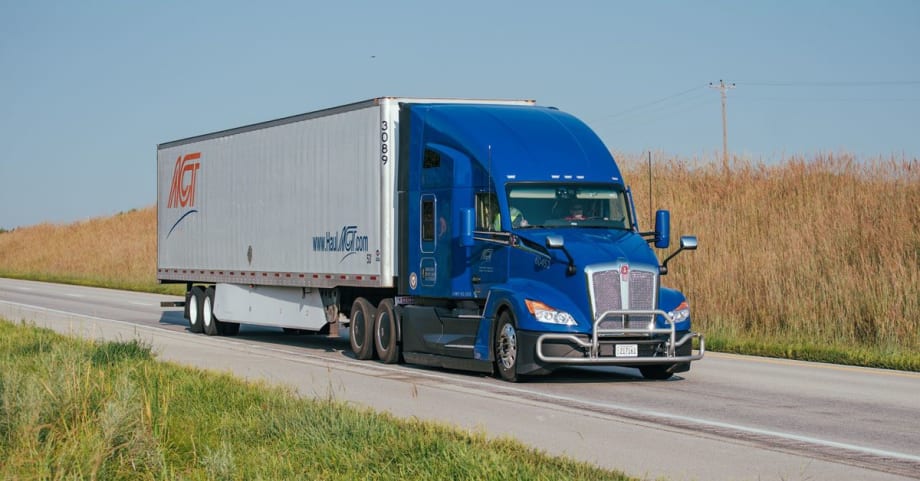
It can be hard to pinpoint why drivers leave fleets. But several factors are usually in play.
Photo: ACT
Each year as part of the Best Fleets to Drive For process, fleets are asked if they have investigated driver turnover and what they have found.
Some answers are more common than others, yet some of the main answers drivers give may not truly explain why drivers are leaving for other companies.
Every single year fleets report drivers say they are leaving for local jobs — quitting over-the-road or long-haul jobs to work locally, says Mark Murrell, co-founder and president of CarriersEdge, which administrates the Best Fleets to Drive For program. But he wonders if that is true.
“I think it's a cover,” he explains. “I think people say that because it’s the kind of thing that you can say that nobody's going to follow up on.
"If you say, ‘I'm going to the carrier down the street,’ people are going to follow up on that and try and convince you otherwise, try and get you to stick around. But if you say you’re going to a local job, the OTR carrier is not going to be able to do as much about that.”
When drivers leave, they usually already have another job lined up, or several. It’s common for drivers to accept positions at multiple companies and then only show up to one of them.
Some drivers leave for more money — or so they say. But things are not as clear-cut as that explanation would suggest, Murrell contends.
“I would argue that nobody quits a job for pay. And some of the best jobs in the world don’t really pay that much, relatively speaking,” he says.
“You quit a job because the pay is bad and lots of other things are bad, too. But you will take a job with lower pay if there’s tons of opportunity, you're going to enjoy the work, and there’s a lot of other positives to it.”
In trucking, he says, most companies have similar pay and benefit packages, so the issue is what else is a company doing. The combination of pay and other things must balance.
The economy can come into play, as well. Murrell says retention numbers tend to be higher when there is a bad freight market and companies are shrinking the size of their fleets. In that economy, drivers are not moving from one company to another as much.
Look at that in comparison to two years ago when people were leaving carriers to buy trucks and get into the record-hot spot market. It was like a gold rush effect.
“We will see trends shift depending on the state of the economy,” he says.
“But as long as the industry continues to focus on hiring based on pay and based on getting someone in that seat fast rather than finding the right fit, you’ll continue to see turnover high, because you’re going to end up with the wrong people in the seats.”
When a driver feels like the job is not a good fit, the problem often stems from recruiting.
“People are getting hired into the wrong positions,” Murrell says. “So much of what the industry does is focus on filling the seats quickly, getting a driver into that truck fast, and getting them on the road. They don’t take the time to figure out if this person is really a fit.”

The company may not take the time to fully explain to a driver what is expected of him or her, and when there’s a mismatch between that and what the driver is expecting, it can lead to driver dissatisfaction.
For instance, during recruitment, drivers usually ask how much money they can make. But once they are out on the road, they may be surprised by the effort it will take to reach the income they want.
The lifestyle may not be what they expected, or it may not be the kind of freight they want to be hauling.
“Those kinds of mismatches end up with somebody leaving,” Murrell says. “Sometimes it’s quitting within the first 90 days, sometimes it’s six months, sometimes it's about a year before they make a decision. But it ends up just being a mismatch in the type of work the person wants to do.”

Fleets have more visibility into truck health, safety events, and driver activity than ever. The next challenge is turning all that information into useful guidance for the person who has to decide what to do next.
Read More →
Federal regulators also are targeting more than 160 additional training providers and launching a nationwide audit of third-party CDL skills testers as part of a broader crackdown on trucking fraud.
Read More →
Two pilot programs could eventually reshape hours-of-service rules, giving truck drivers options to pause their 14-hour clock or use longer split sleeper rest periods.
Read More →
Medical-card violations jumped to the top of the driver out-of-service list during CVSA’s 2026 International Roadcheck, while English-language proficiency violations appeared among the leading violations for the first time.
Read More →
New Teletrac Navman research suggests that onboarding, transparency about driver data, and positive feedback can play a significant role in how commercial drivers respond to safety and coaching technology.
Read More →
KLLM is facing a federal sex-discrimination lawsuit over policies the EEOC alleges put female truck driver trainees at a disadvantage.
Read More →
By changing regulations on English-language proficiency requirements for commercial drivers, rather than relying on a guidance memo, the FMCSA said future administrations won't be able to walk back the Trump administration's stricter enforcement with just a memo.
Read More →
Watch to get an inside look at the Western Star trucks, technology, and community behind the Star Nation Experience 2026!
Read More →
The Freedom Haulers program pulls together existing and expanded programs at several federal agencies to recruit veterans to drive commercial heavy-duty trucks and cut the red tape for them to get a CDL, training, and employment.
Read More →
A test drive of Mack’s Command Steer active steering system evaluates how it can make truck driving easier and less tiring.
Read More →