




Where Did the Hours of Service Rules Come From, Anyway?
How the hours of service rules for truck drivers ever became a safety regulation is a question that has vexed many in the industry.


HOS rules were created in 1930 and would remain fundamentally unchanged until 1995, when Congress directed the DOT to establish a new set rules incorporating the latest scientific understanding of human fatigue and alertness.

HOS rules were created in 1930 and would remain fundamentally unchanged until 1995, when Congress directed the DOT to establish a new set rules incorporating the latest scientific understanding of human fatigue and alertness.
How the hours of service rules for truck drivers ever became a safety regulation is a question that has vexed many in the industry. The rules came into being in the 1930s as a combination of labor and economic regulation intended to bring some stability to the nascent trucking industry, and to protect workers from overly demanding employers. There were few rules to speak of at the time, and little was known scientifically about fatigue, sleep, driver performance, or crash causation.
The earliest regulations requiring rest for truck drivers, circa 1935, allowed drivers to work 12 hours within a 15-hour period while requiring nine hours of rest and three hours of breaks within a 24-hour day. That rule also established a weekly maximum of 60 hours on-duty over seven consecutive days. Sound familiar?
A few years later, organized labor petitioned trucking’s regulator, the Interstate Commerce Commission, for a reduction in the hours drivers were required to work, proposing an eight-hour daily limit and 48-hour weekly limit. The ICC, lacking any specific knowledge on the matter, asked the U.S. Public Health Service in 1938 to investigate truck driver hours of work. The resulting report was not very conclusive, but it did note, “... a reasonable limitation of the HOS would ... act in the interest of highway safety.”
The rules would not change substantially until 1962, when the ICC eliminated the 24-hour framework and replaced it with a rotation that allowed the driver to drive up to 10 hours within a 15-hour period before being required to take eight hours off. The net effect allowed the work/sleep rotation to slip to as short as 16 hours. This meant drivers could get across the country in fewer days, but they would find themselves with no hours left in their 60-hour, seven-day cycles within five or six days.
The split sleeper-berth provision was added in the mid-1960s, which allowed drivers to split their sleeper time into two periods. This meant some would log formerly “clock-running” on-duty time as sleeper time, regardless of whether they were in the sleeper resting or not.
By the late 1960s, as highways grew more crowded, the number of truck crashes was rising, and several safety groups began calling on government to do something to prevent the carnage. They claimed truck driver fatigue was at the root of many crashes and called for changes to the drivers’ HOS rules. This prompted the first scientific analysis of driver fatigue. Three studies would be conducted in the 1970s that did note a causal relationship between fatigue and truck crashes, but the results were not conclusive enough to justify changes proposed in 1979 by the U.S. Department of Transportation.
The HOS rules would remain fundamentally unchanged for almost 60 years until 1995, when Congress directed the DOT to establish a new set of HOS rules incorporating the latest scientific understanding of human fatigue and alertness. DOT published a new rule in 2003 that, again, merely tweaked the rule.
Those, and subsequent changes to HOS up to the present, have statistically done little to lower truck crash rates. While many in the industry complain that they did succeed in limiting trucking’s productivity and drivers’ ability to rest when they needed to rest, critics say the rule changes have not addressed the suspected problem of truck driver fatigue as it relates to crashes and to driver well-being.
Depending on which of the fatigue experts you believe, the various HOS rules developed over the past 80 years have increased driver fatigue while limiting opportunities for rest, have increased drivers’ alertness but could still be improved upon to reduce crashes, or, have done little to meaningfully reduce truck crash rates.
More Safety & Compliance
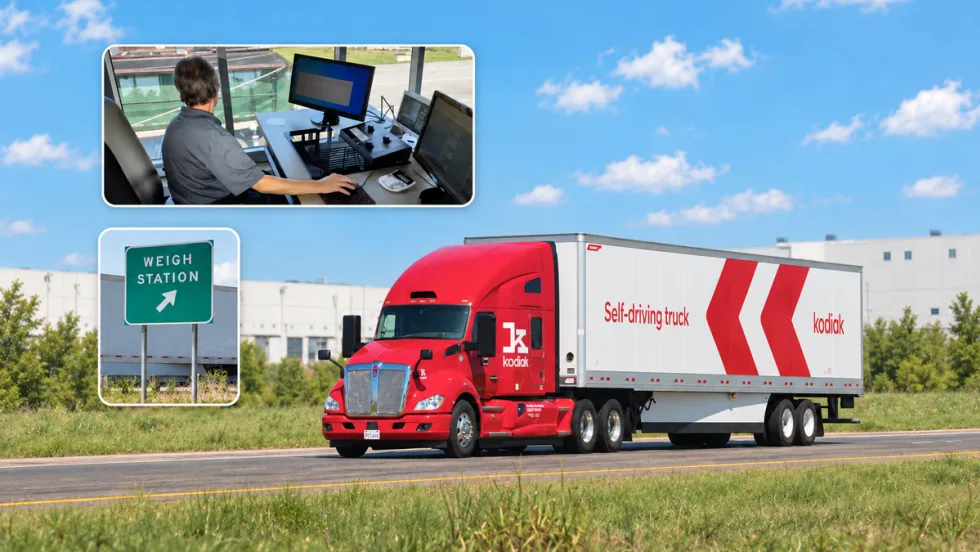
PrePass, Kodiak Connect Driverless Trucks to Roadside Enforcement
The system will allow enforcement agencies to verify Enhanced Inspection information and decide whether Kodiak’s autonomous trucks can bypass roadside screening sites.
Read More →
From One Generation to the Next: How Mentorship Builds Safer Truck Drivers
After three decades in trucking, Harold Perry shares what he's learned about driver safety, mentorship, and helping the next generation build confidence behind the wheel.
Read More →
FMCSA Pauses Biennial-Update Enforcement Amid Motus Transition
Carriers whose updates were due on or after June 1 have more time, while FMCSA works to stabilize its new registration system and warns of phishing sites impersonating its new carrier registration system, Motus.
Read More →
ZF Expands Commercial Vehicle Push in North America
ZF is expanding its North American commercial-vehicle presence with new transmission applications, electrification, trailer technology and autonomous-driving systems.
Read More →
Truck Drivers Need More Than Another Alert
Fleets have more visibility into truck health, safety events, and driver activity than ever. The next challenge is turning all that information into useful guidance for the person who has to decide what to do next.
Read More →
Tesla Wants a Self-Driving Semi. Are Cameras Enough?
Could Tesla’s camera-only autonomous driving technology work on an 80,000-pound Semi? In this commentary, HDT's Deborah Lockridge takes a look at Tesla, Cybercab, and how autonomous trucks see the road.
Read More →
What DOT’s Automated Vehicle Strategy Means for Trucking
The U.S. Department of Transportation issued a new automated-vehicle strategy that outlines plans for driverless-truck regulations, cross-state freight corridors, and federal safety standards.
Read More →
NYC Expands Speed, Pedestrian Safety Tech Across Fleet
New York City is expanding intelligent speed assistance and pedestrian-alert systems across its municipal fleet, moving the technologies from pilot programs into vehicle procurement and retrofit requirements.
Read More →
FMCSA Removes 110 Truck Driver Training Schools from Certified ELDT List
Federal regulators also are targeting more than 160 additional training providers and launching a nationwide audit of third-party CDL skills testers as part of a broader crackdown on trucking fraud.
Read More →
Beyond DOT Compliance: What Makes a Trucking Fleet Truly Safe?
A trucking fleet can follow every rule and still make unsafe decisions. The real test comes when safety conflicts with freight, productivity, or cost.
Read More →