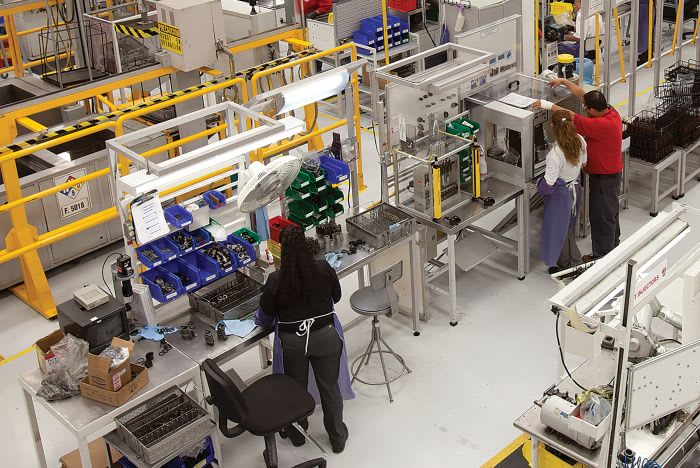
Electronics have added complexity and driven the reman industry to invest more in technician training and special equipment.Photo: Cummins
7 min to read
Electronics have added complexity and driven the reman industry to invest more in technician training and special equipment.Photo: Cummins
The increasing complexity of today’s heavy-duty diesel engine has added complexity to the remanufacturing process.
Ad Loading...
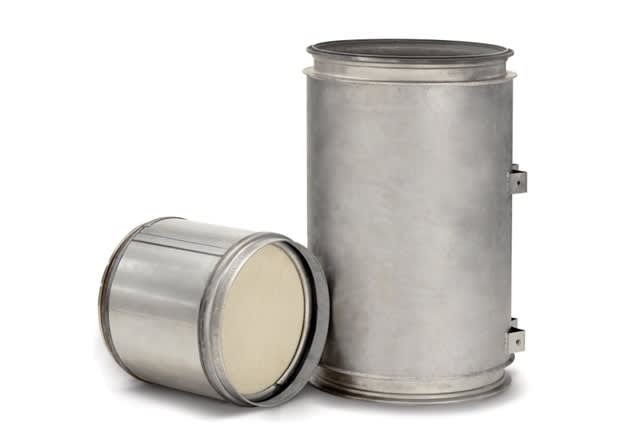
Stringent tolerances and finishes for components such as high-pressure fuel pumps, exhaust gas recirculation valves, diesel particulate filters, diesel exhaust fluid pumps and after treatment devices require “significant investments in state-of-the-art equipment,” says Amanda Snyder, vice president, engineering and business development, Detroit Reman.
The basic engine remanufacturing process hasn’t changed, she notes. “It involves disassembling cleaning, testing and recovering components or replacing them with new parts, as needed.” What has changed is the testing process, which now requires more sophisticated methods.
Ad Loading...
Clay Conn, production manager at U.S. Diesel Remanufacturing LLC, agrees that the complexity of engines has changed the process in many ways. The company had to adapt its assembly rooms. “What was considered a clean room for engine assembly is no longer clean enough to be assembling anything that is Tier 4 emissions,” he explains. “Very small particles, even as small as 20 microns, can be known to create issues in the newer fuel systems.”
He adds that assembly rooms have to be cleaned and maintained in a meticulous fashion, which he considers to be on par with most doctors’ offices.
Another way the reman process has changed, according to Conn, is in the machining process. “Tolerances are becoming a lot tighter on the newer engines. The honing process for the cylinders requires special plateau finishes that make it so the engines no longer have a break-in period. The second you turn the key on, your new engine is broken in and meeting the required emissions. These different finishes and tighter tolerances have required us to update a lot of our machines,” he says.
Investment in technicians is needed as well. “There is a lot less margin for error when it comes to handling and assembling the components in the newer engines,” Conn says. He believes that vocational or technical trade school training is not enough to train technicians properly. “We need to hand pick technicians and then further train them in the specific area where expertise is needed,” Conn says. “Every technician involved in the process needs to be very meticulous, and pay close attention to detail 100% of the time.”
However, the remanufacturers themselves are not the only ones who need to make changes. “Parts suppliers have had to adapt their technologies as well to keep up with the tighter tolerances and changing material compositions that are required for the newer/lower emissions engines,” Conn explains.
Ad Loading...
According to Stanford Siy, heavy duty Recon engine product manager for Cummins, the complexity of engines means remanufacturing capability has become less replicable and more specialized, pushing OEM engine remanufacturers to invest in more technology.
He says that if non-OE engine rebuilders don’t also invest in new technology, the gap between rebuilt and remanufactured products will likely widen. “There is a need to keep customers well educated on the differences between [rebuilt and remanufactured] to help them understand the implications of the choices they make and the expectations they have about one type of repair over a genuine remanufactured product.”
Electronics changing the game
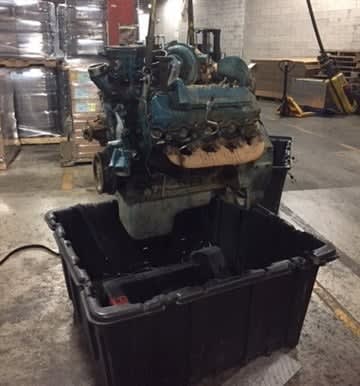
The remanufacturing process starts with acquiring good, high quality cores.Photo: Navistar
Siy notes that electronics have added another level of complexity. “Similar to how engines’ complexity has contributed to more investments, electronics have driven the industry to invest more in manpower training and upgrading of remanufacturing equipment to keep up with the advancements of electronics and even telematics.”
He adds, “The industry will continue to be pushed this way, as the demand for more connectivity and computer-driven predictive analytics grow at a fast pace.”
Conn believes electronics have made remanufacturers’ jobs both harder and easier. He explains that the fuel systems and governors on older engines took a lot of time and knowledge to properly set to make the engine run efficiently. For example, push tube timing on an 855 or N14 Cummins engine can take even an experienced technician a full day to get right, he explains. “A governor assembly on a 6V-53 Detroit diesel engine will leave most everyone who hasn’t been taught that specific governor scratching their heads.”
Ad Loading...
But he says the newer electronically governed and controlled engines usually have a rather easy injector setting, if any injector setting at all. Diagnosing issues with a remanufactured engine that is electronically controlled can be done without even reaching in your toolbox for a wrench, Conn says.
However, the equipment required to diagnose the newer engines can be very expensive. “And just having the equipment to do the diagnostic work is not enough,” Conn says. Electronic diagnostic and repair training is needed for each engine OEM’s product. “This training is very expensive but it allows the technicians to be able to communicate with the engine in ways we never thought would be possible and easily diagnose an engine malfunction.
“The days of cracking a fuel line with a wrench to see what injector is missing have quickly gone by the wayside.”
Stringent tolerances and finishes are needed for components such as diesel particulate filters.Photo: Detroit Reman
OE or independent
All this complexity has made it tougher for smaller operations to be in the engine remanufacturing business.
“The fact that engines are getting more complicated is a barrier to entry,” says Chintan Sopariwala, general manager of core and remanufacturing operations, Navistar. He adds, “Navistar has aggressive plans to expand its reman electronics portfolio to meet market demand.” Emphasizing its focus on remanufacturing, the company recently launched its Core Advantage Program, which it calls “a creative new approach for core life cycle management.”
Ad Loading...
Cores are a key component in the remanufacturing process. As Sopariwala says, “He who controls the cores is the king.” He believes one of the biggest barriers to entry into the remanufacturing business is the access to cores. “Access to good, high-quality cores is of paramount importance more than anything else,” Sopariwala says. “You can’t launch a reman program if you don’t have a core; it is that simple.” He explains that OEMs are getting creative in trying to do a better job controlling their cores and adds that Navistar wants to reduce core fallout to less than 1%. “That means 99% of Navistar cores should come back; that is a pretty aggressive goal.”
Under the new program, fleets have their own account number and location code, which streamlines their ability to see and run reports on purchases, return history, core eligibility and core fallout rates across multiple locations.
Last year, a memorandum of understanding signed by truck and engine makers and commercial aftermarket organizations provided a way for independent repair garages to get access to service information for model year 2010 and later trucks and buses over 10,000 pounds. It’s unclear at this point what effect this will have in the remanufacturing arena.
“As you know, the MOU comes with information flow from the OE to the independent garage, but it is not free,” Sopariwala says.
Independents will also have to invest in training their technicians and buying specialized tools, which come from the OE.
Ad Loading...
Siy says that from a plant process standpoint, the MOU should not effect remanufacturing. “The commitment of remanufacturers remains to provide customers the highest quality and best solutions for their engine needs with products that are brought back to their original state – and in most cases, even better.” He explains that this improved state is the result of OEMs continuously improving the design and build processes.
“All these advantages are shared to the remanufacturing group, which then adapts these improvements without the need to pass on any extra costs to the customer,” he adds.
Sopariwala explains that remanufactured engines incorporate all design changes. As a result, “We would like to see reman as the same as brand new,” he says. “The quality is the same, the warranty is the same, the only difference is it comes at a fraction of the price of new.”
He adds, “What I don’t know is if a lot of truck owners are aware that the remanufactured engine that comes from the factory is actually a better version [of the original], as all design enhancements that happen over time are incorporated in the reman engine.”
Siy says popular Cummins models and specs of engines are generally available as remanufactured ReCon branded products. “Our proposition to the customer is minimizing downtime through the quickest ‘plug-and-play’ solution via a Cummins ReCon engine.”
Ad Loading...
Conn suggests that if truck owners are in the market for a reman engine, they need to do their research.
“The word ‘remanufactured’ is often tossed around in the market by salesmen who are more or less repairing an engine,” Conn says. He advises fleets to make sure they know what protocol the remanufacturer uses, and exactly what parts are going to be replaced in the engine.
“I would recommend being sure to get the reman protocol, with the warranty, in writing before you make a purchase,” he says. “Make sure you take the time to research the company you are going to purchase from. An hour of research can save you tens of thousand of dollars, and invaluable time in the future.”
Looking to the future, Conn sees more changes in store for remanufacturers. “Once a new technology product is introduced to the market at the OEM level, there is always a trickle down effect throughout the entire industry. With the continuing EPA regulation changes, there will be a need for us to keep changing our practices and procedures to stay competitive in the market and supply a quality remanufactured product.”
Reman vs. Rebuilt
There is still some confusion about the difference between rebuilding and remanufacturing. Jasper Engines & Transmissions includes the following definitions of rebuilt and remanufactured on its website:
“To rebuild is reconditioning by cleaning, inspecting and replacing severely worn or broken parts. In the rebuild process serviceable parts are reused within the manufacturer’s acceptable wear limits. Rebuilt component quality can vary widely and many rebuilds come with only a short-term warranty.
“Remanufacturing is to make as closely as new as possible. Core material…are carefully inspected and checked against original equipment measure specifications for correct dimensional tolerances then precisely machined. Replacement parts are new or requalified to meet exacting standards and tolerances. Testing is performed to meet the measured specifications of the manufacturer and original production standards.”
To help fleets choose between a remanufactured and rebuilt engine, Amanda Snyder, vice president, engineering and business development, Detroit Reman, offers these tips:
“The quality of remanufactured parts and engines exceeds that of rebuilt engines because the remanufacturing process is far more comprehensive and sophisticated than the rebuilding process,” she says.
Prices of remanufactured engines are less than new but more than rebuilt. “However, any difference in price between remanufactured and rebuilt engines typically reflects the quality and durability advantages of remanufactured engines over rebuilt,” she explains.
The warranties for remanufactured engines may equal the warranties for new engines, while rebuilt products often have lesser warranties or no warranties.
With freight improving but costs still climbing, fleet maintenance executives explain how they're balancing price, quality, and supplier relationships.
Phillips Industries’ new Cincinnati-area distribution center is now shipping aftermarket trucking parts nationwide, aiming to speed up delivery times for customers.
Webb, which recently acquired the Stemco Trifecta pre-adjusted hub program, will soon start taking orders for its replacement pre-assembled hub, the UltraSet.
Eaton has added its Advantage clutches to its remanufactured product line. The clutches feature a unique strap drive intermediate plate designed to allow customers to choose the latest OE specification
Commercial truck and trailer parts provider ConMet acquired TruckLabs, the company that created TruckWings, an aerodynamic device that attaches to truck cabs and deploys to close the gap between truck and trailer. TruckLabs now operates as a subsidiary of ConMet.
Diesel Laptops said its Truck Fault Codes allows users to input a fault code and immediately identify and order the parts needed to complete repair work.