




Two Things You Should Know About Trailer Lighting and Wiring
Over the years, electrical failures have been the number one problem with trailers. Lighting problems have been reduced by the wider adoption of LED lighting. However, even LEDs, along with the rest of the electrical system, are subject to corrosion, which remains a major headache.

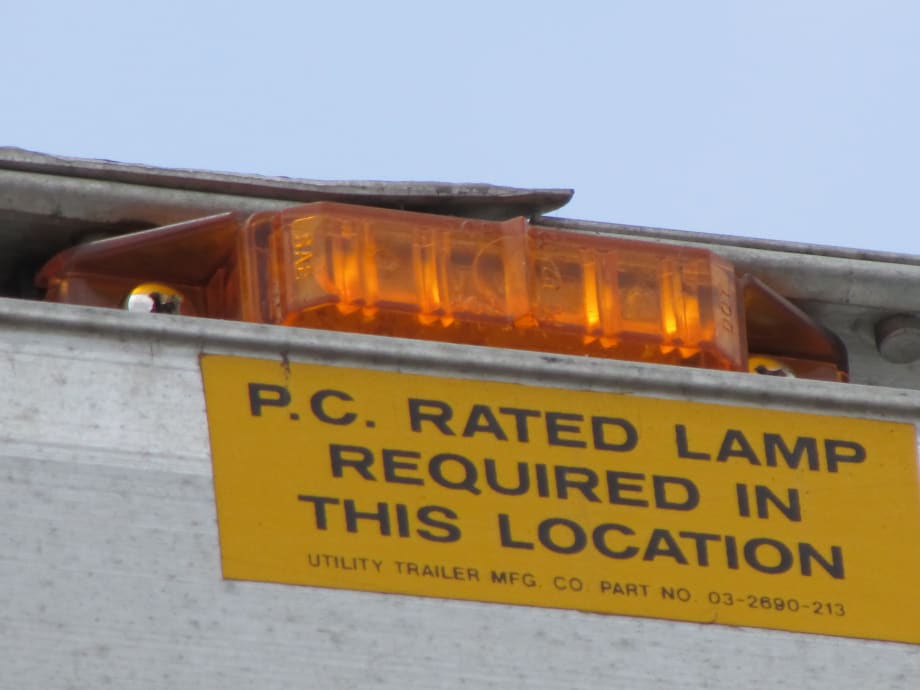
This LED lamp’s lens spreads light across 180 degrees of view, and its four diodes ensure sufficient candlepower throughout that wide angle to meet or exceed the federal regulations. The lamp is therefore “PC rated,” with the C meaning Combination clearance and sidemarker, and it can be mounted on the trailer’s side, though within 6 inches of its nose. (P, for Parking, is from an old industry classification that has been retained.)
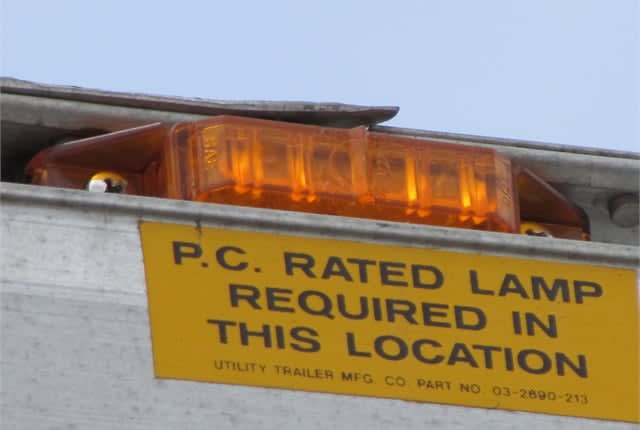
This LED lamp’s lens spreads light across 180 degrees of view, and its four diodes ensure sufficient candlepower throughout that wide angle to meet or exceed the federal regulations. The lamp is therefore “PC rated,” with the C meaning Combination clearance and sidemarker, and it can be mounted on the trailer’s side, though within 6 inches of its nose. (P, for Parking, is from an old industry classification that has been retained.)
Over the years, electrical failures have been the number one problem with trailers. Lighting problems have been reduced by the wider adoption of LED lighting. However, even LEDs, along with the rest of the electrical system, are subject to corrosion, which remains a major headache. Aggressive de-icing chemicals that are splashed up onto trailers’ undersides and onto wiring and lamps, speed up the corrosion that interrupts current flow.
The best way to avoid the worst of these problems is by taking a “whole-system” approach when spec’ing new trailers, says the Technology & Maintenance Council of the American Trucking Associations.
Proper maintenance of the system, including replacement of LEDs when some of the diodes fail, is still your best bet for staying safe and avoiding points against your CSA score.
1. A whole-system approach is best
Recently revised recommendations from TMC say the electrical system should include sealed wiring, water- and corrosion-resistant connectors and low-amperage lamp designs. They are the things to get for long life with few troubles and low downtime, says Recommended Practice 704C.
That’s not new advice, but it’s newly included in the RP, whose “C” suffix means it’s the third update.
“RP-704B, the Recommended Practice for Heavy-Duty Lighting Systems for Trailers, was last updated in January 1992 and was badly in need of an update,” explains the leader of the project, Brad Van Riper, chief technologyofficer at Truck-Lite Inc.
The rewrite:
• Made the RP light-source neutral, and eliminated bulb types and ratings to allow for technology improvements;
• Removed and replaced obsolete references;
• Updated lighting locations; and
• Added wiring harness information, “focusing on the system,” he says.
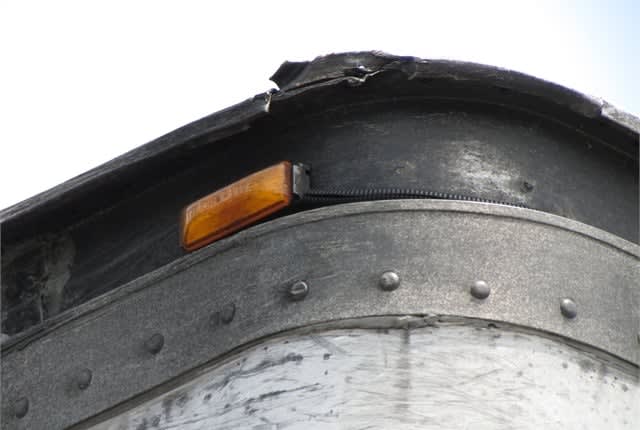
This trailer’s front corner looks like it’s been battered by tree branches or something worse. But its clearance lamp has survived because it’s mounted to the side — permissible under federal rules — and within the top sill’s channel.
“The purpose of the RP is to help equipment purchasers specify a safe and effective heavy-duty lighting system that is low-maintenance, durable and corrosion-free for a minimum service life of 12 years,” Van Riper explains.
Twelve years is a duty cycle agreed on by task force members as typical for widely used trailer types, especially dry freight vans.
“Since lighting is moving away from incandescent light sources and more toward LED technology, the committee decided to de-emphasize the bulb and look at the complete system. We believe that the light source is no longer the weak link in the system, and teaching fleets to focus on a quality system will improve the durability and reduce maintenance on their new trailers.”
RP-704C provides guidelines for how a trailer’s electrical system should be spec’d, and refers often to standards set by the Society of Automotive Engineers, Truck Trailer Manufacturers Association and others. And it leaves room for various trailer types and applications.
“As you’d probably guess, there are as many wire harness systems as there are applications,” Van Riper explains. “A ‘quality system’ is one that meets the needs of the end-use customer.” Included in the system are wiring jacketing, wiring gauge, terminals, connectors, processors, lamps and installation. The RP also included some installation best practices, which can provide guidance to help improve the performance of the system.
2. LED diodes can still fail
Lamps using light-emitting-diodes have become common on trailers and power units since being introduced by Grote Industries more than two decades ago. LEDs use about one-tenth the current of incandescent bulbs and last 10 times as long.
Most LED lamps have multiple light-emitting diodes, so if one or a group of diodes fails, the lamp still works. But is there a percentage of burned-out diodes that defines lamp failure and leads to a citation?
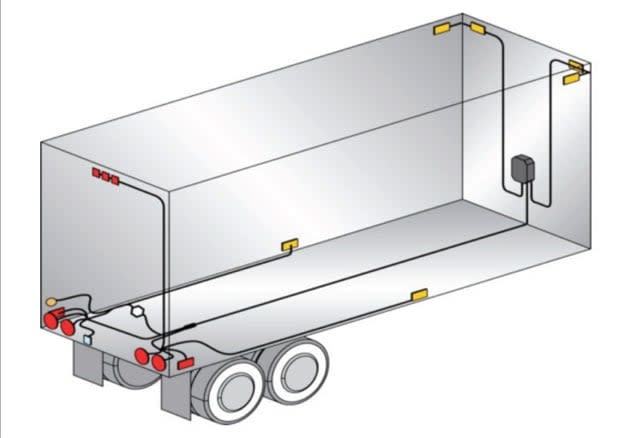
Revised RP-704C includes a wiring schematic for a typical trailer. Note that either one or two lamps may be used at each of the trailer’s corners. A single lamp can be in the corner radius, or on the side within 6 inches of the nose. A side-mounted lamp must be PC rated, meaning its light is visible from ahead and behind.
Not in the United States, according to Will Schaefer, director of vehicle programs at the Commercial Vehicle Safety Alliance. CVSA members are state, provincial and local enforcement officials in the U.S., Canada and Mexico. Together they set standards regarding equipment – but there is none for LEDs.
“We have analyzed it extensively in our Vehicle Committee,” he says. “When one diode goes out, the rest may get brighter. In the end, we do not have a good way of knowing that if two out of three, or three out of seven, or four out of 15 are not lighting, would that cause a total reduction of enough light to constitute a failure? Ultimately, if it’s still visible, it’s still lighting. And ultimately it comes down to the officer’s discretion.”
Vehicle Committee members deliberated the question at a meeting in 2004 but couldn’t come up with an answer.
The inspection questions related to LED lamp failure involve:
• When should a failing LED lamp be replaced?
• How many individual LEDs should remain ‘on’ for the lamp to be acceptable?
• Is there a failure ‘rule’ for each type and brand of LED lamp?
The committee asked the National Highway Traffic Safety Administration and the Federal Motor Carrier Safety Administration for guidance, but they couldn’t provide any. Neither could manufacturers, though one told the CVSA committee that it issued special cards that customers could use to measure light output. Lacking enlightenment from those sources, committee members closed the matter.
In Canada, National Safety Code Standard 11 Part B states, in part, that a lamp should be “rejected” if “25% or more of LEDs of any one lamp assembly are non-functional.” However, Alberta officials, in alerting CVSA to this standard, note that “a NHTSA study indicated 80% of the population cannot tell when lights have lost 25% of their intensity.”
Like all lamps, an LED type must meet light-output standards expressed in Federal Motor Vehicle Safety Standard 108, which says a lamp’s output must be visible from 500 feet. If some light is visible at that distance, it might or might not be judged OK by an inspector.
More Equipment

Used-Truck Remarketing Math Is Changing
Used-truck value is no longer just a concern at trade-in. Decisions made throughout a truck’s first life can influence what it’s worth years later.
Read More →
How Volvo Updated Its D13 for EPA 2027 [Watch]
Volvo’s updated D13 promises lower emissions without sacrificing performance or fuel economy. Take a closer look at what changed inside the engine in this HDT Spotlight video.
Read More →
Michelin Tire Improves Efficiency and Durability for Regional Fleets
The Michelin X Multi Energy D2 is a regional haul drive tire engineered to help fleets improve fuel efficiency, durability and traction in demanding stop-and-go operations.
Read More →
ZF Expands Commercial Vehicle Push in North America
ZF is expanding its North American commercial-vehicle presence with new transmission applications, electrification, trailer technology and autonomous-driving systems.
Read More →
Tesla Wants a Self-Driving Semi. Are Cameras Enough?
Could Tesla’s camera-only autonomous driving technology work on an 80,000-pound Semi? In this commentary, HDT's Deborah Lockridge takes a look at Tesla, Cybercab, and how autonomous trucks see the road.
Read More →
Kodiak: Driverless Long-Haul Truck Launch on Track for 2026
Kodiak AI says its driverless long-haul safety case is 93% complete and it remains on track to begin commercial operations by year-end 2026.
Read More →
What DOT’s Automated Vehicle Strategy Means for Trucking
The U.S. Department of Transportation issued a new automated-vehicle strategy that outlines plans for driverless-truck regulations, cross-state freight corridors, and federal safety standards.
Read More →
East Coast Port Launches $45M Electric Truck Push
The Port Authority of New York and New Jersey announced millions in incentives for zero-emission drayage trucks, yard tractors, and new charging hubs near the port.
Read More →
PlusAI Going Public to Fund Autonomous Truck Launch
A SPAC deal could provide PlusAI with up to $300 million as it works toward a 2027 commercial launch of factory-built autonomous trucks.
Read More →
NHTSA Moves to Rewrite Truck Fuel-Economy Rules
The National Highway Traffic Safety Administration says it lacks authority to regulate medium- and heavy-duty truck engines separately from complete vehicles, but the existing standards have not yet been eliminated.
Read More →