




Truck Drivers Play a Crucial Role on Indy Car Teams
While the Indy race car drivers get the glory, they'd be high and dry without the team of drivers that get the race cars to the event.

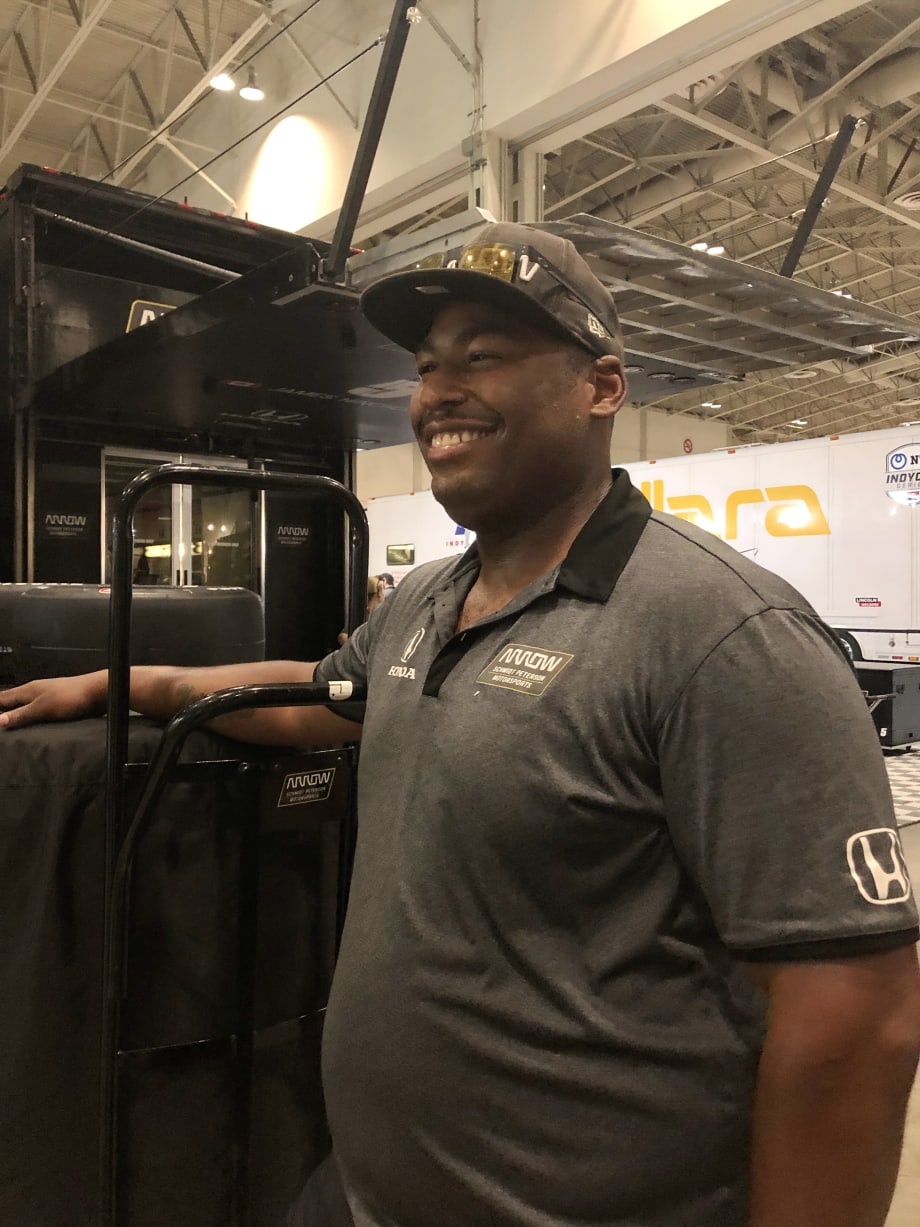
Truck driver Timothy Lane is responsible for far more than hauling equipment. Once on site for a race, he oversees tires and fueling.
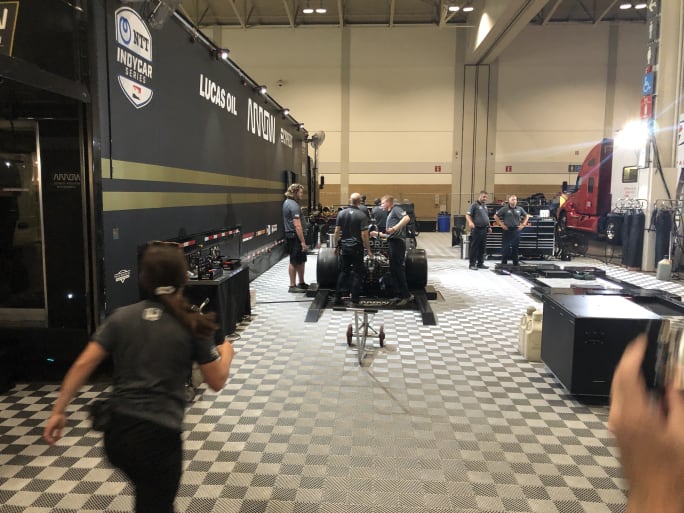
Hauler trucks carry a complete mobile work shop, and engineering team, three race cars and all the gear needed to support the 45-member team while at a race event.
Photos: Jim Park
While the Indy race car drivers get the glory, they'd be high and dry without the team of drivers that get the race cars to the event. The hauler truck drivers have pretty sweet jobs, but driving is only part of what they do. And they earn every nickel they make.
Indianapolis-based Arrow Schmidt Peterson Motorsports, owners of the #5 Indy Car driven by James Hinchcliffe, operates three hauler trucks, each always loaded right to the numbers with all the gear the crew needs for a race. This includes three race cars and enough machinery and spare parts to build another new car from scratch, tons of electronics and diagnostic equipment and of course all the technicians' tools. Typically, about 45 crew members travel to a race.
Timothy Lane is one of six truck drivers on the ASPM team. He and fellow drivers had arrived in Toronto from Indianapolis early Thursday morning ahead of the technical inspections to he held that afternoon prior to the Honda Indy Streets of Toronto race on Sunday, July 14.
Before joining the ASPM team, Lane was an avid Indy racing fan and a regional and city P&D driver. "I had been driving for a year and a half, so I wondered if I could put it all together and drive for the team," he says. "I decided to ask them if they were hiring drivers, and here I am. I asked the right team and I got hired."
The hauler trucks are usually the first part of the crew to arrive at the race, and obviously the last to leave. Often, they are packed up and backing of the paddock area just a couple of hours after the champagne corks have been swept away. They always head directly back to the shop in Indianapolis so the crew can start prepping the cars for the next race.
"We have two drivers per truck so they can drive non-stop," says the team's vice president of marketing, Jeff Darks. "As soon as they get in the truck it's non-stop back to the shop. It's critical that we get everything back to the shop in Indianapolis as quickly as we can so we can get the cars ready for the next race."
It's a short 520-mile trip from Toronto to Indianapolis, so an easy overnight drive, but races on the West Coast can put a little strain on the drivers. They still have to get back to The Circle before heading off the next event, and that means some serious team driving.
The Indy season runs from March through September, so the drivers are away much of that time. Things slow down a little bit in the off season, though.
There's really no off season for the drivers and the team," Lane says. "We do a lot of testing, so we have to ferry the trucks and equipment around to the test tracks. We also get down to doing the maintenance and repairs on the trucks we couldn't find the time to get to during race season. And we even manage to squeeze in a little vacation time."
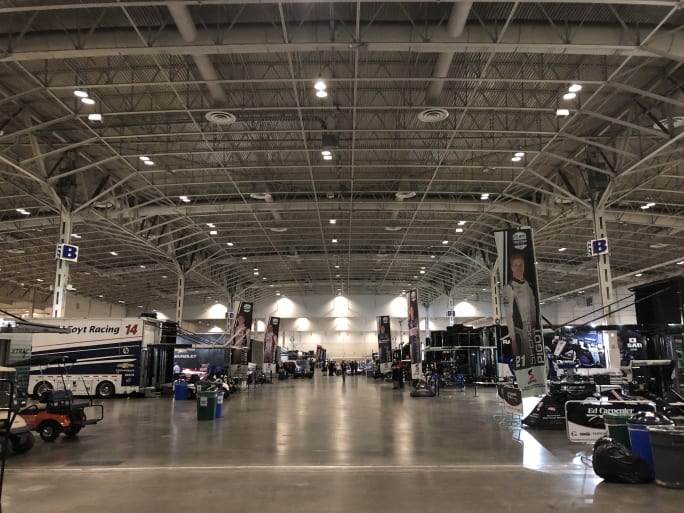
IndyCar trailers rolled into Toronto in the wee hours of Thursday morning. Then the real work began.
Part-time driver, full-time pit crew
Lane is also part of the pit crew, with responsibility for managing the team's tires and fueling the car during the race. "It's really exciting to be 'over the wall' and doing anything with the cars," he says. "The fueling is tough. It's a really fast paced environment with a lot of things going on in such a short time."
It's also the hauler-driver's job to take care of everything you see in pit lane.
"They set up the pits for us, maintain the pit for us all weekend, and most importantly, they do the tires," Darks says. "The race teams do not own the tires; they are all leased from Firestone. It's the same for every team.
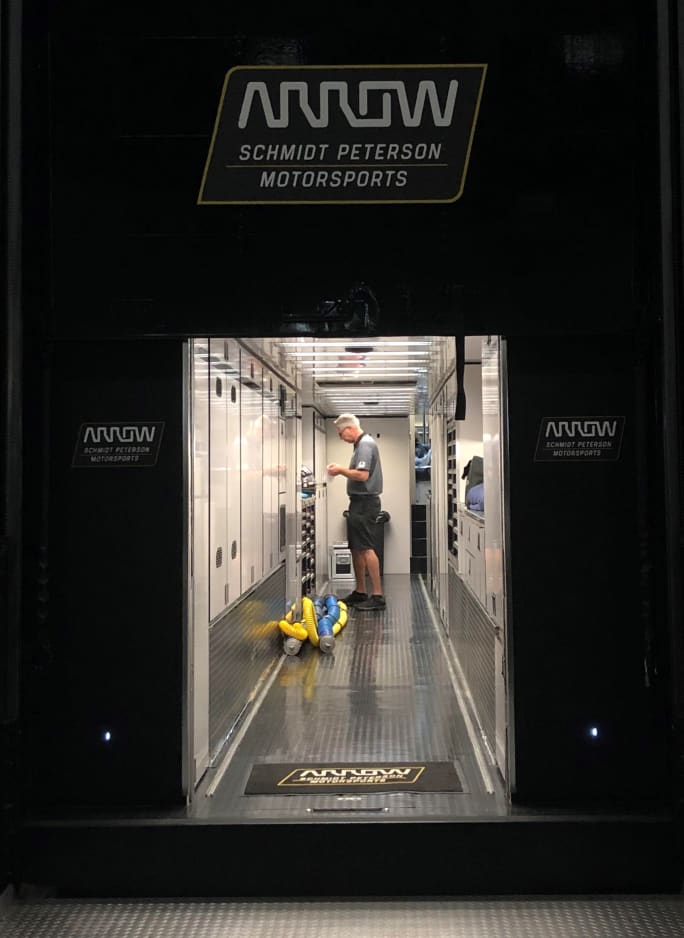
IndyCar trailers are loaded to the limit, and are transformed into work spaces on race weekend.
"We own the wheels though. When we arrive at a race venue, we take a cart that holds 10 sets of wheels off to Firestone. They mount our tires for the weekend, we use them all weekend, and when the race is over, we bring them all back to firestone and they dismount them. They take the rubber home and we take the wheels home."
The truck drivers are in charge of mounting and measuring the tires and wheels and maintaining them for the race.
"We take instructions from our tire engineer because we use different inflation pressures under different track conditions," says Lane. We have to match the tires to the track conditions."
The hauler trucks, a fleet of three Kenworth W900s are owned by team co-owner, Ric Peterson, who also owns Ochulus Transport based in Calgary, Alberta. Ochulus specializes in oil and gas work, and they do a lot of work on the ice roads in northern Canada.
For Lane, driving for the Arrow Schmidt Peterson Motorsports team is a couple of dream jobs rolled into one. One day he was sitting on the sidelines wishing he was in the thick of things and the next day he was. All he did was ask.
More Drivers

Nussbaum, Roehl Announce Second Driver Pay Increase This Year
This year has seen a swath of major truck driver pay increases as freight capacity has tightened.
Read More →
From One Generation to the Next: How Mentorship Builds Safer Truck Drivers
After three decades in trucking, Harold Perry shares what he's learned about driver safety, mentorship, and helping the next generation build confidence behind the wheel.
Read More →
Truck Drivers Need More Than Another Alert
Fleets have more visibility into truck health, safety events, and driver activity than ever. The next challenge is turning all that information into useful guidance for the person who has to decide what to do next.
Read More →
FMCSA Removes 110 Truck Driver Training Schools from Certified ELDT List
Federal regulators also are targeting more than 160 additional training providers and launching a nationwide audit of third-party CDL skills testers as part of a broader crackdown on trucking fraud.
Read More →
Hours of Service Pilot Programs: FMCSA Readies for 2027 Rollout
Two pilot programs could eventually reshape hours-of-service rules, giving truck drivers options to pause their 14-hour clock or use longer split sleeper rest periods.
Read More →
Medical Cards, English Proficiency Reshape Roadcheck Violations
Medical-card violations jumped to the top of the driver out-of-service list during CVSA’s 2026 International Roadcheck, while English-language proficiency violations appeared among the leading violations for the first time.
Read More →
Driver Trust Can Make or Break the Success of Fleet Safety Technology
New Teletrac Navman research suggests that onboarding, transparency about driver data, and positive feedback can play a significant role in how commercial drivers respond to safety and coaching technology.
Read More →
EEOC Sues KLLM Over Alleged Sex Discrimination in Driver Training
KLLM is facing a federal sex-discrimination lawsuit over policies the EEOC alleges put female truck driver trainees at a disadvantage.
Read More →
FMCSA Moves to Codify English Language Requirements for Commercial Drivers
By changing regulations on English-language proficiency requirements for commercial drivers, rather than relying on a guidance memo, the FMCSA said future administrations won't be able to walk back the Trump administration's stricter enforcement with just a memo.
Read More →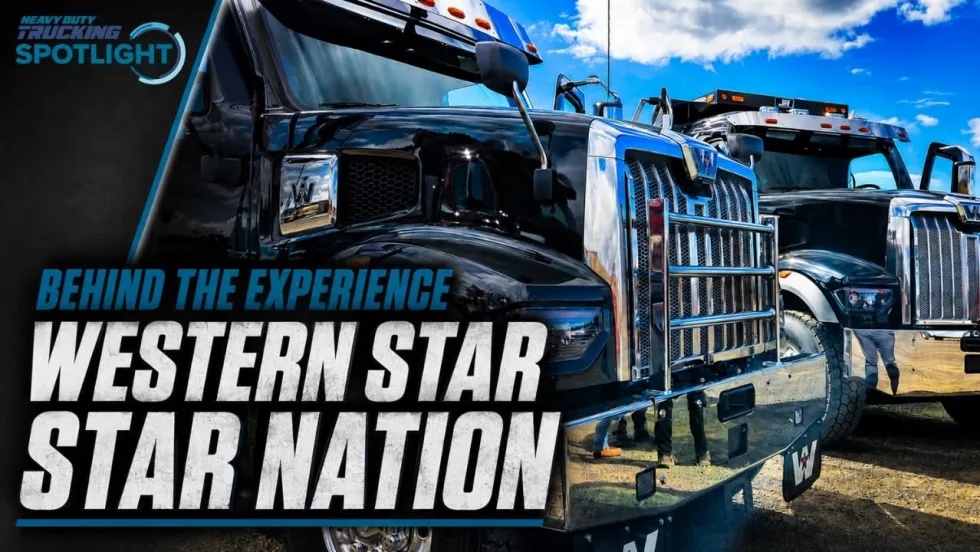
Drivers Put Western Star Trucks to the Test at Star Nation Experience
Watch to get an inside look at the Western Star trucks, technology, and community behind the Star Nation Experience 2026!
Read More →