




Time Running out for CARB Compliance on Trailer Aerodynamics
Jan. 1, 2013, will bring heavy fines for truckers who cross into California without SmartWay verified aerodynamic devices such side skirts or boat tail fairings that improve fuel economy 4% to 5% on their 53-foot or longer box and refrigerated trailers
Jan. 1, 2013, will bring heavy fines for truckers who cross into California without SmartWay verified aerodynamic devices such side skirts or boat tail fairings that improve fuel economy 4% to 5% on their 53-foot or longer box and refrigerated trailers.
"The clock is ticking for compliance," says Randy Rhondeau, air pollution specialist for California's Air Resources Board. "Fleets and owner-operators who travel into California must have aerodynamic devices, unless they registered with CARB on a phase-in option (which provides an alternate compliance schedule)."
If you're pulled over for non-compliance, the owner of the tractor-trailer can be cited $1,000 per day, Rhondeau says.
"The driver of the tractor-trailer is not off the hook either - that person can be fined $1,000 a day as well. Fines can increase to $10,000 per day for egregious, repeat offenders."
Rhondeau said ignorance is not bliss. "Information has been out there for quite some time, so if someone comes in and pleads ignorance, it's not going to hold water. If we catch violators, they're getting a citation."
According to Sean Graham, president of Freight Wing, makers of SmartWay-verified trailer side skirts and gap fairings, the CARB deadline is creating a dash for compliance. "We're fielding a lot of calls asking about what's needed," Graham says.
For fleets needing numerous trailers outfitted before the deadline, Graham said Freight Wing has put together mobile installation teams to help customers with fitments.
While the CARB mandate might seem to be heavy-handed government at work, Graham said that in this case in particular, aerodynamic fairings on trailers have a very fast payback.
"We've worked with many large fleets which have documented real-world fuel savings of up to 4% with our skirts," he said. "In testing, at sustained speeds, our SAE testing has shown up to a 7% improvement. If you do the math, our skirts can have a payback in as little as 35,000 miles of trailer utilization."
Low rolling resistance tires can improve fuel efficiency as well, but SmartWay verified tires cannot be used to help meet the 4% to 5% requirement. Nevertheless they will add an additional 3% improvement for both the tractor and trailer. SmartWay verified tires won't be required on 2010 and older box trailers until January 2017.
More info On CARB Trailer Aerodynamics
According to Rhondeau, owners, drivers, fleet operators, California-based brokers, California-based shippers and motor carriers should be fully aware of all the rules.
CARB will allow a one-time per fleet per year (one tractor) exemption into the state for a trucking company or owner-operator, but the request must be to the CARB via an email or written request and approved before entering California.
In addition, if registered with CARB, local haul 53-foot trailers are exempt from the aerodynamic requirements of the rule, but they must not go beyond 100 miles from their home base. Empty trailers are also exempt. Short haul tractors and the trailers they pull are exempt, but the tractor must be entered into CARB's database and tractor mileage must be 50,000 miles or lower per year.
For complete information on rules go to:
CARB website: www.arb.ca.gov
CARB Truck Stop on the website: http://www.arb.ca.gov/msprog/truckstop/questions.php?page=diesel
CARB Greenhouse Gas Tractor-Trailer Program: http://www.arb.ca.gov/cc/hdghg/hdghg.htm
More Fuel Smarts
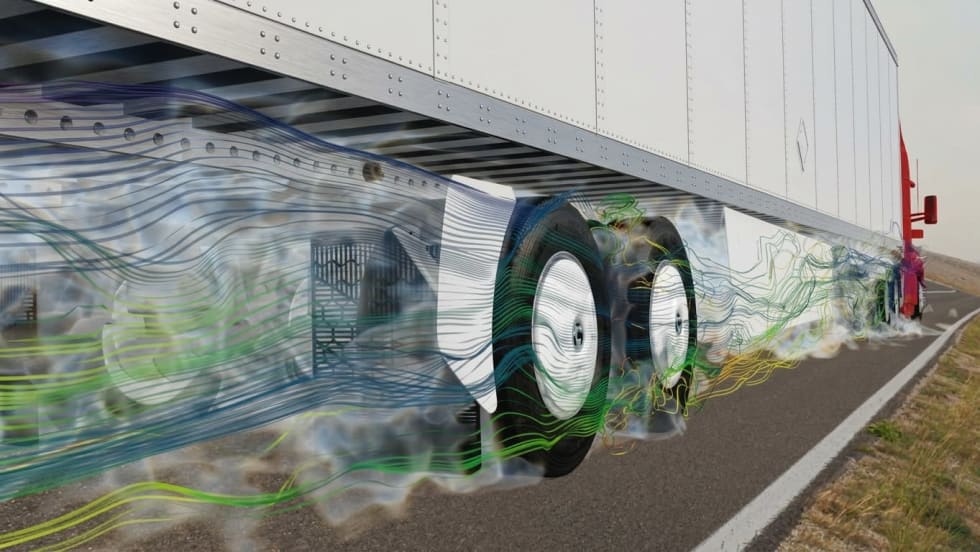
FlowBelow Redesigns Trailer AeroSlider to Cut Fuel Use
The lighter trailer aerodynamic system installs in less than 45 minutes, according to the company, with potential payback in under a year depending on fuel prices and trailer mileage.
Read More →
Why Diesel Price Relief Efforts May Fall Short
Diesel prices have eased from September’s record high, but doubts about additional Russian supply and limits on dyed-diesel tax relief mean trucking fleets still face expensive fuel. And prices could go higher.
Read More →
Why Small Fuel Savings Matter in Trucking
Can better fuel economy help pay for driver raises? In this podcast, GP Transco explains how small efficiency gains create room to reinvest in its people.
Read More →
How GP Transco Cuts Trucking Fuel Costs, a Tenth of a Gallon at a Time
What’s another tenth of a mile per gallon worth? GP Transco shares how equipment upgrades and driver coaching turn small gains into meaningful fuel savings.
Read More →
Electric Yard Tractors Move Beyond Pilots
Operating-cost savings have overtaken sustainability goals as the leading reason surveyed fleets are adopting battery-electric terminal tractors, according to new NACFE research.
Read More →
Geotab Links Fleet Card to Vehicle Data
The new card combines fuel discounts with telematics-based purchase controls. Geotab’s analysis also points to potential savings from choosing lower-priced fuel stops.
Read More →
Fleet Economics Shape Electric Truck Outlook
ACT Research expects costs, charging infrastructure, and technology improvements to drive zero-emission commercial vehicle adoption as federal regulations and incentives retreat.
Read More →
Wex Adds Cardless Fuel Payments for Over-the-Road Customers
A new fuel card feature for Wex customers offers convenience and security.
Read More →
New California Law Could Shed Light on Electric Truck Prices
Why do battery-electric Class 8 trucks remain so expensive? A California bill signed by Gov. Gavin Newsom would give fleets and state agencies more visibility into what manufacturers charge.
Read More →
How Volvo Updated Its D13 for EPA 2027 [Watch]
Volvo’s updated D13 promises lower emissions without sacrificing performance or fuel economy. Take a closer look at what changed inside the engine in this HDT Spotlight video.
Read More →