




The Purpose of the Emergency Response Guidebook
Many shippers and transporters of hazardous materials are familiar with the small orange Emergency Response Guidebook. Most associate the ERG with compliance with the Hazardous Materials Regulations (49 CFR), using it to provide emergency response information for a hazardous materials shipment. Yet that is not why the ERG was created
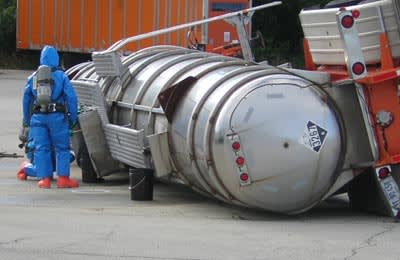
The scenario was part of a Schneider National exercise for hazardous materials responders, but in real life, many carriers keep a current Emergency Guidebook in their trucks to comply with hazmat regulations.
Many shippers and transporters of hazardous materials are familiar with the small orange Emergency Response Guidebook. Most associate the ERG with compliance with the Hazardous Materials Regulations (49 CFR), using it to provide emergency response information for a hazardous materials shipment. Yet that is not why the ERG was created.
The Emergency Response Guidebook originally was developed by the U.S. Department of Transportation, Transport Canada and the Secretariat of Transport and Communications of Mexico for use by police, firefighters and other emergency personnel who are the first to arrive at the scene of a transportation incident involving hazardous materials/dangerous goods. The ERG helps first responders quickly identify the hazard(s) of the materials and protect themselves and the general public during the initial response phase of an incident.
The "initial response phase" is the period following the first responders' arrival at the scene, during which the presence and/or identification of hazardous materials is confirmed, protective actions and area securement are initiated, and assistance of qualified personnel is requested.
The DOT distributes copies of the ERG to emergency responders throughout the U.S. The goal is to have one available to every emergency responder in the country. Occupational Safety and Health Administration and Environmental Protection Agency regulations require that first responders be trained on the use of the ERG.
To increase the likelihood that emergency response information will be available to first responders at the scene of a hazardous materials incident, the Hazardous Materials Regulations require that emergency response information accompany most shipments of hazardous materials. (Emergency response information is not required for hazardous materials that do not require shipping papers or are classified as an ORM-D.)
The emergency response information can be provided in several ways:
- It can be entered on the hazmat shipping papers; or
- It can be provided in another document, other than the shipping paper, that includes the basic description (and technical name if appropriate) of the hazardous material. A Material Safety Data Sheet is an example of this type of document; or
- It can be provided in a separate document, other than the shipping paper, that cross-references the description of the hazardous material on the shipping paper with the emergency response information contained in the document. The ERG is an example of this type of document.
Carriers that transport hazardous materials must maintain the emergency response information the same as they do shipping papers. The emergency response information must be readily available to, and recognizable by, authorities in the event of an incident or inspection.
Although not the original intended use for the ERG, keeping an ERG with the hazmat shipping papers is an easy way to comply with the emergency response information requirements in the Hazardous Materials Regulations. Many carriers play it safe and carry an ERG in their vehicles to cover any hazmat load/situation they may encounter.
The ERG is updated and issued every four years by DOT's Pipeline and Hazardous Materials Safety Administration. The next edition, the 2012 ERG, is anticipated to be released in early 2012. Anyone who works with hazardous materials will want the new 2012 ERG to be sure they have the latest emergency response information.
Thomas Ziebell is a senior editor, Hazardous Materials Transportation for J.J. Keller & Associates.
From the December 2011 issue of HDT.
More Safety & Compliance
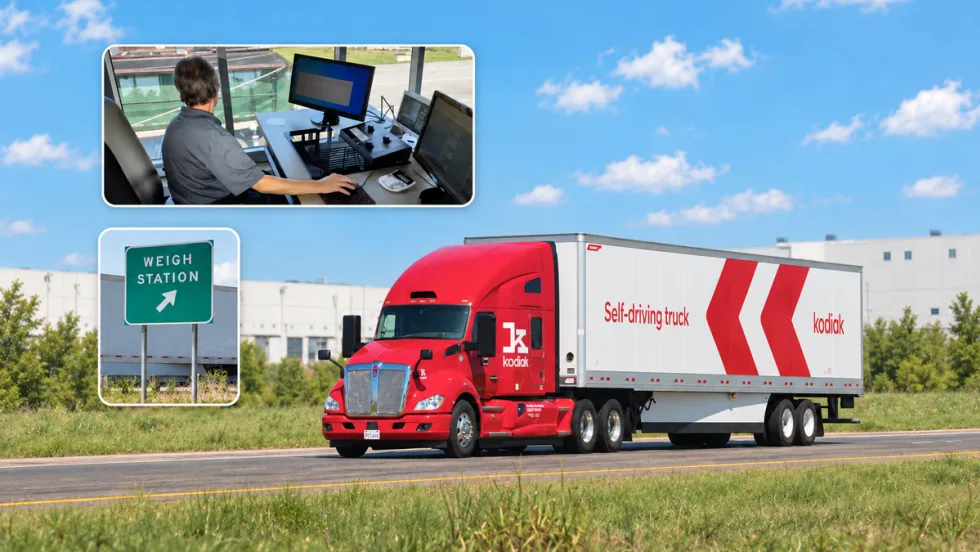
PrePass, Kodiak Connect Driverless Trucks to Roadside Enforcement
The system will allow enforcement agencies to verify Enhanced Inspection information and decide whether Kodiak’s autonomous trucks can bypass roadside screening sites.
Read More →
From One Generation to the Next: How Mentorship Builds Safer Truck Drivers
After three decades in trucking, Harold Perry shares what he's learned about driver safety, mentorship, and helping the next generation build confidence behind the wheel.
Read More →
FMCSA Pauses Biennial-Update Enforcement Amid Motus Transition
Carriers whose updates were due on or after June 1 have more time, while FMCSA works to stabilize its new registration system and warns of phishing sites impersonating its new carrier registration system, Motus.
Read More →
ZF Expands Commercial Vehicle Push in North America
ZF is expanding its North American commercial-vehicle presence with new transmission applications, electrification, trailer technology and autonomous-driving systems.
Read More →
Truck Drivers Need More Than Another Alert
Fleets have more visibility into truck health, safety events, and driver activity than ever. The next challenge is turning all that information into useful guidance for the person who has to decide what to do next.
Read More →
Tesla Wants a Self-Driving Semi. Are Cameras Enough?
Could Tesla’s camera-only autonomous driving technology work on an 80,000-pound Semi? In this commentary, HDT's Deborah Lockridge takes a look at Tesla, Cybercab, and how autonomous trucks see the road.
Read More →
What DOT’s Automated Vehicle Strategy Means for Trucking
The U.S. Department of Transportation issued a new automated-vehicle strategy that outlines plans for driverless-truck regulations, cross-state freight corridors, and federal safety standards.
Read More →
NYC Expands Speed, Pedestrian Safety Tech Across Fleet
New York City is expanding intelligent speed assistance and pedestrian-alert systems across its municipal fleet, moving the technologies from pilot programs into vehicle procurement and retrofit requirements.
Read More →
FMCSA Removes 110 Truck Driver Training Schools from Certified ELDT List
Federal regulators also are targeting more than 160 additional training providers and launching a nationwide audit of third-party CDL skills testers as part of a broader crackdown on trucking fraud.
Read More →
Beyond DOT Compliance: What Makes a Trucking Fleet Truly Safe?
A trucking fleet can follow every rule and still make unsafe decisions. The real test comes when safety conflicts with freight, productivity, or cost.
Read More →