




The High Cost of Tires
Ten years ago, you could buy a decent steer tire for $300. Not anymore. But, then again, you're not buying the same tire anymore either. Long-term pricing trends show that the cost of raw materials used in tire manufacturing has gone up over the past decade, along with the shelf prices for tires, but consumers haven't seen the price swings for tires that manufacturers have seen for materials over the same period of time.

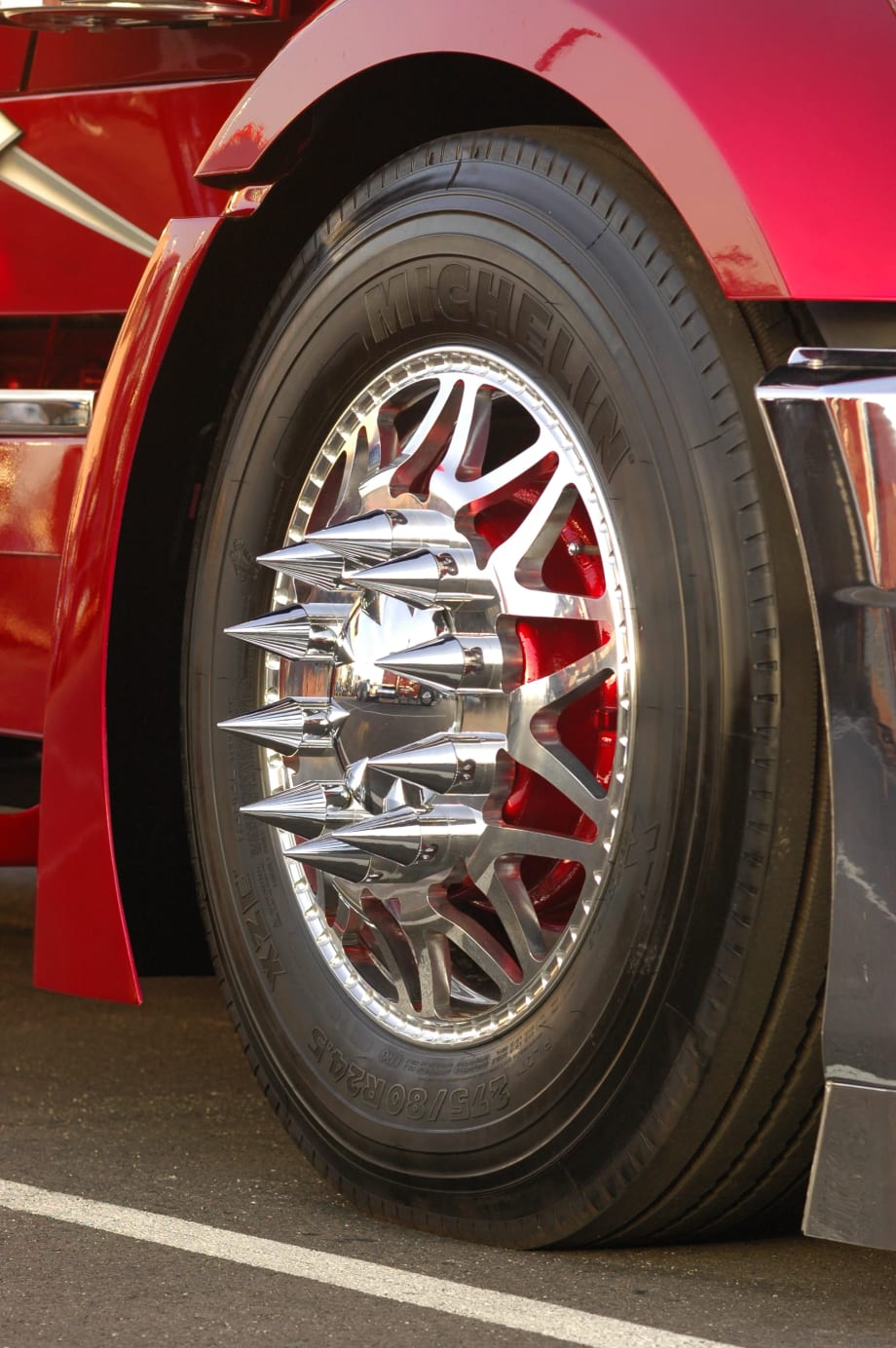
Ten years ago, you could buy a decent steer tire for $300. Not anymore. But, then again, you're not buying the same tire anymore either.
Long-term pricing trends show that the cost of raw materials used in tire manufacturing has gone up over the past decade, along with the shelf prices for tires, but consumers haven't seen the price swings for tires that manufacturers have seen for materials over the same period of time.
And raw materials are only part of the tire's cost structure.
“In a normal year, raw materials make up about 50% of the cost of the commercial tire,” says Rick Phillips, director of commercial sales at Yokohama Tire Corp. “That includes natural rubber, synthetic rubber, carbon black, steel and a host of other organic chemicals, including petroleum.”
Phillips says natural rubber was selling for 56 cents a pound in 2009. Today it's around $1.50 per pound.
Accord to price charts posted on a government of India website, www.rubberboard.org, prices for various grades of natural rubber have increased from $135 per 100 kg in 2004, to a current price in March 2013 ofabout$290.
Steel prices, while essentially stagnant over the past year at $700 to $800 per metric ton, have seen significant swings over the past 10 years. Most types of steel saw price peaks of $1,000 and higher per ton in 2008, which was up dramatically from pre-recession pricing of $500 to $600 per ton for most products.
And don't forget oil prices.
Oil prices in 2003 averaged $27.69 per barrel in 2003 dollars. Today, prices hover in the $90s, another significant increase. This hit tire manufacturers two ways, first as a raw material in tire production, and again in shipping costs, especially for those bringing tires here from overseas.
Less tangible but omnipresent are the research and development costs. Phillips says tire makers were making very good tires 10 years ago, but they can hardly compare to today's tires.
Tires are so much more efficient today than in previous generations that while acquisition costs have increased, life-cycle costs and cost per mile have actually come down. You're getting way more bang for your buck, Phillips says. But at the same time, it's getting harder and harder to make significant strides in technology.
“Now, tires are so efficient and so well-built that we have to spend millions and millions of dollars to get just a small gain,” he says. “The development curve isn't as steep as it was. You have to go a long way to even move the needle today.”
Supply and demand
Global demand for tires has increased, with countries like India and China putting more and more trucks on the road every year. Demand in North America and in Europe is down somewhat.
That reduces the pressure on supply, although Phillips says much of the need for tires in emerging markets is filled domestically.
“We've got a bit more supply here than demand at the present,” he says, “But by the end of the year and through 2014, I expect that will change. When global demand picks up again, we'll have problems here because there's not enough North American capacity to meet demand. And when the commodity brokers see that, we'll probably see more price manipulation like we did in 2011.”
In the short term, Phillips expects prices to stay relatively flat, but when global demand starts to rise, tires and their raw materials costs will start going up right alongside.
“Steel is more stable than rubber, and rubber is more stable than oil, but each is subject to its own pressures,” he notes.
The good news, according to Goodyear, is that raw materials pric ing has been stable over the past few months. That doesn't mean we'll see discounts on tire prices, but they may not be jumping as frequently as they have over the past few years. Enjoy it while you can.

Natural rubber is havested from the hevea trea as a liquid, much like maple syrup is harvested from a maple tree.
Alternatives to natural rubber
Although we're in no danger of running short of our primary source of natural rubber, prices have risen dramatically over the past 10 years and some companies are now looking for alternatives.
The primary producers of natural rubber are in South and Southeast Asia, with some production in tropical West Africa.
All those are places subject to damaging seasonal monsoons and other extreme weather conditions.That makes supply a little unpredictable.
Rubber has also recently become a traded commodity, leading to speculative investment, which has driven up prices.
“It's not unlike petroleum markets,” says Bill Niaura, Bridgestone Americas'director of new business development. “There are price points where it begins to make economic sense to explore and drill for oil in non-traditional areas. We're now at the point in the rubber industry where it makes sense to look for alternatives.”
There are about 2,000 plant species producing natural rubber, but the Hevea tree is the most productive. In the history of the rubber business only one other species, guayule, has been used in actual rubber production.
Unlike the hevea tree, which grows in tropical climates, guayule grows in the arid climates of the U.S. Southwest.
Active research and development programs are under way to domesticate and commercialize guayule, with two led by tire manufacturers.
Guayule blooms again
A consortium consisting of Cooper Tire & Rubber Co., Yulex Corp., Arizona State University and the U.S. Department of Agriculture are working under a $6.9 million grant from the USDA and the U.S. Department of Energy.
The goal is to harness biopolymers extracted from guayule as a replacement for petroleum-based synthetics and tropical-based natural rubber used in the manufacture of tires.
Meanwhile, Bridgestone has its own plans for a guayule research farm near Eloy, Ariz., and a research center in nearby Mesa,Ariz.A 281 -acre agricultural site in Eloy will serve as the base of its agricultural research operation, and will supply guayule for the company's process research center in nearby Mesa.
“Material-wise, guayule is the same polymer as hevea rubber, but it diversifies our supply,” Niaura says. “In terms of plant biology and regionality, it's domestic to the Americas, but there are still challenges ahead.”
The facility is expected to be fully operational in 2014, with trial rubber production starting in 2015.
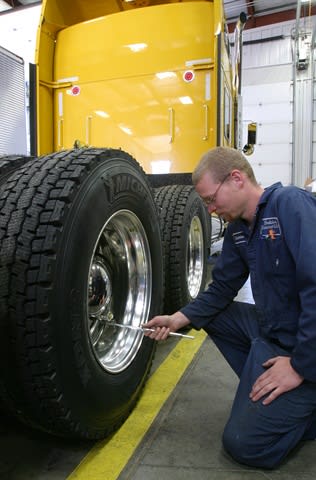
Regular pressure checks are the best way to ensure a long and prosperous relationship with your tires.
Tires are worth looking after
It's easy to dismiss tires as low-tech commodities requiring more time and effort to maintain than they are worth.The truth is you get out of your tire program what you put into it.
Fleets with strong tire programs treat tires as assets.According to Continental's Clif Armstrong, fleets that are ahead of the curve on tires treat them as investments.
“Thirty years ago, when your $150 tire wore out at 40,000 miles, you just disposed of it and bought another one,” he says. “With tires at $350 or $400 and even up to $700 for wide-single tires, you have to treat them as assets.The tread has wearability value, and the casing can be retreaded or sold.”
The more retreads you get from a casing,the better the value, Armstrong says. “It's conceivable today to run a tire/casing out to a million miles with excellent maintenance and several retreads.”
The key factor in maintaining the value in your tire and casing investment is proper maintenance and management-and maintaining tire inflation pressure.
“Improper inflation reduces tire life,” says Bob Montgomery, vice president of intelligent transportation systems for Stemco."Low tire pressure also leads directly to irregular wear and premature failures, which the Technology & Maintenance Council of the American Trucking Associations says are 90% attributable to under-inflation.”
Automatic tire inflation systems, such as Aeris from Stemco, can keep tires at their optimum pressures while providing real-time data to detect leaks, analyze tire performance, calculate fuel economy and even identify mismatched dual tires.
On the pressure monitoring side, several available technologies can alert drivers or fleet management of an impending tire failure through telematics.
Continental's ContiPressureCheck, for example, also uses temperature compensation to tell if a hot tire is underinflated. Without some form of temperature compensation, a hot tire that is underinflated might appear to be fine, because the contained air pressure is at or above its cold inflation pressure.
Aeris, PressureCheck and similar inexpensive and reliable technologies really can extend tire life. Perhaps not to 1 million miles every time, but considerably further than if you do nothing buy kick them a couple of times a week.
More Equipment

How Volvo Updated Its D13 for EPA 2027 [Watch]
Volvo’s updated D13 promises lower emissions without sacrificing performance or fuel economy. Take a closer look at what changed inside the engine in this HDT Spotlight video.
Read More →
Michelin Tire Improves Efficiency and Durability for Regional Fleets
The Michelin X Multi Energy D2 is a regional haul drive tire engineered to help fleets improve fuel efficiency, durability and traction in demanding stop-and-go operations.
Read More →
ZF Expands Commercial Vehicle Push in North America
ZF is expanding its North American commercial-vehicle presence with new transmission applications, electrification, trailer technology and autonomous-driving systems.
Read More →
Tesla Wants a Self-Driving Semi. Are Cameras Enough?
Could Tesla’s camera-only autonomous driving technology work on an 80,000-pound Semi? In this commentary, HDT's Deborah Lockridge takes a look at Tesla, Cybercab, and how autonomous trucks see the road.
Read More →
Kodiak: Driverless Long-Haul Truck Launch on Track for 2026
Kodiak AI says its driverless long-haul safety case is 93% complete and it remains on track to begin commercial operations by year-end 2026.
Read More →
What DOT’s Automated Vehicle Strategy Means for Trucking
The U.S. Department of Transportation issued a new automated-vehicle strategy that outlines plans for driverless-truck regulations, cross-state freight corridors, and federal safety standards.
Read More →
East Coast Port Launches $45M Electric Truck Push
The Port Authority of New York and New Jersey announced millions in incentives for zero-emission drayage trucks, yard tractors, and new charging hubs near the port.
Read More →
PlusAI Going Public to Fund Autonomous Truck Launch
A SPAC deal could provide PlusAI with up to $300 million as it works toward a 2027 commercial launch of factory-built autonomous trucks.
Read More →
NHTSA Moves to Rewrite Truck Fuel-Economy Rules
The National Highway Traffic Safety Administration says it lacks authority to regulate medium- and heavy-duty truck engines separately from complete vehicles, but the existing standards have not yet been eliminated.
Read More →
Detroit Opens Orders for EPA 2027 Engines
Detroit isn’t starting from scratch to meet EPA 2027 diesel emissions standards. Its Gen 6 DD13 and DD15 engines keep much of today’s platform while updating the fuel and aftertreatment systems.
Read More →