




Talon Logistics and CNG
Last year, food and fuel retailer Giant Eagle unveiled its first two compressed natural gas (CNG) fueling stations in the Pittsburgh area at its Beechnut Drive retail support and distribution center. The demonstration included a fuel-up of one of its brand-new natural gas-powered VNM daycabs
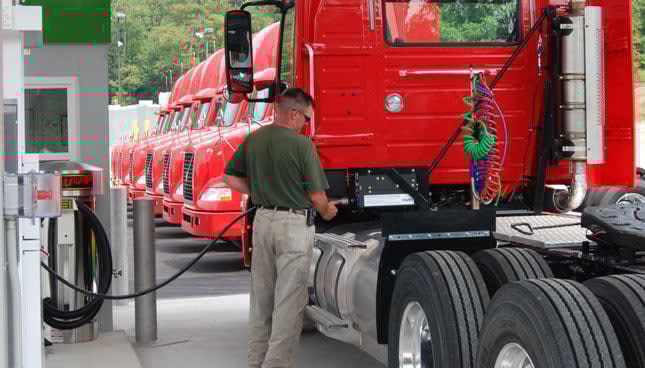
Talon Logistics' Volvo VNM daycabs use dual frame-mounted CNG tanks, rather than the back-of-cab cabinet frequently seen.
Last year, food and fuel retailer Giant Eagle unveiled its first two compressed natural gas (CNG) fueling stations in the Pittsburgh area at its Beechnut Drive retail support and distribution center. The demonstration included a fuel-up of one of its brand-new natural gas-powered VNM daycabs
purchased by its transportation division, Talon Logistics.
The Volvos are powered by 9-liter, 320-horsepower, 1,000 pounds-foot Cummins Westport ISL G engines. The heavy-duty engine requires only a three-way catalyst to meet EPA 2010 emissions standards.
Last fall, Pennsylvania's Department of Environmental Protection announced that Talon Logistics would get a $500,000 grant to replace 20 diesel-fueled delivery trucks with 20 trucks fueled by compressed natural gas. This will be the first use of heavy-duty trucks in Pennsylvania that feature the Cummins Westport ISL G 11.9-liter 400-horsepower engine.
We conducted a Q&A with Bill Parry, vice president of logistics for Giant Eagle.
Q: What prompted Giant Eagle/Talon Logistics to look into using natural gas for fuel?
Parry: We have been an early adopter of alternative fuels usage with pilot projects in both commercial fleets and consumer vehicles, including biodiesel and electric charging stations. As domestic supply of natural gas increased and the transportation industry found new ways to transport, we explored CNG. Now there is more resolve from the public and private sectors to make this work, including new tractors designed to accommodate this region's hilly terrain.
Q: When did you start investigating natural gas?
Parry: In 2010, Giant Eagle's distribution unit, Talon Logistics, received an Alternative Fuels Incentive Grant from the State of Pennsylvania. This coupled with funding from the organization allowed for the purchase of 10 CNG-powered Volvo tractors and the installation of a public CNG refueling station as well as a private station for the company's fleet.
Q: How did you go about educating yourself on the topic?
Parry: We prepared by doing a great deal of research and conducting focus groups with key team members. Giant Eagle's automotive technicians then participated in courses at the National Alternative Fuels Training Consortium, a program through West Virginia University.
Q: What objectives were you looking to achieve?
Parry: Giant Eagle is committed to environmental sustainability. Natural gas is a clean, environmentally-friendly fuel source that is among Giant Eagle's many green initiatives. There are also significant cost savings as natural gas trucks operate at about one-third the fuel cost of their diesel counterparts.
Q: What have been the results?
Parry: Results have been as predicted. Our natural gas vehicles and equipment have been extremely reliable. Those vehicles are completely incorporated into our fleet without exception or restriction. Performance has also been as expected, and our natural gas trucks run quieter.
Q: What challenges have you experienced?
Parry: Miles per gallon per unit is slightly below what we are averaging with diesel trucks. The 8.9 liter-engine is smaller than our typical engine and we had to change the gear ratio to maximize performance.
Q: What are you doing to overcome those challenges?
Parry: We are going to be beta testing an 11.9-liter engine we believe will enable us to return to traditional gear ratio and close the gap on the mile per gallon difference. This is still relatively new technology in North America and we have a wonderful team working very hard to support the conversion to natural gas.
Q: What types of changes were required at your maintenance facilities?
Parry: We implemented CNG-specific procedural steps that depend on the work being done and how long the truck will be in the shop. Gas detection and ventilation systems were adapted to working with natural gas.
Q: What type of driver training was involved?
Parry: During the orientation of our drivers, we educate on the differences between diesel and natural gas, as well as procedures for fueling, pre-trip inspections and, most importantly, a safety overview.
Q: How long does it take to fuel? I've been told that one of the hurdles for commercial CNG stations is that once you've depleted the reserve capacity of the station, it takes longer to fuel.
Parry: Filling time depends on the station facility and tank capacity on the trucks. We fill an equivalent capacity CNG truck in less than 10 minutes, which is similar to filling our diesel trucks. Some advantages of CNG include that you can run the tanks to near zero and you do not have to prime the fuel system as you do with diesel if you run out of fuel.
Q: What has been the response as far as public usage of the station?
Parry: Results have been better than anticipated. We are located near an interstate highway which has led to inquiries about natural gas vehicles and associated fuel cost savings.
Following an Alternative Fuel Conference presentation last year, participants were invited to the Community College's Auto Shop to view CNG vehicles from Equitable Gas and Giant Eagle.
More Fuel Smarts

Record Diesel Prices Squeeze Trucking Fleets
Average U.S. diesel prices have climbed to nearly $6 a gallon, surpassing the 2022 record as tight refinery capacity and Middle East disruptions keep fuel costs elevated.
Read More →
How Fuel Delivery Shapes Engine Performance
Fuel delivery depends on more than what happens at the injector. For fleet, maintenance and technical professionals, looking at the full path from pump to injector can provide useful context for understanding engine performance.
Read More →
East Coast Port Launches $45M Electric Truck Push
The Port Authority of New York and New Jersey announced millions in incentives for zero-emission drayage trucks, yard tractors, and new charging hubs near the port.
Read More →

California Bill Could Shed Light on Electric Truck Prices
Why do battery-electric Class 8 trucks remain so expensive? A California bill headed to Gov. Gavin Newsom would give fleets and state agencies more visibility into what manufacturers charge.
Read More →
Detroit Opens Orders for EPA 2027 Engines
Detroit isn’t starting from scratch to meet EPA 2027 diesel emissions standards. Its Gen 6 DD13 and DD15 engines keep much of today’s platform while updating the fuel and aftertreatment systems.
Read More →
Zero-Emission Truck Corridor Planned for West Coast
California, Oregon, Washington, British Columbia and Baja California are coordinating plans for truck charging and hydrogen fueling from Canada to Mexico.
Read More →
A Closer Look at Kenworth’s Electric T880E Vocational Truck [Video]
Learn more about Kenworth's T880E battery-electric vocational truck at the Paccar Technical Center, including its range, applications, upfitting considerations, and PTO options, in this HDT Spotlight video.
Read More →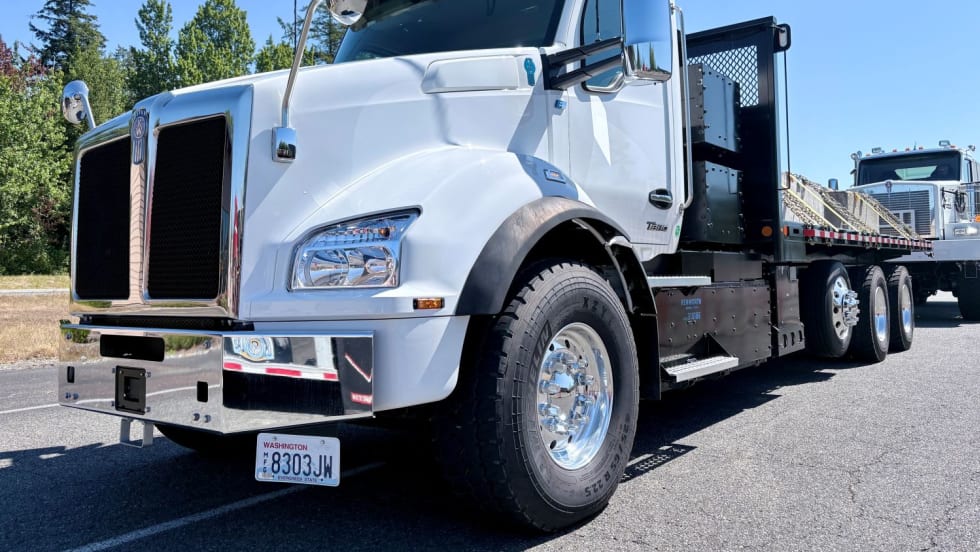
Kenworth T880E Brings EV Power to Vocational Trucks
A closer look at the Kenworth T880E’s range, charging, powertrain and upfit options — and where fleets are showing the most interest.
Read More →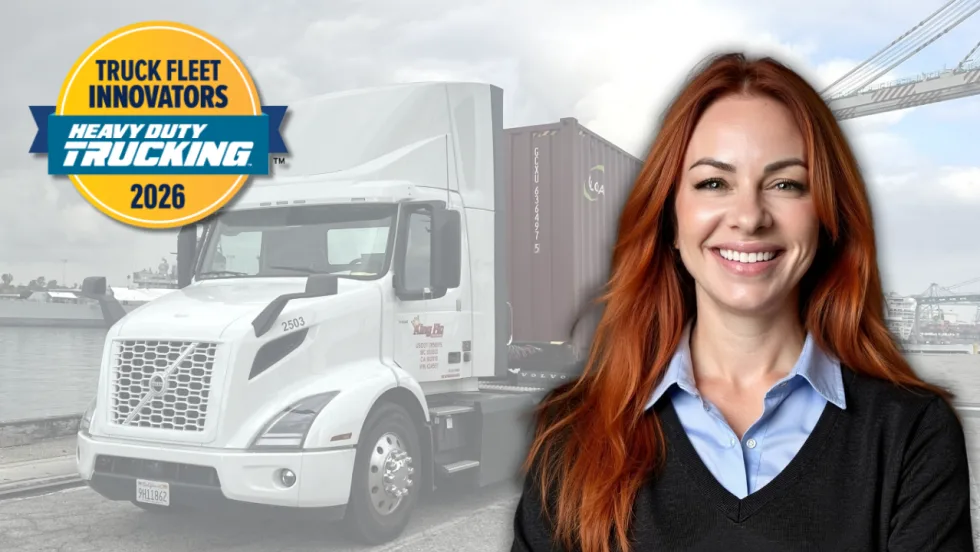
Jennie Abarca Is Proving Electric Trucks Can Do the Job
HDT Truck Fleet Innovator Jennie Abarca is building confidence in fleet electrification one load at a time while openly sharing the challenges she encounters along the way as a small-fleet owner.
Read More →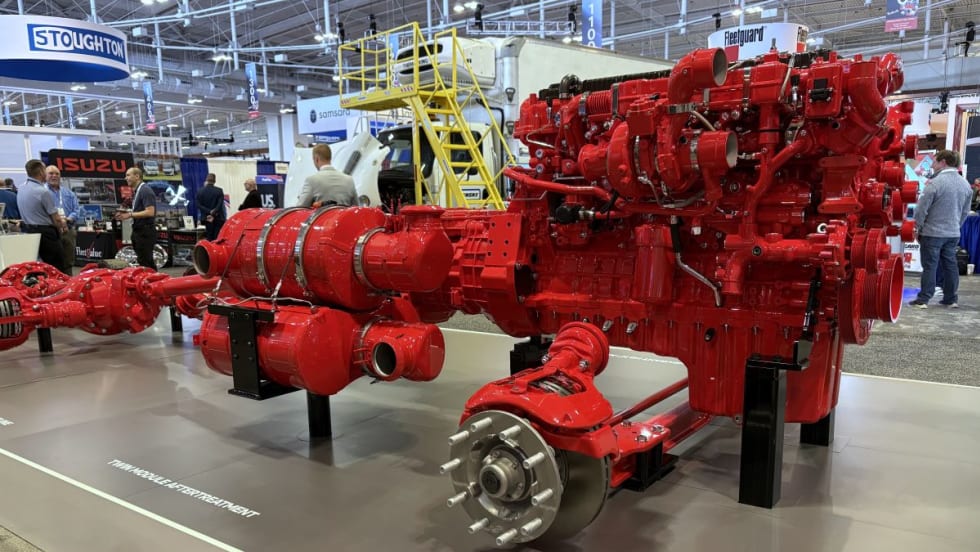
Cummins Adjusts 2027 Engine Rollout After EPA Proposal
The engine maker will gradually introduce its new Model Year 2027 diesel engines while continuing to offer current models during the transition, citing the EPA's proposed emissions rule changes.
Read More →