




Taking the Driver Physical to a New Level
Trucking companies, drivers and the general public who shares the road with trucks would all benefit from an approach that treats truck driver health as an ongoing project rather than every-other-year paperwork – and the new National Registry of Certified Medical Examiners could be a step in that direction.


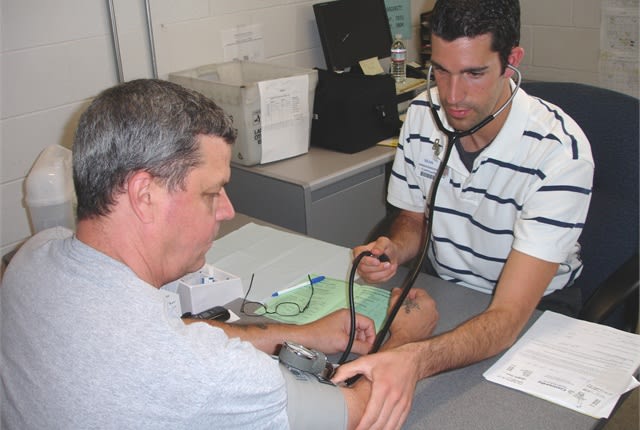
Trucking companies, drivers and the general public who shares the road with trucks would all benefit from an approach that treats truck driver health as an ongoing project rather than every-other-year paperwork – and the new National Registry of Certified Medical Examiners could be a step in that direction.
That was the message of Dr. David McKinney at the second annual Fleet Safety Conference put on by Bobit Business Media last month in Schaumburg, Ill.
Founder of California Occupational Medical Professionals, McKinney has been involved with the development of the National Registry of Certified Medical Examiners, which is now active. By May 21, 2014, all drivers must use a professional from the registry to conduct their physicals and get their medical cards.
While regulations have for some time required a medical certification exam to determine a driver's physical qualifications to operate a commercial motor vehicle, "We however found out that getting this exam done and done properly was problematic to say the least," McKinney explained. "Oftentimes family physicians, urgent care physicians, would do these exams as an afterthought, so driver certification became very hit and miss. This has become more of a problem as time has gone on."
Adding to the problem, he said, was the practice of doctor-shopping, where drivers who failed to get a medical card from one doctor would simply try different ones until they succeeded.
"There are certain examiners people seek out because they'll pass anybody," McKinney said.
With the new registry, not only will medical professionals have to pass an exam showing they understand the medical demands of truck driving, but they also will have to input the results of each physical conducted into a national database. Those exam results will be available to the next examining physician.
One potential problem is that come next May, there may not be enough certified examiners to handle the workload. McKinney strongly recommended that fleets develop a relationship with several certified professionals ahead of time.
That relationship also can help fleets move drivers more toward a program of true wellness rather than simple medical certification.
The Challenge of Driver Health
It's no secret that the lifestyle of trucking not conducive to good health, with its sedentary nature and lack of access to healthy foods.
"I know of no organic food bar that has parking spaces for truckers," McKinney quipped.
However, he also pointed out a factor that gets less attention: The very nature of the high level of alert that professional drivers need to maintain is a stresser that leads to health problems.
"One of the biggest stressers is the ability to stand ready," McKinney explained. "We take fire departments that don't have a lot of action, like airport fire departments, yet we note the rate of heart disease and hypertension is higher than the general population, because there's this constant state of readiness. Driving can be analogized to this. There's a lot of responsibility, a very demanding situation."
All these factors lead to an increasing prevalence of serious disease in commercial motor vehicle drivers, he said. The big four are:
Hypertension
Type 2 diabetes
Cardiovascular disease
Sleep apnea
"To some extent this mimics the general population," he said, "but it is somewhat more prevalent and has special significance for those driving trucks." No one wants a driver to have a heart attack or stroke, fall into a diabetic coma, or fall asleep behind the wheel of an 80,000-pound truck.
McKinney noted that the Federal Motor Carrier Safety Administration will soon be releasing new "guidance" for medical examiners about screening truck drivers for sleep apnea, which will likely look at body mass index among other factors. Although the "guidance" does not have the force of law, he said especially with the new registry and certification process in place, physicians will likely follow the guidance.
"Once the registry comes into effect, examiners are going to have less leeway," he said.
But McKinney views this as an opportunity.
Being Proactive
"I think going forward there's a real opportunity here for the industry and medical examiners to really affect driver health," McKinney said. "We do this by approaching the physical exam and certification as a fitness for duty exam. Instead of just passing the exam to get your certification, focus on driver health and managing their medical problems so we keep them certified."
"Really what we're looking for is to keep driver healthy, fit and driving. That's going to require more work on your part and on the doctor's part."
Fleets can be proactive, he said, in requiring drivers to have a more comprehensive "fit for duty" exam than is called for in the federal regulations, to help identify at-risk drivers and address their health issues.
McKinney, who is also a certified flight surgeon for the FAA, said this is already the approach he takes with pilots.
"That's the way I treat my pilots who are at risk," he said. "I see them more frequently than their certification. I carry on a relationship with them and their company way more than required by the FAA, so when certification comes up, we've already addressed issues with high blood pressure or whatever else, so I sign their card and they go off into the wild blue yonder."
More Fleet Management

Color Match Smarter: Tools That Restore & Perform
For fleet managers and collision repair professionals keeping heavy-duty trucks on the road, getting the color right the first time isn't just about appearance — it's about efficiency, turnaround time, and bottom-line results. Discover how today's digital color tools are transforming the repair process from guesswork to precision.
Read More →
FMCSA Pauses Biennial-Update Enforcement Amid Motus Transition
Carriers whose updates were due on or after June 1 have more time, while FMCSA works to stabilize its new registration system and warns of phishing sites impersonating its new carrier registration system, Motus.
Read More →
2026 Blueprint for Countering Smarter Supply Chain Theft
Cargo theft is no longer just the cost of doing business. It's a multi-billion-dollar criminal enterprise exploiting vulnerabilities across your fleet, drivers, and supply chain.
Read More →


How Telematics Improves Visibility, Control, and Performance in Refrigerated Fleets
Explore how telematics help refrigerated fleets improve visibility, uptime, efficiency, compliance, and cargo protection across connected cold chain operations.
Read More →
What the U.S.-Canada Trade War Means for Trucking
Escalating U.S.-Canada tariffs could disrupt cross-border freight, reduce truck volumes, raise costs, and create new uncertainty for carriers on both sides of the border.
Read More →
What Are Trucking’s Top Concerns for 2026?
The American Transportation Research Institute wants to know what's worrying trucking fleet managers, drivers, and other stakeholders in its annual Industry Issues survey.
Read More →
American Trucking Associations Looks for a New Leader
ATA President and CEO Chris Spear abruptly left his job at the association on August 21, at a pivotal time for the trucking industry.
Read More →
Public Wi-Fi Cybersecurity Risks: How Truck Drivers and Fleets Can Protect Their Data
Public Wi-Fi can expose truck drivers and fleets to credential theft, malware, and other cyber threats. Here’s how to reduce the risk on the road.
Read More →
For Nicky Cupp, Fleet Innovation Starts With Frustration
HDT Truck Fleet Innovator Nicky Cupp turns everyday pain points at Fraley & Schilling into opportunities for better technology and smarter processes.
Read More →
Adam Buttgenbach’s Approach to Electric Trucks: Start With Where They Fit
HDT Truck Fleet Innovator Adam Buttgenbach helped PepsiCo build one of North America’s largest EV fleets by focusing on where electric trucks make operational sense.
Read More →