




Survey: What Fleets Consider When Choosing Suspensions
When spec’ing tractors and trailers, there are a lot of things to consider. In this month’s edition of Survey Says, we asked our readers all about their suspension considerations.

Along the bumpy roads that move freight from origin to destination, fleets try to make sure that their cargo, and drivers, are not feeling every pothole in the pavement. In this month’s edition of Survey Says, we asked our readers all about their suspension considerations.
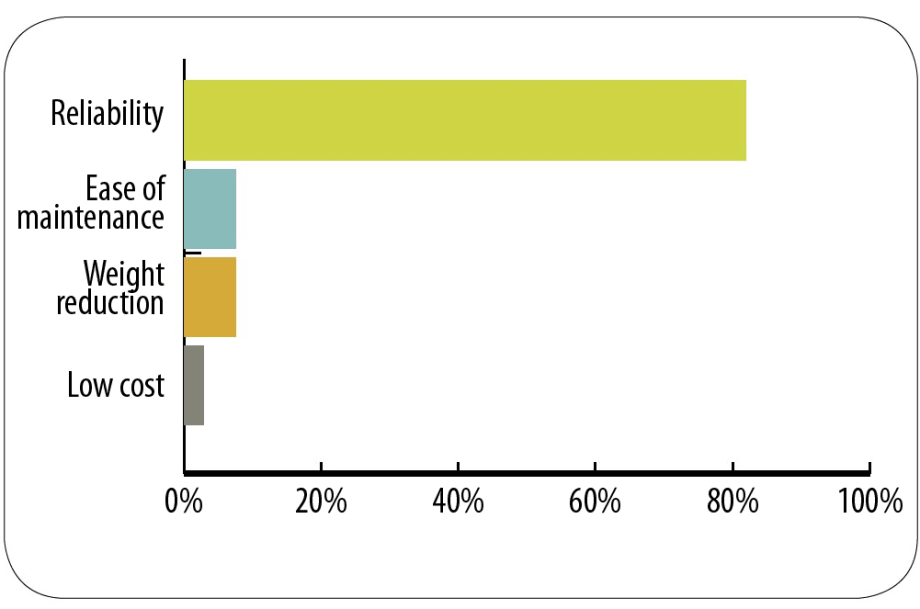
When spec’ing tractors and trailers, there are a lot of things to consider. More than anything else, the fleets we reached out to touted reliability as their main concern, with more than 80% agreeing. Weight reduction and ease of maintenance tied at around 8%, while low cost was the primary concern for fewer than 3% overall.
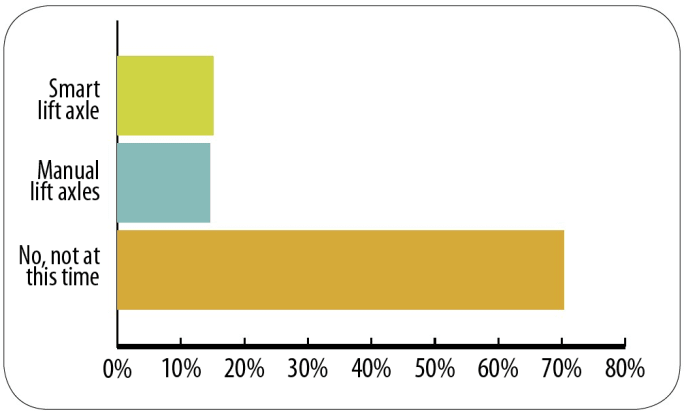
While there is new tech out there to ease the ride, most of the fleets are not currently considering adding smart lift axles or manual lift axles. Only about 15% said they use or are considering using smart or manual lift axles.
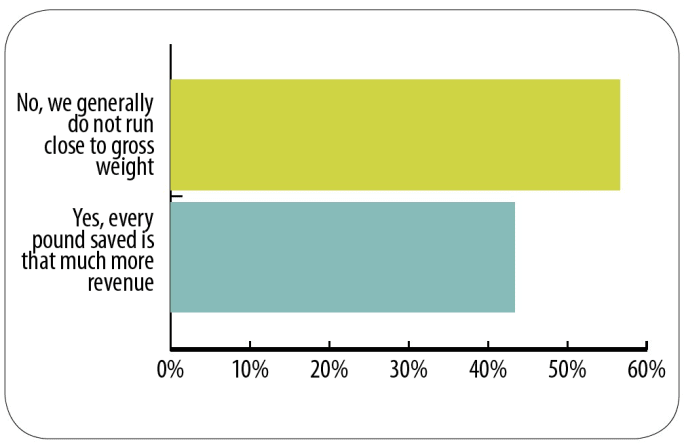
When it came to whether or not fleets were willing to pay a premium price for a lightweight suspensions, the split was a little closer, with 57% saying no, since they generally do not run close to gross weight, and 43% saying yes, with the thought that every pound saved is that much more revenue for the fleet.
Our readers are also generally satisfied with OEM offerings, preferring not to spec an alternate supplier’s product. Close to 90% were happy with what OEMs offer on that front.
When considering your suspension spec, tractor or trailer, what is your primary consideration?
Are you willing to pay a premium for a lightweight suspension?
Have you already or are you considering adding “smart lift axles” or manual lift axles to your trailer suspension spec?
This information was provided by a select group of our print magazine circulation. If you’d like to participate, contact Managing Editor Stephane Babcock at sbabcock@truckinginfo.com.
More Equipment

How Volvo Updated Its D13 for EPA 2027 [Watch]
Volvo’s updated D13 promises lower emissions without sacrificing performance or fuel economy. Take a closer look at what changed inside the engine in this HDT Spotlight video.
Read More →
Michelin Tire Improves Efficiency and Durability for Regional Fleets
The Michelin X Multi Energy D2 is a regional haul drive tire engineered to help fleets improve fuel efficiency, durability and traction in demanding stop-and-go operations.
Read More →
ZF Expands Commercial Vehicle Push in North America
ZF is expanding its North American commercial-vehicle presence with new transmission applications, electrification, trailer technology and autonomous-driving systems.
Read More →
Tesla Wants a Self-Driving Semi. Are Cameras Enough?
Could Tesla’s camera-only autonomous driving technology work on an 80,000-pound Semi? In this commentary, HDT's Deborah Lockridge takes a look at Tesla, Cybercab, and how autonomous trucks see the road.
Read More →
Kodiak: Driverless Long-Haul Truck Launch on Track for 2026
Kodiak AI says its driverless long-haul safety case is 93% complete and it remains on track to begin commercial operations by year-end 2026.
Read More →
What DOT’s Automated Vehicle Strategy Means for Trucking
The U.S. Department of Transportation issued a new automated-vehicle strategy that outlines plans for driverless-truck regulations, cross-state freight corridors, and federal safety standards.
Read More →
East Coast Port Launches $45M Electric Truck Push
The Port Authority of New York and New Jersey announced millions in incentives for zero-emission drayage trucks, yard tractors, and new charging hubs near the port.
Read More →
PlusAI Going Public to Fund Autonomous Truck Launch
A SPAC deal could provide PlusAI with up to $300 million as it works toward a 2027 commercial launch of factory-built autonomous trucks.
Read More →
NHTSA Moves to Rewrite Truck Fuel-Economy Rules
The National Highway Traffic Safety Administration says it lacks authority to regulate medium- and heavy-duty truck engines separately from complete vehicles, but the existing standards have not yet been eliminated.
Read More →
Detroit Opens Orders for EPA 2027 Engines
Detroit isn’t starting from scratch to meet EPA 2027 diesel emissions standards. Its Gen 6 DD13 and DD15 engines keep much of today’s platform while updating the fuel and aftertreatment systems.
Read More →