




Software Users Hear About Trucking Industry Trends at Conference
From the rise in truck intermodal to shippers' use of 3PLs to the coming black box, the changes we're seeing in the trucking industry were front and center during the opening general session of the McLeod Software User's Conference

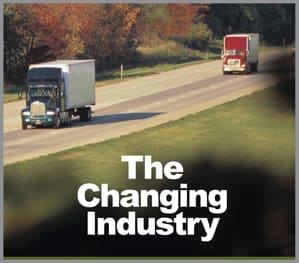
From the rise in truck intermodal to shippers' use of 3PLs to the coming black box, the changes we're seeing in the trucking industry were front and center during the opening general session of the McLeod Software User's Conference,
Oct. 21, in Birmingham, Ala.
Shorty Whittington, outgoing chairman of the American Trucking Associations and president of Grammer Industries (and a longtime McLeod customer), said when people ask him how the industry has changed, he holds up his Blackberry and asks, "How has THIS changed in the last five years?" A man who used to travel with a black satchel filled with magazines so people would think he had a computer, Wittington now says he can't live without his smart phone. And the changes going on in the industry are just as great.
When you look at the different modes of transportation and how they are projected to change between now and 2020, trucking is expected to increase about 30 percent, rail by about 22 percent - but rail intermodal is projected to increase 64 percent. "That's a big, big jump in any industry," Whittington noted. Legislation that has been introduced in Congress would require more freight to go to railroads, which would mean that rail intermodal business would have to increase 1200 percent, he said.
Yet despite that growth, if you look at a pie chart of the distribution of tonnage projected for 2020, trucking still has about 70 percent of the pie - about the same as in 2008. Intermodal's piece of that pie is projected to go from 1.1 to 2 percent.
Despite the changes it's going through, "Trucking is still the 800-pound gorilla," he said.
'The Black Box is Coming'
"Back in the '90s, I was one of those country guys who bought I didn't need to learn about computers," Whittington said. "And then I started using one. Now I don't know what I'd do without my Blackberry."
One of the items on the American Transportation Research Institute's survey of the top issues faced by the trucking industry was onboard truck technology.
"I'm going to tell you, the black box is coming," Whittington said. "You are going to have electronic logs. It is coming really, really fast." His fleet is getting ready to take part of the fleet and move to electronic logs, and Grammer is just one of many fleets that have been installing the systems in the past year, from Schneider to FFE.
The main thing driving the change, Whittington said, is not the fact that electronic on board recorders are likely to become mandatory at some point, but rather, the safety and liability issues.
"If you have an accident with a large truck today and there's a fatality, that's going to cost $3.5 million. When you go to court, do you have the material ready to hand that you can put before a jury to prove that you were doing the right thing?
"It's the right thing for the industry to go to this technology," Whittington said.
When electronic logs eventually become mandatory, as many regulatory watchers predict, a lot of shippers aren't going to like it, he predicted. "Today, if we can't pick up and deliver a load in a timely manner, they've got five guys waiting in the wings who can do it illegally," Whittington said.
He related a recent conversation with one of his own shippers, who was complaining about a load not getting there in time. This shipper, he said, knew full well that if they held the truck more than three hours, the driver would not have enough hours to make the delivery on time. But the company was holding the truck up for five hours. Whittington told the man on the other end of the phone line that the company would be the first one on the witness stand if the truck were in an accident, testifying that they knew they were forcing the driver to violate hours of service regulations.
Trends Drive Development
Company founder and president, Tom McLeod, spoke about how his company has been developing products to meet the needs of a more diverse industry.
Starting about six to eight years ago, McLeod said, they saw their customers begin to diversify as a way to grow their businesses, rather than adding more trucks as was the typical strategy in the '90s. They've seen three main areas: brokerage, dedicated divisions, and hauling intermodal containers.
"This is being done both as a way to serve your customers better, but also as a way to hedge your bets against one particular sector being down," McLeod said.
He also spoke about the rise of the third-party logistics provider. After deregulation in the '80s, he said, when the number of carriers exploded, shippers expanded their traffic departments to deal with lots and lots of carriers. But in the '90s, the "core carrier" concept developed, where shippers reduced the number of carriers they dealt with, with a certain amount of their freight going through brokers, which created a place for smaller carriers to have access to the freight from larger shippers.
These days, we're seeing that trend continue to total outsourcing of transportation to third-party logistics providers, or 3PLs, McLeod explained, who then works with the brokers and the carriers.
"The third party logistics player acts a whole lot more like a shipper than like a broker or carrier," McLeod said. "A key differentiator in the logistics and 3PL environment from the broker environment are the reporting requirements. You're looking to provide a shipper metrics on how their freight execution is going from year to year, statitistics on what the carrier performance is." That's why McLeod earlier this year bought a product called iLENS, Integrated Logistics Execution Network Solution. McLeod has integrated it with its PowerBroker software and added EDI capabilities.
Some of the other things McLeod has done in the past year, he said, include two releases of its LoadMaster enterprise software (v9.2 and v9.3); enhancements to their document imaging product (including supporting in-cab scanning interfaces with Qualcomm and DriverTech); a new interface with the ProMiles routing and fuel optimization system; and a new division, McLeod Financial Solutions, to help finance purchases of software, computer hardware and other purchases.
More Fleet Management

2026 Blueprint for Countering Smarter Supply Chain Theft
Cargo theft is no longer just the cost of doing business. It's a multi-billion-dollar criminal enterprise exploiting vulnerabilities across your fleet, drivers, and supply chain.
Read More →
How Telematics Improves Visibility, Control, and Performance in Refrigerated Fleets
Explore how telematics help refrigerated fleets improve visibility, uptime, efficiency, compliance, and cargo protection across connected cold chain operations.
Read More →
What the U.S.-Canada Trade War Means for Trucking
Escalating U.S.-Canada tariffs could disrupt cross-border freight, reduce truck volumes, raise costs, and create new uncertainty for carriers on both sides of the border.
Read More →

What Are Trucking’s Top Concerns for 2026?
The American Transportation Research Institute wants to know what's worrying trucking fleet managers, drivers, and other stakeholders in its annual Industry Issues survey.
Read More →
American Trucking Associations Looks for a New Leader
ATA President and CEO Chris Spear abruptly left his job at the association on August 21, at a pivotal time for the trucking industry.
Read More →
Public Wi-Fi Cybersecurity Risks: How Truck Drivers and Fleets Can Protect Their Data
Public Wi-Fi can expose truck drivers and fleets to credential theft, malware, and other cyber threats. Here’s how to reduce the risk on the road.
Read More →
For Nicky Cupp, Fleet Innovation Starts With Frustration
HDT Truck Fleet Innovator Nicky Cupp turns everyday pain points at Fraley & Schilling into opportunities for better technology and smarter processes.
Read More →
Adam Buttgenbach’s Approach to Electric Trucks: Start With Where They Fit
HDT Truck Fleet Innovator Adam Buttgenbach helped PepsiCo build one of North America’s largest EV fleets by focusing on where electric trucks make operational sense.
Read More →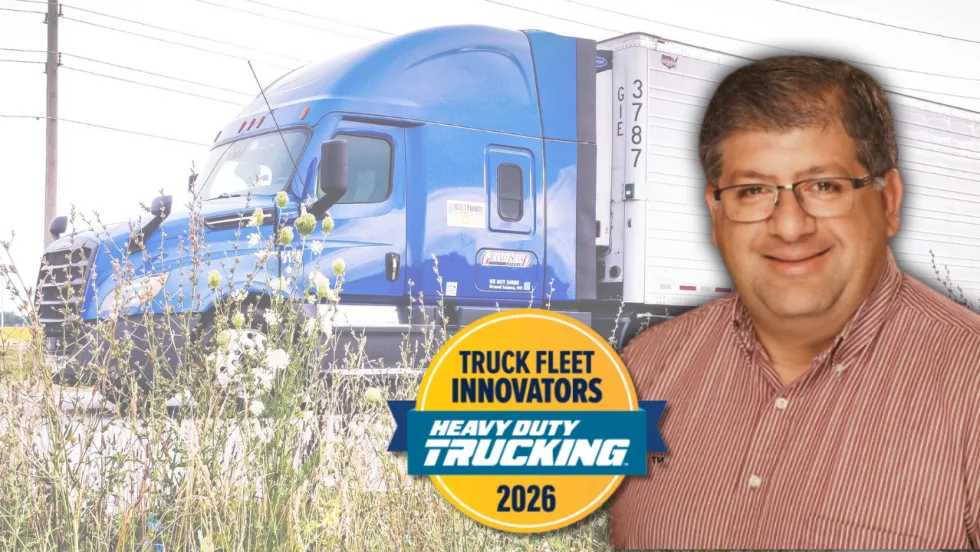
Deen Albert: Let Automation Do the Math, People Make the Decisions
HDT Truck Fleet Innovator Deen Albert makes sure people are still at the heart of operations at Grand Island Express, even while adopting artificial intelligence tools. AI-assisted dispatch helped boost revenue 25% with the same number of trucks.
Read More →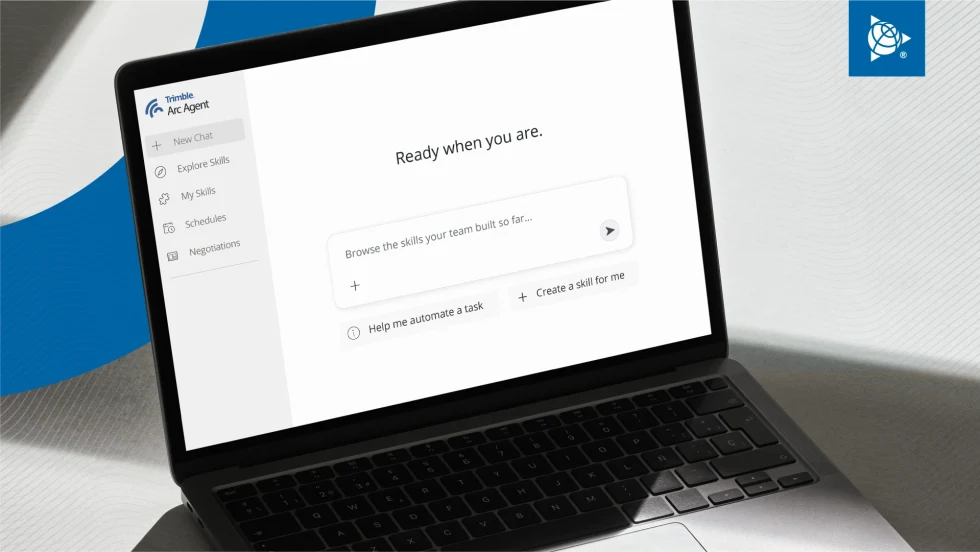
Trimble’s New AI Agent Takes Aim at Fleet Back-Office Busywork
Arc Agent works across Trimble TMS products to automate repetitive tasks such as freight orders, maintenance, invoices, fuel costs and more.
Read More →