




Shipper-Carrier Relations: Coca Cola Supply Looks for a Better Way
We're at a familiar point in the business cycle, a dismal one from the perspective of many carriers
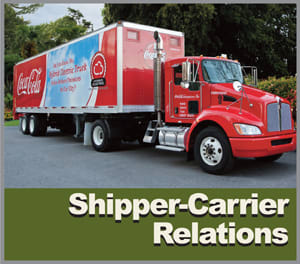
We're at a familiar point in the business cycle, a dismal one from the perspective of many carriers.
With freight down, carriers take even non-sustainable rates in hopes of staying afloat until the economy starts to produce again. At which point the pendulum will reverse: Capacity becomes king and shippers must pay.
One major shipper, Coca Cola Supply, is looking for a better way.
Several years ago the global beverage giant started to examine the logistics end of its business with a mind to take out unnecessary costs, of course, but also to build a more sustainable system. The effort reaches well beyond logistics, but in a presentation at the Oil Price Information Service's Fleet Fueling Conference in September, Coca Cola Supply's Chris Gaffney focused on the shipper-carrier relationship.
"Historically we have not allowed carriers to be very efficient in doing business with us," Gaffney said, describing one of the lessons learned. The soft drink business is by nature volatile in terms of pricing and volume, and the company didn't present that information to its transportation providers very well.
"What we finally found was that carriers said I can't do a good job utilizing my fleet the way you show freight," Gaffney said.
Matching Demand and Supply
What carriers need, the company found, is to have freight flows presented not just on an aggregate annual basis but on a more detailed level at shorter intervals. The aim, Gaffney said, is to get better at matching Coca Cola's demand with the carrier's supply.
"We've had carriers say, if you will allow me to bid more creatively I can do some things that are healthy for me and productive for you."
For example, Gaffney said, the practice of requiring a carrier to bid lane-by-lane can work against the best interests of both sides. A carrier might find, instead, that if it can commit to two lanes simultaneously it can find efficiencies in a third lane as well.
Gaffney described this approach as bidding against an engineered solution. "We want to do that because we think that allows us access over time to better quality capacity. We think it reduces empty miles. It's the kind of practice we want to see more of."
Collaboration Counts
Coca Cola Supply has used this technique and a wide variety of others to save on the order of $100 million over the past three years, Gaffney said. "We look for people who can help us work on this stuff together. A lot of the collaboration we're doing is because a shipper or carrier we work with says, 'I know somebody you ought to talk to.'"
The company is using standard techniques, ranging from automated dispatch and optimization of functions such as procurement and inbound/outbound routing, to fuel management. "We focus on the little things that add up to big things," Gaffney said.
For example, there's nothing unique about the effort to improve fuel economy and reduce emissions. The company limits idling with a 10-minute shutoff, fuel tanks are kept at least a quarter full, tires are kept inflated and highway speed is controlled. The company also is working at cutting extra weight out of tractors and trailers - it has some 3,000 combinations whose payload weight is up toward 52,000 pounds, Gaffney said.
And he sees a lot of opportunity in collaboration with other shippers and carriers. "We're starting to see a lot more work between suppliers and customers on freight that doesn't have anything to do with what we're selling today. We might have a large retail customer we're doing business with and we're starting to talk to them about maybe moving dog food in to one of their distribution centers … we might be hauling orange juice in a refrigerated truck on one side, and fruits and vegetables on the other."
This kind of collaboration has been talked about for a long time, Gaffney said. "But we're now starting to see the maturity in transportation management systems and other ways of transacting business electronically. I think there's a big opportunity there."
Equipment Innovation
Next: he wants to make better decisions about how Coca Cola products are hauled. "We have a lot of Coke assets that run truckload freight but we haven't necessarily been as thoughtful as we need to be in terms of making the right decisions on the size of those fleets and how we have them deployed," he said. "It's a huge area of opportunity for mileage reduction."
The company has the resources to invest in longer-term innovations, as well. It has more than 140 hybrid straight trucks in service. These are the Eaton direct hybrid system with the Paccar PX-6 240-horsepower engine and Hitachi batteries in a 33,000-pound-GVW, six-bay delivery truck. This year the company is deploying 150 hybrid tractors - again with Eaton-Paccar-Hitachi technology but in a 55,000-pound-GVW single-axle route tractor.
For more on the shipper/carrier relationship, see the November issue of Heavy Duty Trucking magazine.
More Fleet Management

Why Private Fleets Are Taking More Freight
Private fleets are putting their own trucks on demanding customers and high-cost lanes as companies seek greater control over service, costs, and capacity.
Read More →
Color Match Smarter: Tools That Restore & Perform
For fleet managers and collision repair professionals keeping heavy-duty trucks on the road, getting the color right the first time isn't just about appearance — it's about efficiency, turnaround time, and bottom-line results. Discover how today's digital color tools are transforming the repair process from guesswork to precision.
Read More →
FMCSA Pauses Biennial-Update Enforcement Amid Motus Transition
Carriers whose updates were due on or after June 1 have more time, while FMCSA works to stabilize its new registration system and warns of phishing sites impersonating its new carrier registration system, Motus.
Read More →


2026 Blueprint for Countering Smarter Supply Chain Theft
Cargo theft is no longer just the cost of doing business. It's a multi-billion-dollar criminal enterprise exploiting vulnerabilities across your fleet, drivers, and supply chain.
Read More →
How Telematics Improves Visibility, Control, and Performance in Refrigerated Fleets
Explore how telematics help refrigerated fleets improve visibility, uptime, efficiency, compliance, and cargo protection across connected cold chain operations.
Read More →
What the U.S.-Canada Trade War Means for Trucking
Escalating U.S.-Canada tariffs could disrupt cross-border freight, reduce truck volumes, raise costs, and create new uncertainty for carriers on both sides of the border.
Read More →
What Are Trucking’s Top Concerns for 2026?
The American Transportation Research Institute wants to know what's worrying trucking fleet managers, drivers, and other stakeholders in its annual Industry Issues survey.
Read More →
American Trucking Associations Looks for a New Leader
ATA President and CEO Chris Spear abruptly left his job at the association on August 21, at a pivotal time for the trucking industry.
Read More →
Public Wi-Fi Cybersecurity Risks: How Truck Drivers and Fleets Can Protect Their Data
Public Wi-Fi can expose truck drivers and fleets to credential theft, malware, and other cyber threats. Here’s how to reduce the risk on the road.
Read More →
For Nicky Cupp, Fleet Innovation Starts With Frustration
HDT Truck Fleet Innovator Nicky Cupp turns everyday pain points at Fraley & Schilling into opportunities for better technology and smarter processes.
Read More →