




Seattle Mayor Challenges City Fleets to Cut Use of Petroleum-Based Fuels
Seattle Mayor Mike McGinn has directed city departments to build on earlier "green fleet" efforts to cut the city's annual use of petroleum-based fuels by 1 million gallons by 2020, using electric and alternative fueled vehicles, biodiesel and more efficient use of vehicles.
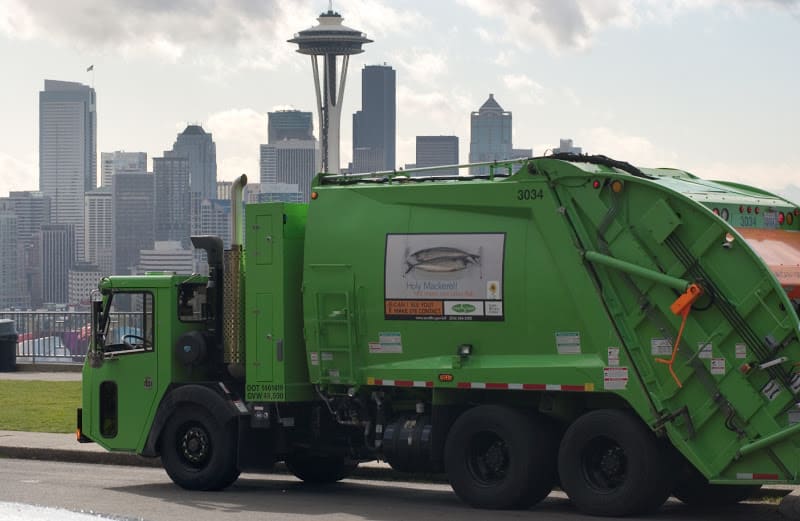
CNG truck operated by CleanScapes in Seattle.
CNG truck operated by CleanScapes in Seattle.
Seattle Mayor Mike McGinn has directed city departments to build on earlier "green fleet" efforts to meet the challenge of cutting the city's annual use of petroleum-based fuels by 1 million gallons by 2020.
This will take improving operational efficiencies, making investments in alternative-fuel infrastructure, and ramping up purchases of alternative vehicles.
"Reducing consumption of petroleum-based fuels is good for the climate and good for the economy," said McGinn. "By ramping up demand on the government side we can help support businesses that are interested in innovating sustainable alternatives to petroleum-based fuels. I encourage my colleagues across the region and country to take similar actions."
Using the city's 2012 fuel usage as a baseline, a reduction of 1 million gallons of petroleum-based fuel would equate to a 42% reduction in overall petroleum-based fuel usage by the city's fleet.
To meet the "million gallon challenge," McGinn has instructed the Department of Finance and Administrative Services to update the City's 2007 Clean and Green Fleet Action Plan. The plan will focus on four key areas to reduce Seattle's use of petroleum-based fuels by 2020:
1. Using advanced vehicle technology, such as automatic vehicle locators, to create operational efficiencies:
2. Purchasing alternative-fueled vehicles:
All-Electric passenger vehicles, parking enforcement scooters, and light-duty trucks
Electric-Hybrid vehicles, heavy-duty trucks and large work vans
Other alternative-fueled vehicles that run on biofuels.
3. Working with regional partners to develop electric vehicle infrastructure to support city fleet needs and enable Seattle residents to purchase all-electric vehicles:
Install additional charging stations in strategic locations throughout Seattle and travel points throughout Washington
4. Using a biodiesel blend made with waste vegetable oilat the city's three main fueling sites.
FAS will update the Clean and Green Fleet Action plan in 2013, so that this effort can start in earnest in 2014. McGinn will propose an adjustment to the 2014 endorsed budget to cover the costs associated with achieving this goal in 2020.
This includes funding to:
purchase approximately 36 all-electric vehicles to replace traditional fuel vehicles due for replacement in 2014;
install and maintain 200 Advanced Vehicle Locator systems for supporting more efficient use of vehicles;
instal additional charging stations throughout the city
preparation of existing tanks for biodiesel use
fund a new Green Fleet Coordinator, who will be responsible for implementing the Green Fleet Action Plan and cultivating regional partnerships to achieve green fleet goals.
Actual funding amounts will be worked out during the 2014 budget process.
Seattle has been a leader in green fleet development for more than 20 years - starting in 1991 when Seattle built a regional compressed natural gas fueling station on city-owned property. Having CNG fueling infrastructure ultimately led to the purchase of CNG fleet vehicles, spurring others to convert to CNG-fueled vehicles and laying the groundwork for requiring Seattle's waste hauler contractors to use CNG garbage trucks. Seattle was also an early adopter of hybrid technology and grew its fleet of Toyota Prius to be one of the largest in the U.S. Since 2011, the city's 43 all-electric Nissan Leafs have traveled more than 240,000 miles.
More Fuel Smarts

How Volvo Updated Its D13 for EPA 2027 [Watch]
Volvo’s updated D13 promises lower emissions without sacrificing performance or fuel economy. Take a closer look at what changed inside the engine in this HDT Spotlight video.
Read More →
Diesel Price Spike Shortens Payback for Natural Gas Trucks, Report Says
Energy Vision estimates fleets could recover the higher purchase price of an RNG-fueled Class 8 tractor in 1.3 to 2.8 years under current fuel-price scenarios.
Read More →
Calstart Becomes Catalyst Mobility, Reflecting Broader Focus
Calstart is now Catalyst Mobility, reflecting the nonprofit’s growing national role in clean transportation, including zero-emission trucks, infrastructure and incentive programs.
Read More →

Record Diesel Prices Squeeze Trucking Fleets
Average U.S. diesel prices have climbed to nearly $6 a gallon, surpassing the 2022 record as tight refinery capacity and Middle East disruptions keep fuel costs elevated.
Read More →
How Fuel Delivery Shapes Engine Performance
Fuel delivery depends on more than what happens at the injector. For fleet, maintenance and technical professionals, looking at the full path from pump to injector can provide useful context for understanding engine performance.
Read More →
East Coast Port Launches $45M Electric Truck Push
The Port Authority of New York and New Jersey announced millions in incentives for zero-emission drayage trucks, yard tractors, and new charging hubs near the port.
Read More →
California Bill Could Shed Light on Electric Truck Prices
Why do battery-electric Class 8 trucks remain so expensive? A California bill headed to Gov. Gavin Newsom would give fleets and state agencies more visibility into what manufacturers charge.
Read More →
Detroit Opens Orders for EPA 2027 Engines
Detroit isn’t starting from scratch to meet EPA 2027 diesel emissions standards. Its Gen 6 DD13 and DD15 engines keep much of today’s platform while updating the fuel and aftertreatment systems.
Read More →
Zero-Emission Truck Corridor Planned for West Coast
California, Oregon, Washington, British Columbia and Baja California are coordinating plans for truck charging and hydrogen fueling from Canada to Mexico.
Read More →
A Closer Look at Kenworth’s Electric T880E Vocational Truck [Video]
Learn more about Kenworth's T880E battery-electric vocational truck at the Paccar Technical Center, including its range, applications, upfitting considerations, and PTO options, in this HDT Spotlight video.
Read More →