




Se Habla Espanol?
CFI's Mexican business can be traced back to deregulation.
You might call Glenn Brown a reluctant innovator. He's chairman & CEO of Joplin, Mo.-based Contract Freighters Inc., where 40 percent of its business is providing service to Mexico. But back in the early '80s – right after deregulation, when CFI's auto industry customers were pushing for CFI to haul freight into Mexico – Brown at first resisted the idea.
"About the only Spanish I knew was 'taco,'" he says. "At that point in time, I viewed Mexico – like I think everyone did – as a big black hole. But [customers] kept insisting that we do it. So I made a trip to Mexico and spent a couple weeks visiting with people along the border and in Mexico to try to learn what was involved. And then I became convinced that we could do it. It was a steep learning curve, but we just went to work and made it happen."
Brown had to hire people in Mexico, had to establish relationships with Mexican trucking companies and develop interline agreements so they could pull CFI's trailers. CFI had to become familiar with freight forwarders, with all the paperwork necessary to transport the freight from the United States to Mexico – and how to do the same thing in reverse to get the trailers back out of Mexico. They hired a sales representative in Mexico who could find northbound freight. They had to rent locations along the border for terminals.
"I learned very quickly I had to have someone who could speak Spanish," Brown says. "So initially I hired a sales representative in Monterrey, Mexico, and a terminal manager in Laredo who were bilingual. That's how we started out. And early on, I went to a Spanish language school in Mexico for a couple weeks to acclimate myself to the basics."
It wasn't a notion Brown would have predicted when he began driving a truck at CFI back in 1976. Brown was soon promoted to dispatcher, and he worked his way up the ladder, becoming president in 1986. He has watched the company grow from 33 trucks to about 2,400 power units and 7,400 trailers, operated by both company drivers and owner-operators.
The Mexican business isn't the only area where CFI has been innovative under Brown's leadership. For instance, Brown was the first person to drive a tandem-axle truck up Colorado's Pikes Peak in the annual Pikes Peak Hill Climb, and set a new world land speed record for a heavy-duty truck at Utah's Bonneville Salt Flats, all in the name of differentiating CFI from the pack in the eyes of drivers.
The racing program also led Brown to some equipment innovations. For instance, CFI was one of the first in the industry to spec front disc brakes. "Through the racing program, we learned they're much more effective in stopping a truck than the traditional drum brakes," Brown says.
Brown can trace the Mexican business back to deregulation. With its new nationwide general commodities authority, CFI went to existing customers that it knew had freight going to geographic areas that CFI hadn't been able to serve in the regulated environment. For instance, it was now able to haul glass containers from Missouri to Michigan. And in Michigan, CFI discovered the automotive industry and all the freight it had going all over the country.
"Just like stepping stones, it allowed us to go from one thing to another," Brown says. "Prior to deregulation, we couldn't go to Michigan, and we couldn't haul automotive products. So we really started growing prolifically with the automotive industry." And when their automotive customers needed CFI to get their freight into Mexico – well, the rest, as they say, is history.
Things have changed in the more than two decades since CFI started hauling freight to Mexico. Some of the border crossing processes that Brown describes as "archaic" have been updated and streamlined. As concern about security focuses more attention on our borders, at the same time, officials are developing new programs to expedite the movement of freight across the borders while maintaining security. Today, all CFI vice presidents are proficient in Spanish, and there's someone bilingual in every department. CFI offers its website in both English and Spanish. The company has eight locations along the U.S./Mexico border. Today, it's not just automotive loads, but all kinds of freight – "everything from cookies to computers," Brown likes to say.
Then there's the North American Free Trade Agreement. "We were [in Mexico] prior to NAFTA by several years, and found that to be a very good business for us," Brown says. "When NAFTA came into being, it was kind of turning a spotlight on that opportunity, so it brought a lot of competition that wasn't there when we first started."
NAFTA may also mean challenges in the future. "The original terms of NAFTA included opening the U.S./Mexican border for U.S. drivers to enter into Mexico and for Mexican drivers to enter the United States," Brown says (but would not allow cabotage, foreign drivers transporting freight point-to-point domestically). That provision has never been fully implemented. Currently, regulations mean Mexican drivers are effectively allowed into this country only within limited "commercial zones" along the border.
While this issue has not been in the news lately, Brown says, "I'm told that negotiations continue to get that accomplished. Should that provision be implemented, I think it could change the playing field with regard to international business."
More Fleet Management
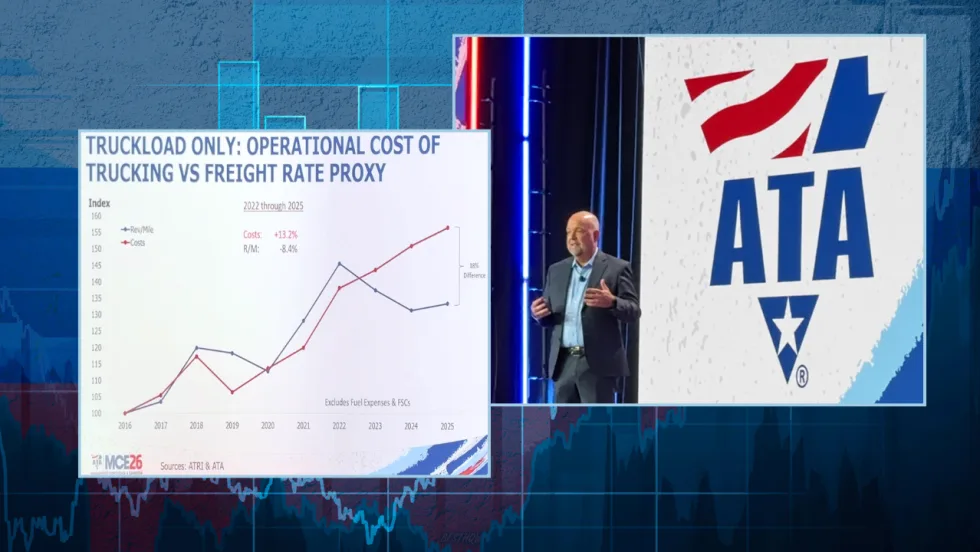
Why This Trucking Recovery Is Different
Freight demand remains sluggish, but rising costs and tougher enforcement have taken enough capacity out of the market to change the outlook for motor carriers.
Read More →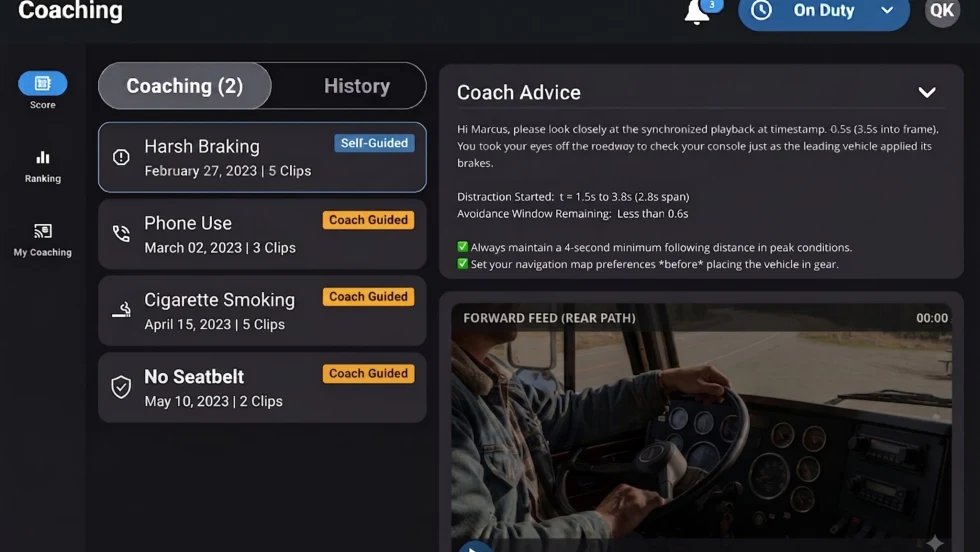
Platform Science Adds Dispatch and Safety Tools
Four additions to PS Fleet help fleets monitor loads, manage driver coaching, share truck locations and adjust video system settings.
Read More →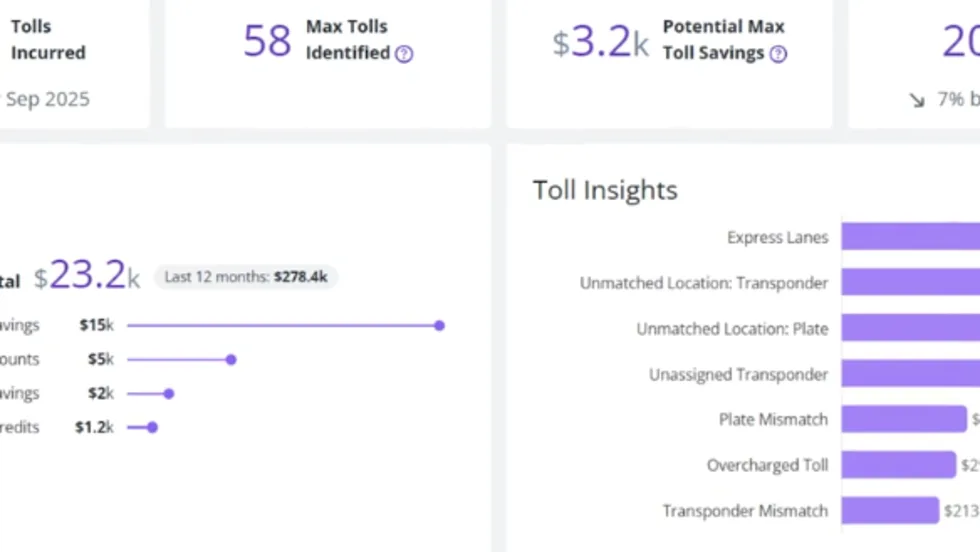
PrePass Intelligence Mines Fleet Bypass, Toll and Safety Data
PrePass Intelligence helps fleets measure bypass savings, flag potential toll overcharges, and spot suspicious transactions by combining data from separate systems.
Read More →
Motive Adds AI Agents for Fleet Operations
New tools automate follow-up on fleet data, from maintenance work orders to driver alerts, with two-way voice conversations planned for later this year.
Read More →
Can You Beat Our Trucking Trivia Challenge?
Test your truck knowledge with 19 trivia questions from Heavy Duty Trucking Exchange. Can you keep up with the fleet pros?
Read More →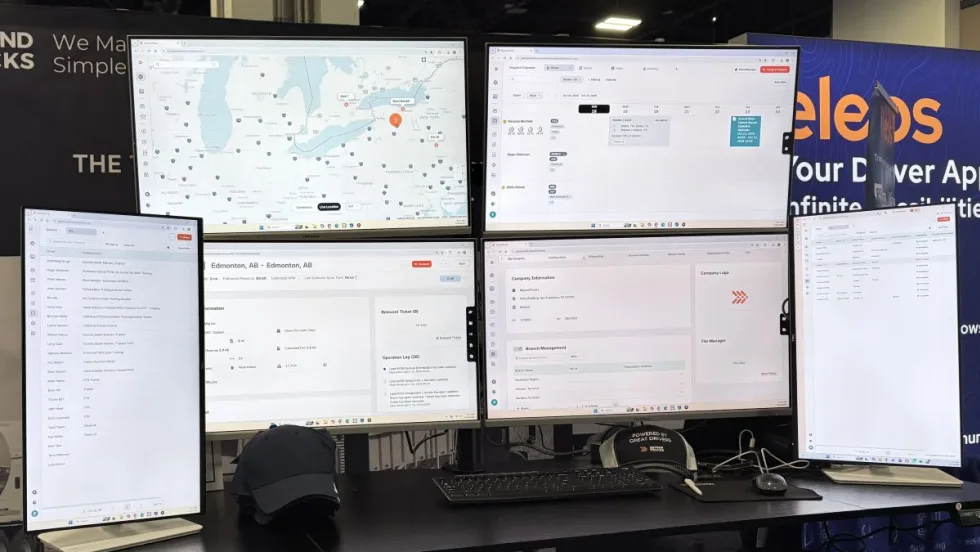
BeyondTrucks Adds Rules Checks to Dispatch
New Compatibility Engine checks driver qualifications, equipment requirements and fleet policies before loads are dispatched.
Read More →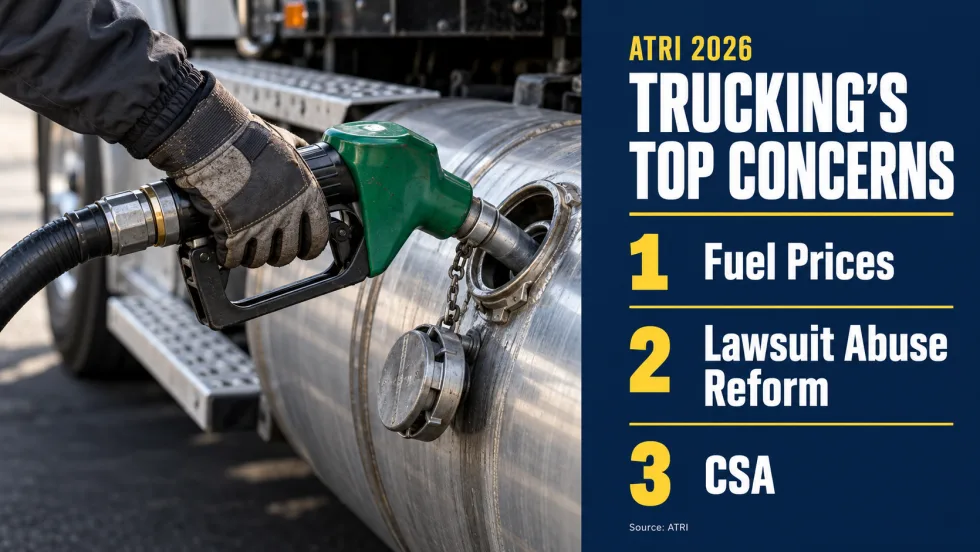
Diesel Prices Hijack Trucking’s Worry List
ATRI’s annual survey finds cautious optimism about freight, but diesel costs, litigation, and insurance continue to squeeze fleets. Drivers have different priorities on several issues.
Read More →
Nomination Deadline Extended for HDT Emerging Leaders
Just a few more days to nominate accomplished trucking fleet professionals under 40 who are making an impact and helping lead the industry forward for the HDT Emerging Leaders award. Deadline extended to October 20!
Read More →
What Will ATA’s New Leader Bring to Trucking's Table?
Incoming President and CEO Mark Colson’s record in Alabama offers clues about his priorities and approach following Chris Spear’s abrupt departure as the head of the American Trucking Associations.
Read More →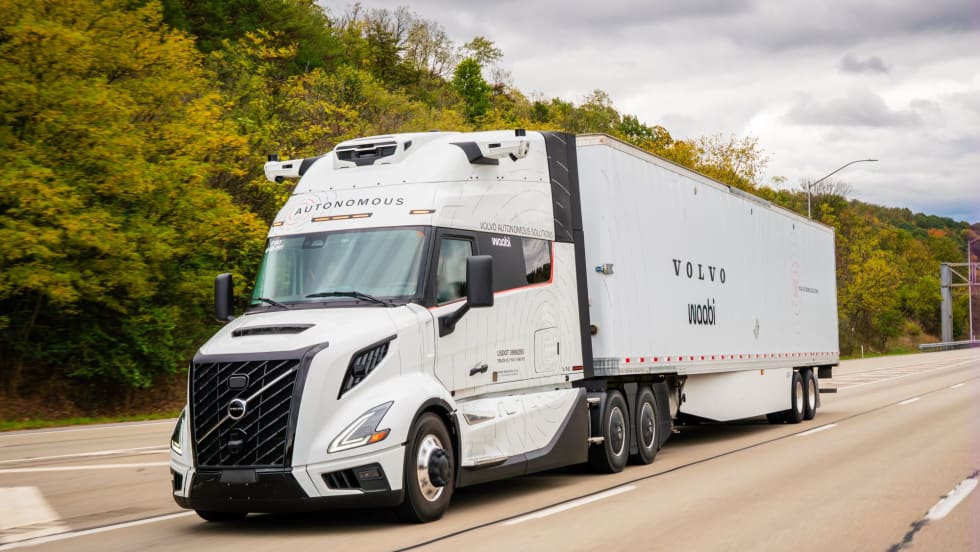
Volvo, Waabi Start Commercial Autonomous Operations in Texas
Volvo VNL Autonomous trucks, powered by the Waabi Driver, are hauling freight directly to third-party facilities for a customer in Texas.
Read More →