




Say Goodbye to Booster Cables
Next to the clang of your cell door slamming shut, there are few sounds more disheartening than the "click, click, click" of a starter that's not getting enough juice. Maxwell Technologies' Engine Start Module is an ultracapacitor starting system that can prevent that.

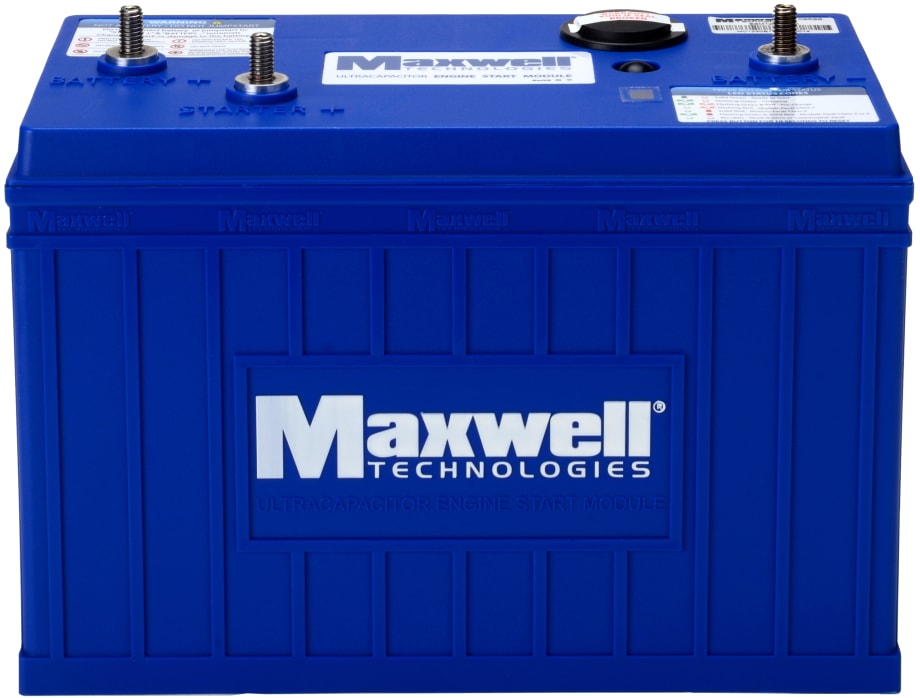
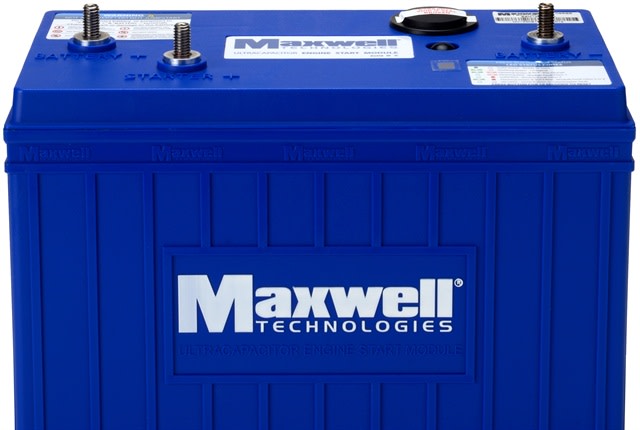
Next to the clang of your cell door slamming shut, there are few sounds more disheartening than the "click, click, click" of a starter that's not getting enough juice. Scrap the day's plans, and execute Plan B -- call a tow truck for a boost and go for a coffee.
That would never happen with an ultracapacitor starting system. Maxwell Technologies has pioneered such a system; it's called an Engine Start Module.
"It's the same size as a typical Group 31 truck battery, so it will fit into the same space as all your other batteries," explains Dennis Flynn, director of brand communication and marketing at Maxwell Technologies. "It weighs just 20 pounds and it will last almost infinitely. There are no moving parts, no chemical reactions to degrade over time, and it will recharge from near zero to full charge in just few minutes."
A single ESM replaces a bank of two, three or four heavy lead-acid batteries, leaving room in the battery box for a few AGM (absorbed glass mat) batteries to power hotel loads like on-board electric air-conditions, entertainment systems, electric cooking utensils, refrigerators, etc.
Here's the beauty of the ESM: AGM batteries aren't very good at starting trucks. They are designed to discharge current slowly over longer periods of time, so they are great for hotel loads. Maxwell's ESM, however, is very good at starting engines, because it is designed to deliver high current output over short periods.
Together, an ESM and a bank of AGM batteries solve all the truckers' on-board electrical demands. The traditional lead-acid battery was good for starting, but not so good at powering hotel loads. Prolonged use for hotel power kills lead-acid batteries prematurely, increasing the risk of the above no-start scenario.
And there's more: ESMs are not affected by cold temperatures. The discharge cycle doesn't depend on chemical reactions that slow at low temperatures. The ESM will perform as well at minus 40 degrees as it will at 140 degrees.
On top of that, Flynn says relieving the AGM batteries of their starting duties can about double their life expectancy.
Duty-Specific Application
Ultracapacitors are not batteries in the traditional sense. They do not rely on a chemical reaction to produce energy. Rather, they store energy from other sources in an electric field inside the device. The release of stored energy requires no chemical reaction or moving parts, so the ESM can survive hundreds of thousands more charge and discharge cycles than traditional batteries can.
Flynn says he's not sure the things will ever wear out.
"In all the fleet testing we've done, we have yet had a product failure," he says. "There's nothing in the ultracapacitors themselves that could fail. If anything, you might see a physical failure of some of the electronic or electrical componentry associated with the ESM. We've done very extensive shock and vibration testing and the OE are testing it too."
Thus, Maxwell can offer a four-year warranty on the product, which is basically the first life of most fleet trucks.
If or when it's taken out of service, it poses no environmental threat.
"Because there are no chemical inside, there's nothing hazardous to dispose of," Flynn says. "You'd just return it to the dealer or to Maxwell. We have other types of ultracapacitor systems in service in everything from transit buses to wind turbines, and the typical life expectancy is 10-15 years."
How Does it Work?
When installed, the ESM is connected in parallel to the rest of the battery pack. It is charged through those connections, but the third terminal on the ESM isolates the rest of the batteries from the starter. That third terminal is connected directly to the starter solenoid, thus being the sole source of current to the starter, which protect the other batteries.
There is some minor rewiring involved, but it's nothing a first-year technician couldn't handle.
Flynn says the ESM is good for three or four cranks lasting five to seven seconds. In the event the ESM discharges before the truck starts, it will draw a charge from the other batteries on board, and recharge itself completely in about 15 seconds.
If it hasn't started by then, chances are something is wrong with the truck.
"Our ESM has really raised some eyebrows," Flynn says. "We've now got one 200-truck fleet on the West Coast committed to the product, and we're talking with about 20 outer fleets around the country. All of the OEs are currently testing and evaluating the ESM now, so we're expecting so big things to come from that."
By now, you have to be thinking this is way too good to be true, or it will cost an arm and a leg, and possibly your left kidney. But you'd be wrong.
"The end user is paying about $800 right now," Flynn says. "Our first units were about $1,200, so we've come down $400 already, and we fully expect to see the price come down even more as economies of scale develop."
But acquisition cost is just part of the equation. Flynn says a typical fleet would see a return on the investment in about 11 months.
"Obviously it's situation-specific, and it would depend on how often you call for a roadside boost," says Flynn. "Look at the other advantages: no more changing out lead-acid batteries over the life of the vehicle, no more no-start down time, better performance from your AGM batteries on hotel loads, and maybe even more idle reduction due to greater utilization of the on-board climate control systems without fear of not being able to start in the morning."
With the ESM for Class 8 trucks now making its presence felt in the market, Maxwell is developing different capacities and different form factors for different truck applications. Today, it's a one-size-fits-all, so you don't even have to worry about cranking amp ratings over cost.
Maxwell Technologies' Engine Start Module
Product Specifications:
Voltage: 12V starter,
Nominal 15V module voltage, Maximum module voltage 16V
Peak Current: 1,500A (at -40 Farenheit) 1,700 (at 77 degrees Farenheit)
Cranking Power: 17kW
Works dependably in engines to 15L
Here's a good explanation of the pros and cons of ultracapacitors and how they work: http://gigaom.com/2011/07/12/how-ultracapacitors-work-and-why-they-fall-short/
More Drivers

From One Generation to the Next: How Mentorship Builds Safer Truck Drivers
After three decades in trucking, Harold Perry shares what he's learned about driver safety, mentorship, and helping the next generation build confidence behind the wheel.
Read More →
Truck Drivers Need More Than Another Alert
Fleets have more visibility into truck health, safety events, and driver activity than ever. The next challenge is turning all that information into useful guidance for the person who has to decide what to do next.
Read More →
FMCSA Removes 110 Truck Driver Training Schools from Certified ELDT List
Federal regulators also are targeting more than 160 additional training providers and launching a nationwide audit of third-party CDL skills testers as part of a broader crackdown on trucking fraud.
Read More →
Hours of Service Pilot Programs: FMCSA Readies for 2027 Rollout
Two pilot programs could eventually reshape hours-of-service rules, giving truck drivers options to pause their 14-hour clock or use longer split sleeper rest periods.
Read More →
Medical Cards, English Proficiency Reshape Roadcheck Violations
Medical-card violations jumped to the top of the driver out-of-service list during CVSA’s 2026 International Roadcheck, while English-language proficiency violations appeared among the leading violations for the first time.
Read More →
Driver Trust Can Make or Break the Success of Fleet Safety Technology
New Teletrac Navman research suggests that onboarding, transparency about driver data, and positive feedback can play a significant role in how commercial drivers respond to safety and coaching technology.
Read More →
EEOC Sues KLLM Over Alleged Sex Discrimination in Driver Training
KLLM is facing a federal sex-discrimination lawsuit over policies the EEOC alleges put female truck driver trainees at a disadvantage.
Read More →
FMCSA Moves to Codify English Language Requirements for Commercial Drivers
By changing regulations on English-language proficiency requirements for commercial drivers, rather than relying on a guidance memo, the FMCSA said future administrations won't be able to walk back the Trump administration's stricter enforcement with just a memo.
Read More →
Drivers Put Western Star Trucks to the Test at Star Nation Experience
Watch to get an inside look at the Western Star trucks, technology, and community behind the Star Nation Experience 2026!
Read More →
Trump Administration Looks to Put More Veterans Behind the Wheel
The Freedom Haulers program pulls together existing and expanded programs at several federal agencies to recruit veterans to drive commercial heavy-duty trucks and cut the red tape for them to get a CDL, training, and employment.
Read More →