




Rude Awakening
A lot of your customers are going to find the new CSA 2010 enforcement regime painful. Helping them avoid that pain is good business
A lot of your customers are going to find the new CSA 2010 enforcement regime painful. Helping them avoid that pain is good business.
Maintenance issues will likely result in one out of every four small fleets getting an "intervention" from the Federal Motor Carrier Safety Administration under its new CSA 2010 enforcement regime. This is a huge opportunity for aftermarket parts and service suppliers.
Things that were previously relatively minor enforcement issues - a missing mudflap, a burned-out lamp - are suddenly taking on a much larger importance in the eyes of fleets who are paying attention to this issue. And you need to be paying attention to it, as well.
CSA 2010, which eventually will become just CSA (Compliance, Safety and Accountability), changes the way the Federal Motor Carrier Safety Administration analyzes the safety data it collects from roadside inspections, truck crash reports and traffic reports on moving violations.
Right now, under SafeStat, the agency limits its analysis of roadside inspection data to violations that result in out-of-service orders. Under CSA 2010, all safety violations are included, in an analysis that goes considerably deeper into company operations.
The vast majority of trucking companies have not checked their status under CSA 2010, which they can do online with their DOT number and a PIN. After the system starts to go live in December, a lot of them are going to be in for a rude awakening.
Carriers in the half-dozen pilot states that have been testing the program have found that good scores in the old SafeStat measurement system don't mean they will do well under CSA 2010.
The government's usual penchant for acronyms is evident in its establishment of seven categories they're looking at under CSA 2010, called Behavior Analysis and Safety Improvement Categories, or BASICs.
When safety risk management firm Rair compared CSA 2010 to SafeStat records of more than 64,000 fleets, it found that the second-most-likely BASIC to trip carriers up was the maintenance category. As fleet size gets smaller, the risk gets bigger. In the one-to-five fleet size, about 25 percent will be looking at an FMCSA intervention for maintenance problems.
In this issue, Rich Farrell, president of Tangent Knowledge Systems, says people most commonly buy from fear or insecurity. They want to avoid pain. If they're not already in fear of CSA 2010, they ought to be, because it's definitely going to be causing a lot of carriers pain. This is an opportunity for you to help solve their problems.
As just one example, let's take LED lighting retrofits. With LEDs' long life and durability, fleets may be more willing to pay a premium to avoid CSA points for burned-out bulbs.
Don't forget that if you have a truck delivery fleet, you could be feeling some of this pain yourself.
That's exactly what happened to CRW Parts, Baltimore, Md., which is in one of the pilot states. The distributor recently received a letter warning it about the number of points its 50 trucks had racked up in infractions in the last three years. One of them was for a driver not using his seatbelt, said CRW President Dave Willis - and one of the trucks cited in the letter didn't even belong to his company.
For more information, go to the FMCSA's official CSA 2010 website at http://csa2010.fmcsa.dot.gov.
More Aftermarket

What Three Fleets Are Doing Differently When Buying Truck Parts in 2026
With freight improving but costs still climbing, fleet maintenance executives explain how they're balancing price, quality, and supplier relationships.
Read More →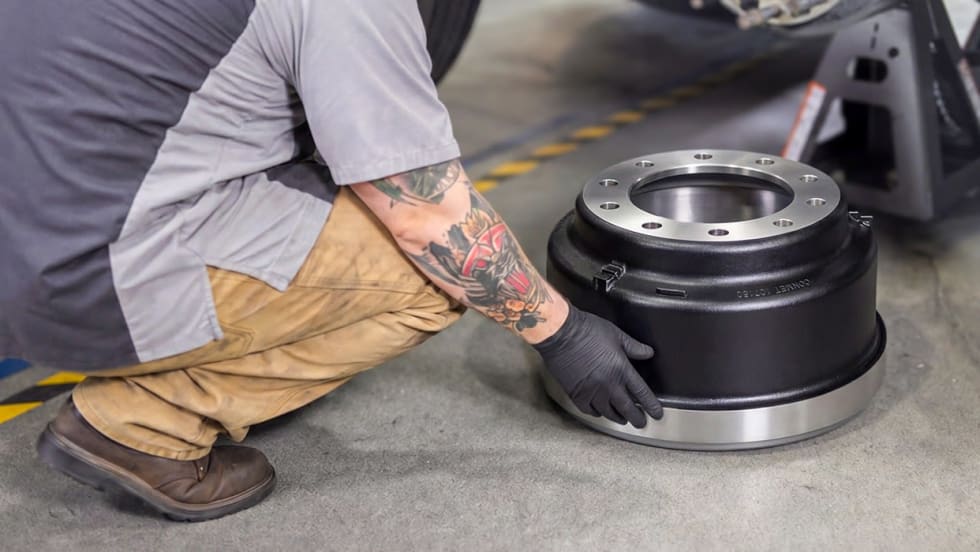
ConMet Expands Aftermarket Brake Drum Lineup With TruCast
A new heavy-duty truck brake drum option in the aftermarket gives customers more flexibility within the ConMet product family.
Read More →
Phillips Opens High-Tech Distribution Center for Faster Parts Delivery
Phillips Industries’ new Cincinnati-area distribution center is now shipping aftermarket trucking parts nationwide, aiming to speed up delivery times for customers.
Read More →
Volvo to Sponsor America’s Road Team for 2025
Volvo Trucks announced that it is extending its exclusive sponsorship of America’s Road Team for 2025.
Read More →
Webb to Start Taking Orders for UltraSet Pre-Adjusted Wheel Hubs
Webb, which recently acquired the Stemco Trifecta pre-adjusted hub program, will soon start taking orders for its replacement pre-assembled hub, the UltraSet.
Read More →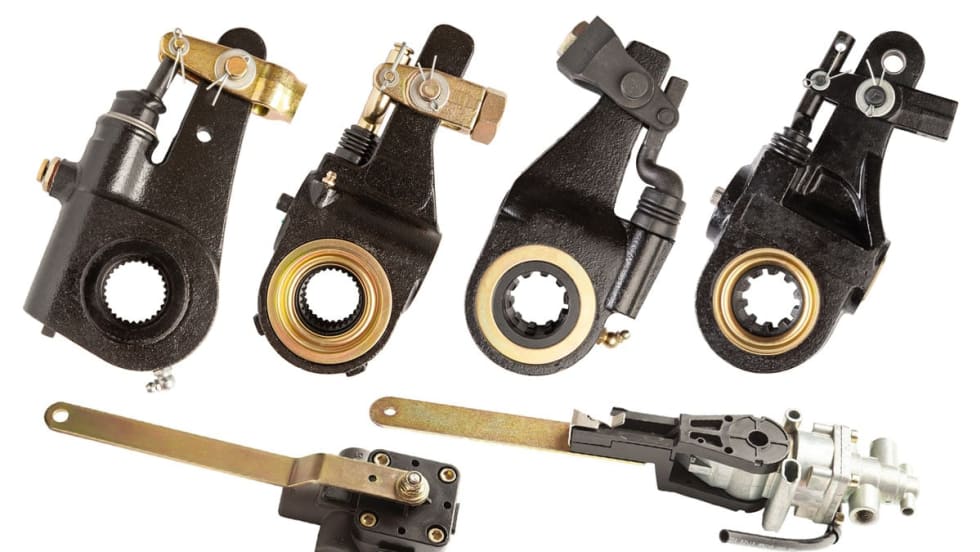
All-Makes Automatic Brake Adjusters, Ride Height Control Valves from Midland
SAF-Holland has added automatic brake adjusters and ride height control valves to its Midland All-Makes Program.
Read More →
ZF Aftermarket Expands [pro]Academy Training
ZF Aftermarket said it is expanding its ZF [pro]Academy training and will be adding 40 new modules this year.
Read More →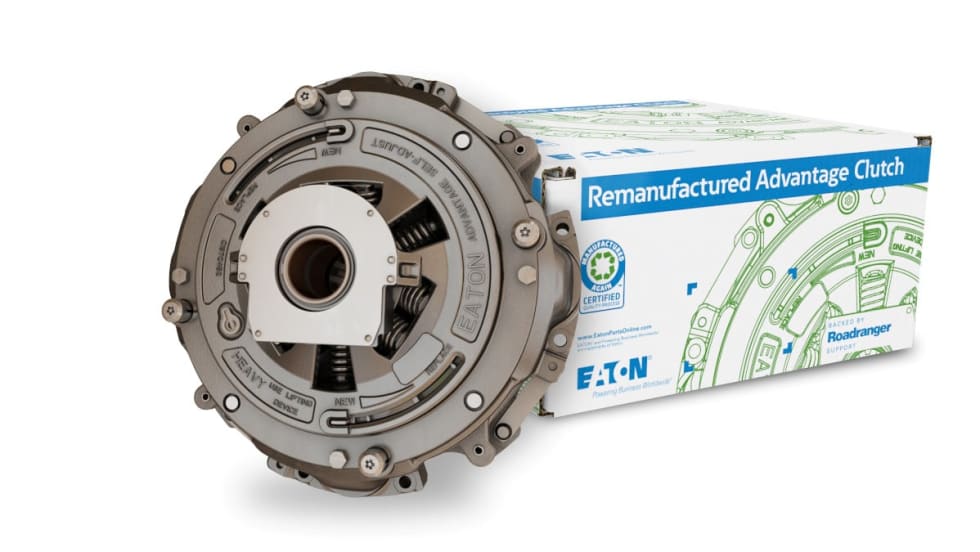
Eaton Adds Remanufactured Advantage Line of Clutches
Eaton has added its Advantage clutches to its remanufactured product line. The clutches feature a unique strap drive intermediate plate designed to allow customers to choose the latest OE specification
Read More →
ConMet Acquires TruckLabs, the Creator of TruckWings
Commercial truck and trailer parts provider ConMet acquired TruckLabs, the company that created TruckWings, an aerodynamic device that attaches to truck cabs and deploys to close the gap between truck and trailer. TruckLabs now operates as a subsidiary of ConMet.
Read More →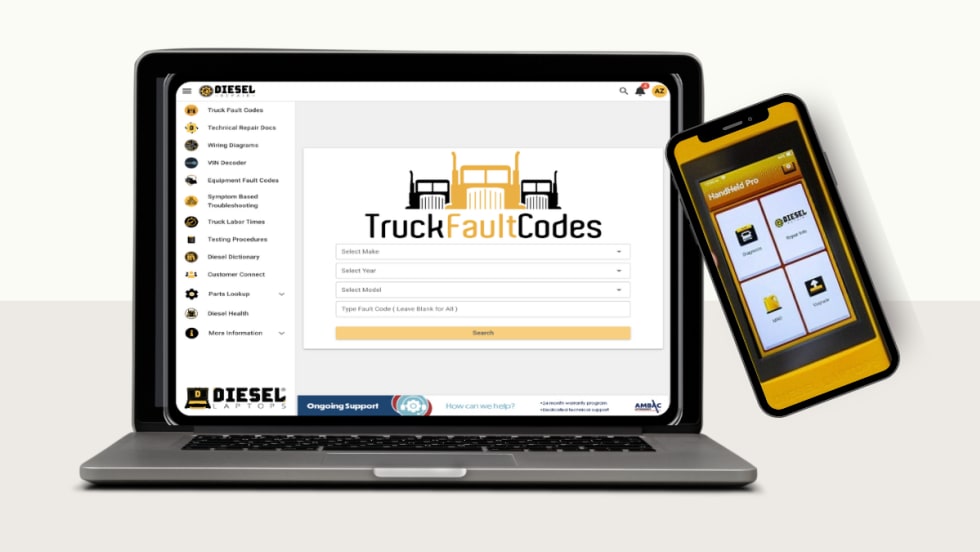
Diesel Laptops Releases Fault-Code-to-Part-Number Tool
Diesel Laptops said its Truck Fault Codes allows users to input a fault code and immediately identify and order the parts needed to complete repair work.
Read More →