Heavy Duty Trucking Logo
MenuMENU
SearchSEARCH

Reducing Pay Volatility Helps Fleet Keep Quality Drivers

While other fleets have increased driver pay in an attempt to curb high turnover rates, Roadmaster Group decided to focus on making pay more predictable.

May 20, 2019
Reducing Pay Volatility Helps Fleet Keep Quality Drivers

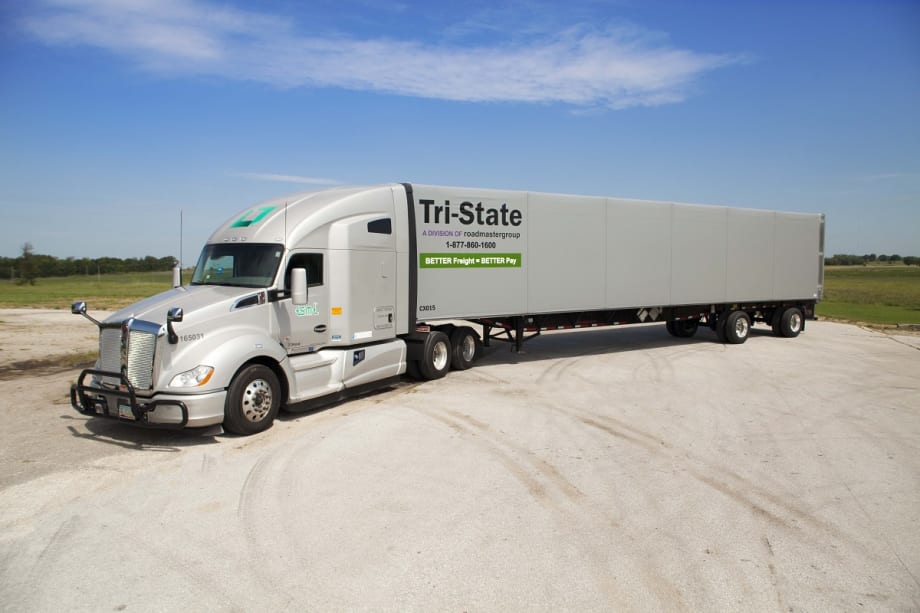
Tri-State Motor Transit handles high-security loads, which means it has higher standards for drivers.

Photo: Roadmaster Group

3 min to read


When John Wilbur took over as Roadmaster Group’s CEO in 2011, the Glendale, Arizona-based company was suffering from severe turnover. At times Roadmaster, the parent company of several secure truckload transportation fleets, saw turnover rise above 100%.

Turnover is a major problem for most fleets, but recruiting is even harder for Roadmaster’s primary division, Tri-State Motor Transit, which handles high-security loads for the Department of Defense.

Ad Loading...

Tri-State can’t hire on just any driver. It needs driver teams, with hazmat and tanker endorsements, a TWIC card to get in and out of ports, a U.S. passport, and the ability to maintain a security clearance. Prospective drivers must have one to two years of experience and a perfect driving record.

To solve his turnover problem, one of the first things Wilbur looked at was driver pay – not just the amount they received, but how steady it was paycheck to paycheck. Compared to his office employees, who always knew how much they were going to make, his drivers were always unsure.

“Drivers know they’re working next week, but they have no clue in a traditional mileage-based format how much money they’re going to make,” Wilbur explains. “That’s just ridiculous. I don’t know how you run your life like that.”

Week to week, driver pay varied wildly, too dependent on issues outside of a driver’s control, such as good weather or light traffic.

He suspected that this instability was a root cause of his turnover woes. It wasn’t how much his drivers made, but how consistent pay was week to week that really impacted their decision to stay or go.

Ad Loading...

So Wilbur created a hybrid salary format for drivers that guarantees a minimum daily pay rate and includes mileage bonuses and other activity-related pay. At its core was a base daily pay that each driver would receive, no matter how far or how long he or she drove.

At first his drivers were skeptical. Some felt the new system would cheat them out of pay. But he asked them to give him 90 days to prove it. After that 90-day period, it was never an issue again, he says. “Nobody wanted to go back.”

“I think there was a lot of thought that somehow we were trying to take money out of their pockets, when actually we were trying to put money in their pockets,” he says.

Almost overnight, he says, their pay became steadier and their lives became a little easier to manage, leading to happier and safer drivers. Compared to strictly mileage-based pay, the cost of paying his drivers went up. But he found that with lower recruiting, training, and marketing expenses, his company became more profitable.

Best of all, his drivers stick around. Since a daily minimum pay rate was instituted, Roadmaster’s turnover dropped to as low as 30% and it never rose above 50%.

Ad Loading...

“I hear all this noise about a driver shortage, but look at all the credentials, experience and track records we need for our fleet, and we don’t have a significant problem finding drivers.”

Fleets can’t be afraid to change, Wilbur says, and at the end of the day it comes down to respect.

“Do you compensate them fairly, do you invest in their facilities, do you make their job, which is the hardest job in the company, as easy as possible? That’s what we’ve done for years, and it’s differentiated us from the pack.”


Fleet Snapshot

Who: Roadmaster Group

Where: Glendale, Arizona

Fleet: 500 trucks, 750 drivers

Operations: Secure truckload transportation, primarily hauling arms ammunition and explosives for the Department of Defense

Fun Fact: Roadmaster Group division Tri-State   is the largest transporter of AA&E in the U.S.

Challenge: Recruiting and retaining highly

Subscribe to Our Newsletter

More Fleet Management

Daimler-Class8 partnership.
Fleet Managementby News/Media ReleaseFebruary 2, 2026

DTNA Partners with Class8 to Expand Digital Services for Freightliner Owner-Operators

A new partnership brings free wireless ELD service plus load optimization and dispatch planning tools to fourth- and fifth-generation Freightliner Cascadia customers, with broader model availability planned through 2026.

Read More →
SponsoredFebruary 1, 2026

Reducing Fleet Downtime with Advanced Diagnostics

This white paper examines how advanced commercial vehicle diagnostics can significantly reduce fleet downtime as heavy duty vehicles become more complex. It shows how Autel’s CV diagnostic tools enable in-house troubleshooting, preventive maintenance, and faster repairs, helping fleets cut emissions-related downtime, reduce dealer dependence, and improve overall vehicle uptime and operating costs.

Read More →
SponsoredFebruary 1, 2026

Stop Watching Footage, Start Driving Results

6 intelligent dashcam tactics to improve safety and boost ROI

Read More →
Ad Loading...
M&A illustration with Werner and FirstFleet logos
Fleet Managementby Deborah LockridgeJanuary 29, 2026

Werner Expands Dedicated Fleet Nearly 50% With FirstFleet Acquisition

The $283 million acquisition of FirstFleet makes Werner the fifth-largest dedicated carrier and pushes more than half of its revenue into contract freight.

Read More →
Bobit Business Media B2X Rewards.
Fleet Managementby News/Media ReleaseJanuary 29, 2026

Bobit Business Media Launches B2X Rewards Engagement Program

B2X Rewards is a new, gamified rewards program aimed at driving deeper engagement across BBM’s digital platforms, newsletters, events, and TheFleetSource.com.

Read More →
Trucking Trends series graphic
Fleet Managementby Deborah LockridgeJanuary 29, 2026

AI is Reshaping Trucking in 2026, from the Back Office to the Shop

Trucking’s biggest technology shifts in 2026 have one thing in common: artificial intelligence.

Read More →
Ad Loading...
Column graphic illustration with Deborah Lockridge head shot and a small fleet truck in the background
Fleet Managementby Deborah LockridgeJanuary 27, 2026

Why Small Trucking Fleets Are Still Standing [Commentary]

Why discipline, relationships, and focus have mattered more than size for smaller trucking fleets during the freight recession.

Read More →
Fleet Managementby Deborah LockridgeJanuary 23, 2026

Cargo Theft Is Surging. A Bill in Congress Could Help. [Video]

Cargo theft losses hit $725 million last year. In this HDT Talks Trucking Short Take video, Scott Cornell explains how a bill moving in Congress could bring federal tracking, enforcement, and prosecutions to help address the problem.

Read More →
CargoNet infographic showing 2025 cargo theft trends
Fleet Managementby Deborah LockridgeJanuary 22, 2026

Cargo Theft Losses Jump 60% in 2025 as Criminals Target Higher-Value Freight

Cargo theft activity across North America held relatively steady in 2025 — but the financial damage did not, as ever-more-sophisticated organized criminal groups shifted their cargo theft focus to higher-value shipments.

Read More →
Ad Loading...
Phillips Connect -- McLeod smart trailer TMS.
Fleet ManagementJanuary 22, 2026

Phillips Connect, McLeod Integrate Smart Trailer Data into TMS Workflows

A new partnership between Phillips Connect and McLeod allows fleets to view trailer health, location, and cargo status inside the same McLeod workflows used for planning, dispatch, and execution.

Read More →