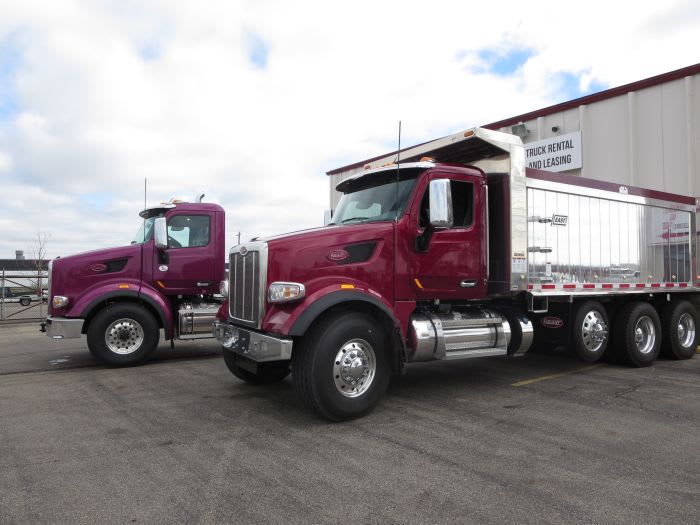
The Peterbilt 567 SFFA's set-forward front axle adds payload in bridge-formula states, but doesn’t seem to come with the usual penalty in maneuverability.
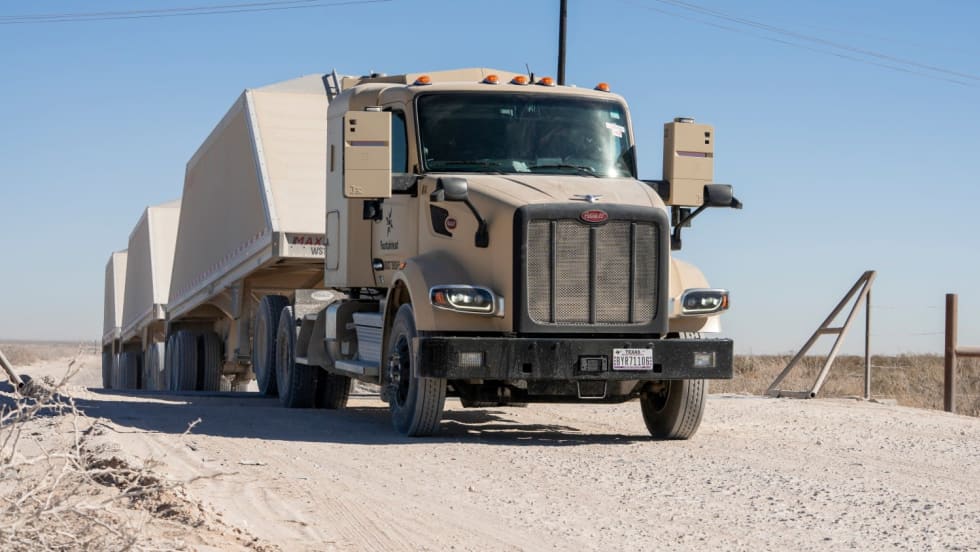
The Model 567 SFFA’s set-forward steer axle sits 17 inches closer to the bumper than the 567’s setback axle. High-mounted headlight pods should avoid most job-site collision damage. Photos: Tom Berg
3 min to read
The Model 567 SFFA’s set-forward steer axle sits 17 inches closer to the bumper than the 567’s setback axle. High-mounted headlight pods should avoid most job-site collision damage. Photos: Tom Berg
As more of Peterbilt’s vocational customers choose the modern Model 567 over the older 365 and 367 models, the builder is expanding the newer vehicle’s available configurations to handle more jobs. The latest is the 567 SFFA, with a forward-set steer axle, first displayed at the World of Concrete show in February, in Las Vegas, Nev., a state whose bridge-formula weight laws favor longer wheelbases.
Ad Loading...
The 567, which features a wider, roomier aluminum cab and chassis improvements, came out two years ago with a setback steer axle that’s more usable in axle-weight states. If frame length and placement of rear axles remain the same, a forward-set steer axle on the 567 lengthens a wheelbase by 17 inches, according to Peterbilt engineers. That stretch adds thousands of pounds of legal payload, though exactly how much varies by state.
Ad Loading...
Often that comes with a sacrifice in turning ability, as steering gear tends to limit wheel cut, and a harsher ride due to shorter leaf springs. But not so much on this truck. With a wheel cut of 43 to 45 degrees, The 567 SFFA turned rather well and rode very well on its parabolic leafs. Just maneuvering it around the parking lot at Peterbilt of Cincinnati, where this factory-owned demo truck temporarily resided, was easier than I expected. Out on nearby streets, I didn’t have to spin the steering wheel quite as early to make tight right-angle turns as I’ve done with other axle-forward trucks.
Rear axles included tandem drivers and one liftable, steerable “pusher” axle ahead of the tandem. This is called a “tri-ax” in neighboring Indiana, and it was the usual type used there until higher-capacity “quads” — tandems with two pushers — were authorized, noted salesman Lyle Monroe at the dealership. The tri-ax is also allowed in Kentucky, Pennsylvania, and elsewhere, though they usually have beefier wheels and tires to gain maximum weight-carrying ability. Ohio is a bridge-formula state where multi-axle dumps with two, three and even four pushers are the rule. A shorter tri-ax is not usually seen here.
“So I was kinda conservative with the load I put in there,” Monroe said. “You’ve got 12 tons of sand. That should give you a good feel for how it handles.”
It did, as 24,000 pounds in the East aluminum box settled down the suspensions and yielded a realistic riding experience. Peterbilt spokesman Derek Smith rode along on a lengthy loop consisting of freeways and state highways north and east of Cincinnati. The countryside was a mix of flat and roller-coaster terrain, more than enough for me to appreciate the Paccar MX-13 diesel’s 500 horses and freedom from shifting presented by an Allison 4700 automatic transmission. Handling through curves was flat and almost crisp, thanks again to the suspensions, plus the Bridgestone tires and the stable Sheppard power steering. Braking was strong and stable, thanks to disc brakes all around.
The cab’s width is 2.1 meters, or 82.7 inches, about 8 inches more than the old cab on the 365, 367 and other earlier Petes. This new one seems just as tight and quiet, and of course has the extra interior space. There’s plenty of legroom, and the tilting-and-telescoping steering column combined with the highly adjustable Peterbilt-brand driver’s seat let me position myself for viewing, pedal pushing and perching. This is an “office” that I’d love to work in, and I’m sure it will please drivers and owners with its comfort, reliability, durability and yes, the mystique that comes with that red oval badge.
This is a show truck, and the posh interior includes leather-covered heated seats and an attractive dash with nicely trimmed gauges.
SPECIFICATIONS
Truck
2015 Peterbilt 567 SFFA (set-forward front axle), conventional-cab vocational chassis, 5/8-in. x 11-5/8-in. frame rails w/ aluminum crossmembers, BBC 115 inches, GVW rating 80,000 lbs.
SAF-Holland reengineered the UltraLite40 Slider for the ULX40 Mechanical Sliding Suspension and Axle System to reduce weight, improve durability, extend trailer life, and increase payload efficiency.
Volvo Trucks North America highlighted new connectivity, safety tech and production investments at TMC. The OEM also signaled that a new heavy-haul flagship tractor is coming soon.
The company’s expanded EPEQ ecosystem includes flexible solar panels, lithium batteries, hydraulic power systems, and a portable fast charger for electric trucks.
Phillips Connect Smart Trailer enhancements give fleets deeper operational insights from trailers -- even when another provider supplies basic GPS tracking.
New approval for Valvoline Premium Blue One Solution Gen2 allows fleets running Cummins X15 engines to extend oil drain intervals by up to 25,000 miles -- reaching intervals as high as 100,000 miles.
Peterson’s Genesis lighting system and repairable J560 connector target two persistent fleet problems: LED light failures and costly electrical connector downtime.
Many fleets extended truck replacement cycles during recent market disruptions. But holding equipment too long can lead to higher repair costs, longer downtime, and new operational risks.