




Owner-Operator Seeks Out Truckstop Electrification
How bad does owner-operator Matt Purtee want truckstop electrification? “Bad enough where I know a few truckstops that have light poles with plug-ins at the base,” he says with a chuckle. “I get to those sites early so I can tap into the power before someone else does."
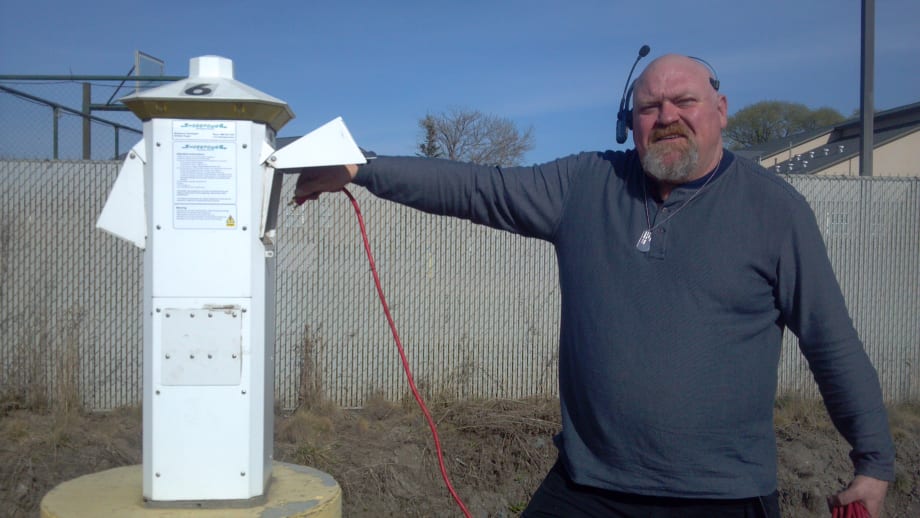
Owner-operator Matt Purtee likes it when he can find plug-in shore power at truckstops, but he'll search it out elsewhere, too.
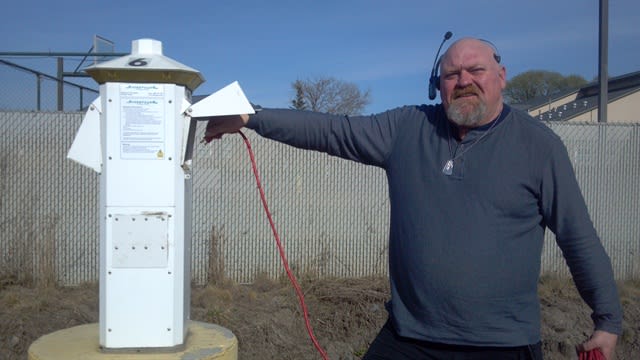
Owner-operator Matt Purtee likes it when he can find plug-in shore power at truckstops, but he'll search it out elsewhere, too.
How bad does owner-operator Matt Purtee want truckstop electrification? “Bad enough where I know a few truckstops that have light poles with plug-ins at the base,” he says with a chuckle. “I get to those sites early so I can tap into the power before someone else does. I’m always looking for power.”
According to Purtee, finding truckstops with more conventional power outlets, hrough designated power pedestals, has become easier over the last year, “but I’m looking forward to the day where I can go to any truckstop and not have to ask if they have power plug-ins. It should be the norm – the vast majority of owner-operators I know want power at truckstops. And they’d like it now.”
That’s music to the ears of Alan Bates, vice president of marketing for Shorepower Technologies, which earlier this year completed electrifying the I-5 corridor between Washington and California. Truckers will find 14 truckstops along the corridor so plugging in is very easy.
The rest of the country, though, is not as far along.
“Like Matt, we too would like to see the day where power at truckstops is truly the norm and not the exception," Bates says. "The number of truckstops offering power has increased by 314% since the beginning of 2012, and in five years, we expect 400 to 500 truckstops offering powering. What will make it happen even faster is if fleets and owner-operators let travel plaza operators know they want power pedestals put in. If they know you want it, it won’t fall on deaf ears.”
Purtee, who hauls equipment for NFL broadcasts, as well as for popular TV programs, will often stay a few days to a few weeks at a venue, and plugging in to power makes life easier.
“I was down for the Super Bowl – hauling equipment to New Orleans where there were broadcasts during the Super Bowl countdown,” Purtee says. “I was contracted to work those two weeks – running cables and setting up cameras. While there I was parked over at the Big Easy Travel Plaza, which had power pedestals. For two weeks I was plugged in, so I didn’t have to worry about heat or running down my batteries. It was great. I used my motorcycle to get me around town, then came back to the truck at night to sleep – sans for a few nights I stayed at a hotel.”
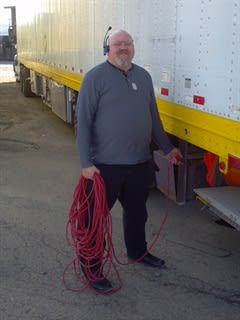
"The vast majority of owner-operators I know want power at truckstops," says Matt Purtree.
According to Purtee, during football season he’s often allowed to park at the stadium and either tap into power from the stadium, or use power from mobile generator trucks.
“That works great,” he says. “On some occasions, I’ll have to park elsewhere and I try to search out areas that have power. I would say my success rate in finding power is about 50%, but it’s getting better. I’ve even bobtailed into RV parks and plugged in. I get a few interesting looks, but I don’t mind. They have power and I need it.”
A self-taught mechanic who likes to tinker, Purtee even developed and installed his own AC-powered air conditioning system into his Freightliner Century Class.
“I could have bought a system that runs on batteries and shore power, but I had more fun making my own,” he says. “For heat, I just use a space heater. I used to run a full diesel-powered APU, but I got tired of all the maintenance on that unit. With AC-power, there really is nothing to go wrong. I do have 10 batteries (four starting and six deep-cycle), but for the length of time I’m out in one spot with the engine off, it can’t keep up with the draws of a heater or air conditioner for any length of time. Plus shore power extends my battery life. That’s why shore power is so important to me.”
More Drivers

FMCSA Removes 110 Truck Driver Training Schools from Certified ELDT List
Federal regulators also are targeting more than 160 additional training providers and launching a nationwide audit of third-party CDL skills testers as part of a broader crackdown on trucking fraud.
Read More →
Hours of Service Pilot Programs: FMCSA Readies for 2027 Rollout
Two pilot programs could eventually reshape hours-of-service rules, giving truck drivers options to pause their 14-hour clock or use longer split sleeper rest periods.
Read More →
Medical Cards, English Proficiency Reshape Roadcheck Violations
Medical-card violations jumped to the top of the driver out-of-service list during CVSA’s 2026 International Roadcheck, while English-language proficiency violations appeared among the leading violations for the first time.
Read More →
Driver Trust Can Make or Break the Success of Fleet Safety Technology
New Teletrac Navman research suggests that onboarding, transparency about driver data, and positive feedback can play a significant role in how commercial drivers respond to safety and coaching technology.
Read More →
EEOC Sues KLLM Over Alleged Sex Discrimination in Driver Training
KLLM is facing a federal sex-discrimination lawsuit over policies the EEOC alleges put female truck driver trainees at a disadvantage.
Read More →
FMCSA Moves to Codify English Language Requirements for Commercial Drivers
By changing regulations on English-language proficiency requirements for commercial drivers, rather than relying on a guidance memo, the FMCSA said future administrations won't be able to walk back the Trump administration's stricter enforcement with just a memo.
Read More →
Drivers Put Western Star Trucks to the Test at Star Nation Experience
Watch to get an inside look at the Western Star trucks, technology, and community behind the Star Nation Experience 2026!
Read More →
Trump Administration Looks to Put More Veterans Behind the Wheel
The Freedom Haulers program pulls together existing and expanded programs at several federal agencies to recruit veterans to drive commercial heavy-duty trucks and cut the red tape for them to get a CDL, training, and employment.
Read More →
Putting Mack’s Command Steer to the Test
A test drive of Mack’s Command Steer active steering system evaluates how it can make truck driving easier and less tiring.
Read More →
Competition Heating Up for Truck Drivers
New report reveals rising driver hiring costs, the return of sign-on bonuses, growing AI advantages, and the operational factors shaping driver retention.
Read More →