




New E-Reefers Smart Move for LA Grocery Delivery
D&D Wholesale Distributors in City of Industry, Calif., has been distributing produce, meats, poultry, grocery, non-foods, frozen foods and dairy in the Southern California area since 1979. It's responding to the state's demand for lower emissions by moving to all-electric refrigeration units for its delivery trucks.

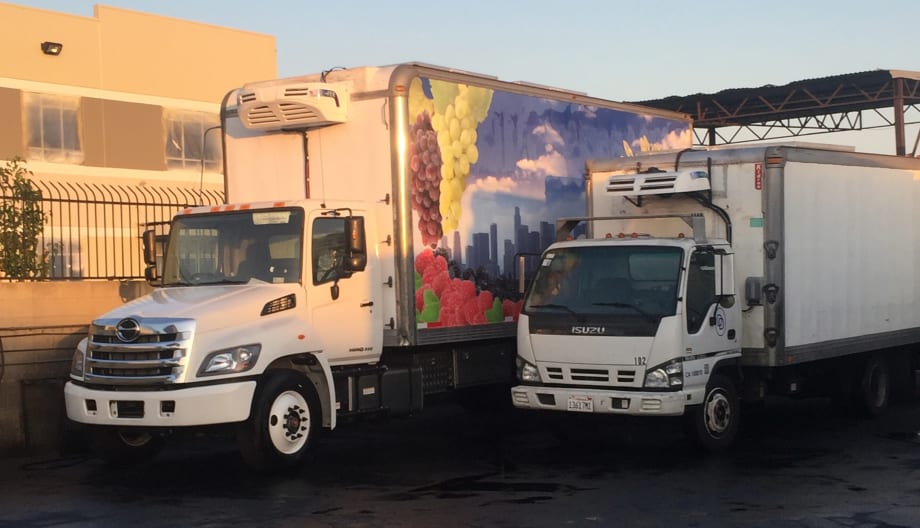
Two of D&D's trucks outfitted with Volta Air electric reefers. Photo courtesy Second Generation Cooling and Volta Air.
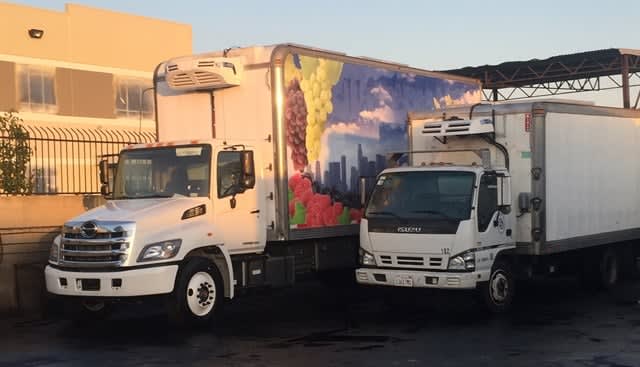
Two of D&D's trucks outfitted with Volta Air electric reefers.Photo courtesy Second Generation Cooling and Volta Air.
California’s continued push toward fewer and fewer emissions has affected all companies that use trucks in the state, and fleets that rely on trucks to deliver products are no exception. D&D Wholesale Distributors in City of Industry, Calif., has been distributing produce, meats, poultry, grocery, non-foods, frozen foods and dairy in the Southern California area since 1979, and it’s responding to the demand by moving to all-electric refrigeration units for its delivery trucks.
“Because of the of the lack of ARB-compliant units in California, we looked really deep into the future and decided we wanted to go battery operated,” explains Frank Ulloa with Second Generation Cooling, also in the LA area, which handles refrigeration needs for D&D’s 40 trucks.
They found a Canadian company, Volta Air, that offers all-electric refrigeration units for vans and medium-duty delivery trucks. Last year they installed a unit it a smaller truck, an Isuzu. It worked “wonderful,” according to Ulloa, so this summer they added a larger-size unit incorporating solar panels on a larger Hino box truck.
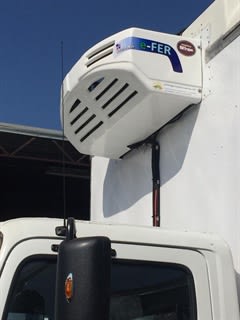
The new Volta Air 450 system is nose-mounted like a traditional reefer unit.Photo courtesy Volta Air
Not only will the move make the reefer units eco-friendly, they’ll also save money — Ulloa says $3,500 a year just in fuel, not counting savings in maintenance costs. And, he says, the up-front cost is actually less than a traditional reefer unit.
Peter Johnston with Volta Air explains that the Vancouver, Canada-based company started out with a no-idle electric auxiliary power unit for long-haul trucking, and has been working with the Canadian government and educational institutions on further developing its electric compressor and control systems. The D&D unit installed this summer is the third one they have running in California but they’re ready to do more with the help of Second Generation Cooling.
“If you’re stopped, you leave your engine off and the solar panels kick in to charge the batteries,” he explains.
Solar panels go on the roof of the box, two to four panels depending on the size of the unit and the demand.
New on this unit, Johnston says, is a controller that will send alerts if the power level is getting too low or the refrigeration box temperature is too high, and will monitor the idle time and fuel saved.
“We’re 25 years ahead of the mandate by going this route,” he says. “By 2050 all units have to be zero emissions. By next year all companies have to have plug ins.”
One benefit of the Volta Air system over other reefers that run on stand-by power, Johnston says, is that it requires only a standard breaker. “Some standby units have to run off three phase power,” he says, which can be expensive to install. “These units can run off single phase. Just go buy an extension cord at Home Depot.”
They also are lighter than traditional reefer units, allowing more payload capacity.
Another benefit? The noise level, Ulloa says. “We got a lot of complaints about the diesels making deliveries at 4 in the morning. They won’t even know we’re there” with the electric refrigeration units. “‘Sustainable urban delivery trucks’ is kind of what we’ve been advertising.”
Drivers love them, too, he says. “You can stand next to the unit and have a conversation.”
Volta Air already offered refrigeration units that could be mounted atop delivery vans. But its newest offering, the VAR450DTBLI, which includes a solar system, is designed for medium-duty delivery trucks.
An entirely 12V electric refrigeration unit dubbed the E-Fer, it’s a front-mount electric refrigeration unit that is integrated with lithium batteries and a solar panel charging system.
Ulloa says so far D&D has been impressed by the technology. “D&D wholesale delivers all over southern California. You’re talking the desert where the temperature is 100 plus and we can meet the demands with these units. We challenged Volta Air, and they’ve met the demand.”
For more information visit www.voltaair.ca or www.reeferhub.com
More Fuel Smarts

How Volvo Updated Its D13 for EPA 2027 [Watch]
Volvo’s updated D13 promises lower emissions without sacrificing performance or fuel economy. Take a closer look at what changed inside the engine in this HDT Spotlight video.
Read More →
Diesel Price Spike Shortens Payback for Natural Gas Trucks, Report Says
Energy Vision estimates fleets could recover the higher purchase price of an RNG-fueled Class 8 tractor in 1.3 to 2.8 years under current fuel-price scenarios.
Read More →
Calstart Becomes Catalyst Mobility, Reflecting Broader Focus
Calstart is now Catalyst Mobility, reflecting the nonprofit’s growing national role in clean transportation, including zero-emission trucks, infrastructure and incentive programs.
Read More →

Record Diesel Prices Squeeze Trucking Fleets
Average U.S. diesel prices have climbed to nearly $6 a gallon, surpassing the 2022 record as tight refinery capacity and Middle East disruptions keep fuel costs elevated.
Read More →
How Fuel Delivery Shapes Engine Performance
Fuel delivery depends on more than what happens at the injector. For fleet, maintenance and technical professionals, looking at the full path from pump to injector can provide useful context for understanding engine performance.
Read More →
East Coast Port Launches $45M Electric Truck Push
The Port Authority of New York and New Jersey announced millions in incentives for zero-emission drayage trucks, yard tractors, and new charging hubs near the port.
Read More →
California Bill Could Shed Light on Electric Truck Prices
Why do battery-electric Class 8 trucks remain so expensive? A California bill headed to Gov. Gavin Newsom would give fleets and state agencies more visibility into what manufacturers charge.
Read More →
Detroit Opens Orders for EPA 2027 Engines
Detroit isn’t starting from scratch to meet EPA 2027 diesel emissions standards. Its Gen 6 DD13 and DD15 engines keep much of today’s platform while updating the fuel and aftertreatment systems.
Read More →
Zero-Emission Truck Corridor Planned for West Coast
California, Oregon, Washington, British Columbia and Baja California are coordinating plans for truck charging and hydrogen fueling from Canada to Mexico.
Read More →
A Closer Look at Kenworth’s Electric T880E Vocational Truck [Video]
Learn more about Kenworth's T880E battery-electric vocational truck at the Paccar Technical Center, including its range, applications, upfitting considerations, and PTO options, in this HDT Spotlight video.
Read More →