




Minding the Fleet
In the beginning, fleet management software mostly meant applications that tied together a carrier's accounting and dispatch functions. Today, such products encompass a number of operational activities and integrate with a wide range of technologies

In the beginning, fleet management software mostly meant applications that tied together a carrier's accounting and dispatch functions. Today, such products encompass a number of operational activities and integrate with a wide range of technologies,
such as mobile communications systems. Many of the early system were full-featured products that required substantial computing resources (as well as an IT department) to implement. But such systems have become more affordable, within the reach of even the smallest carriers, as more products are offered as Web applications, eliminating the need for an in-house IT department or high-end computing hardware.
Full-featured enterprise software handles almost everything a fleet does: order entry, dispatch, load planning, driver communications, route and fuel stop planning, fuel tax and mileage reporting, billing, accounts receivable, accounts payable, general ledger, financial reporting, payroll and driver settlements, driver qualification, safety and regulatory requirements and maintenance, to name a few.
Of course, not every truck fleet needs all these capabilities. Local delivery operations, for instance, don't have to worry about tracking their vehicles across the country. Therefore, many providers offer their products in module form, where the buyer selects from a menu of capabilities. Other suppliers develop software for specific niches, specializing in mid-size LTL operations, for instance.
And because trucking encompasses a number of applications, a number of fleets use their management software to perform application-specific tasks. For example, refrigerated carriers want to be able to monitor the temperature of refrigerated loads. With sensors, a mobile communications system and an interface with the management software, that's not a problem. Fleets can set their system to flag and report any variation in cargo temperature that falls outside of certain parameters. Such trailer tracking systems can deliver temperature data hourly, ensuring that a load of perishables arrives at its destination in good shape.
As we've written recently, many fleets are using features within their fleet management software to save on fuel costs. Fuel optimization programs - those that help plan fuel stops based on factors such as negotiated discounts, fuel taxes and location - were somewhat slow to catch on. As recently as last year, industry suppliers said only about 10 percent to 20 percent of fleets were using such programs. That seems to be changing now, as the national average price of diesel fuel nears $5 a gallon. Many fleet management systems providers and other companies that supply complementary products have introduced new fuel modules in recent months. Prophesy, for example, announced in May the introduction of a fuel optimization feature to its Dispatch fleet management product. Others are reporting increased sales, attributable in some measure to higher fuel costs and the tough economic climate.
Efficiency remains the primary reason fleets adopt these products and technologies. Fleets report being able to get more work done with fewer people because they have been able to automate what had been time-consuming chores. This gives carriers the ability to grow without having to add enormous amounts of staff. When fleets also adopt scanning technologies to handle bills of lading and other paperwork, the workflow is made even more efficient.
Perhaps the greater efficiencies can be realized outside the office and on the road. Most fleet management systems were designed from the ground up to reduce empty miles and to help fleets better utilize their rolling stock. One fleet manager said once his company began using fleet management software, they discovered that some of their routes were not really profitable. Because the systems allow a fleet manger to know exactly how much revenue he is making per mile per customer, he can find out which customers generate the most income and which ones are unprofitable to service.
Access for Smaller Fleets
Web-based fleet management systems are increasingly available that allow smaller trucking companies to compete in the IT world with their larger counterparts. "The Internet is connected and it is very easy to send information to a company's back office," says Tom Flies, senior vice president of product strategy for Xata Corp. "And the standards have also evolved into things like Web services and XML. The technology has become more flexible and easier to integrate with existing systems."
More affordable communications options are driving more fleets to embrace these systems. "The growth of cost-effective cellular networks with declining cost and the Internet has really opened up the market to fleets of all sizes," Flies says. "We've seen a lot of growth in the last two to three years from smaller fleets under 100 trucks, even under 50 trucks. The reason is that the technology has advanced to the point where it has become cost-effective for [smaller] fleets to implement."
Qualcomm Enterprise Solutions, a pioneer in mobile communications and fleet management systems, known for its satellite-based communications system, is marketing a cellular-based product to metropolitan-based fleets. The OmniVision Metro service uses a Web interface that allows customers to view their vehicles and receive management data via in-vehicle GPS hardware. Bert Gillespie, director of sales for Qualcomm Enterprise Services, says, "This is a service for metropolitan fleets such as those operated by service companies, as well as for our long-haul fleet customers that have mixed fleets. These customers want to know where their trucks are, but they don't need the onboard computer and the more comprehensive applications." These customers want to reduce idling and improve routing to cut costs, but they also want to offer better customer service. "That is the payoff for the technology," Gillespie says. The system includes industry-specific capabilities and features, including detailed maps and reports that provide a snapshot of an entire fleet for improved logistical planning.
Last year, Qualcomm introduced a Web-based critical event recorder that works with the company's mobile communications systems to alert fleet managers whenever specific events occur on the road that might signal poor driving habits.
Qualcomm says that while most of its customers do in fact have IT departments and high-end servers, the company is concentrating on making new applications accessible via a services portal.
J.J. Keller's FleetMentor system is a Web-based fleet management applications designed for fleets of fewer than 100 trucks. Launched this year, the service provides 60 interactive tools for managing operations, personnel and safety. These tools can identify fixed and variable costs, set rates, track accident claims and manage insurance policies. It also includes vehicle inventory and personnel and safety compliance tools.
Hardware Changes
As more fleets adopt Internet-based applications for managing their fleets, the hardware used to trace, track and communicate with drivers has begun to change, with more fleets looking at handheld and mobile devices as opposed to in-cab computers. Part of this move is related to price. Part of it represents a move toward open architecture, and part of it revolves around a desire among some carriers to have the ability to run more applications, such as routing/mapping programs, in the truck.
"We see that trend more and more," says Xata's Flies. "Historically, each company built their own on-board computer and only their software could run on that onboard computer, so it was very proprietary and closed." But that model may be changing, with more focus placed on software applications and providing options for companies to use standard devices such as handheld computers, cellular phones and other Windows CE devices.
More Fleet Management
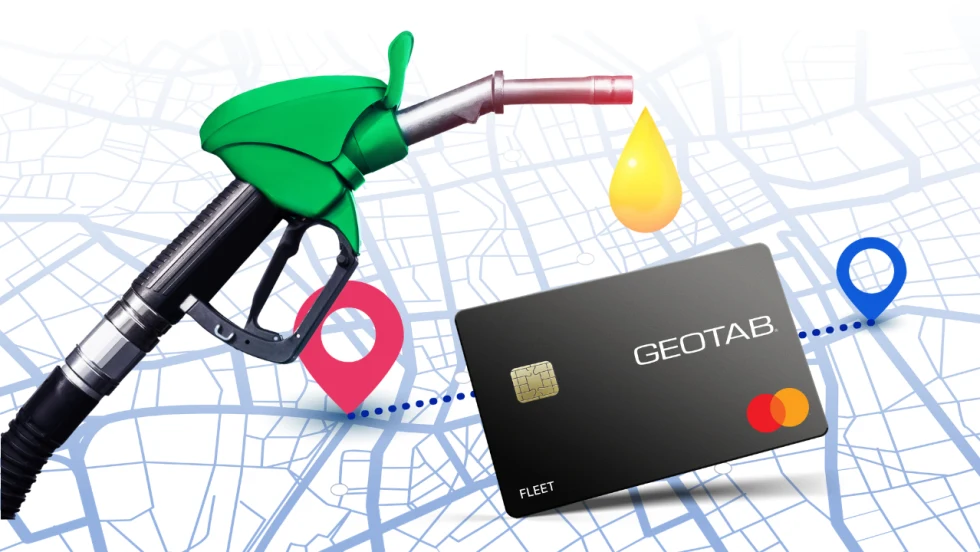
Geotab Links Fleet Card to Vehicle Data
The new card combines fuel discounts with telematics-based purchase controls. Geotab’s analysis also points to potential savings from choosing lower-priced fuel stops.
Read More →
How MFA Helps Protect Trucking Fleets
Multi-factor authentication adds protection when passwords are stolen. Here’s how it works and where fleets should start.
Read More →
How Better Freight Data Helps Trucking Teams Get Ahead of Disruption
Trucking and logistics teams have plenty of data. The problem is getting the right information in front of the right people soon enough to act. Better-connected data can help teams spot trouble earlier and make smarter decisions before small problems become big ones.
Read More →

Trimble: Taking Artificial Intelligence in Trucking Beyond Faster Tasks
At Insight 2026, Trimble executives argued that fleets may need to redesign workflows to get more from AI as it introduced new products and enhancements. AI’s value will depend on how fleets combine automation with their people's knowledge.
Read More →
Build a bulletproof fleet: Uniting ELDs and dash cams for total compliance
An ELD can prove compliance, but it cannot always prove what happened on the road. Discover how uniting accurate ELD data with AI-powered dash cam video can help your fleet strengthen compliance, defend against liability, protect drivers and reduce operational costs.
Read More →
Nominations Open for HDT Emerging Leaders
Heavy Duty Trucking is looking for accomplished trucking fleet professionals under 40 who are making an impact and helping lead the industry forward.
Read More →
Why Private Fleets Are Taking More Freight
Private fleets are putting their own trucks on demanding customers and high-cost lanes as companies seek greater control over service, costs, and capacity.
Read More →
Color Match Smarter: Tools That Restore & Perform
For fleet managers and collision repair professionals keeping heavy-duty trucks on the road, getting the color right the first time isn't just about appearance — it's about efficiency, turnaround time, and bottom-line results. Discover how today's digital color tools are transforming the repair process from guesswork to precision.
Read More →
FMCSA Pauses Biennial-Update Enforcement Amid Motus Transition
Carriers whose updates were due on or after June 1 have more time, while FMCSA works to stabilize its new registration system and warns of phishing sites impersonating its new carrier registration system, Motus.
Read More →
2026 Blueprint for Countering Smarter Supply Chain Theft
Cargo theft is no longer just the cost of doing business. It's a multi-billion-dollar criminal enterprise exploiting vulnerabilities across your fleet, drivers, and supply chain.
Read More →