




Mack's New Large Car
The Pinnacle Axle Forward lacks a really long hood, but this madeover CH has traditional looks and terrific driveability, thanks partly to a new, bigger engine.

Mack has lacked a "large car" since 1993. The last traditionally styled, long-nose conventional was the Super-Liner with its 998-cubic-inch Thermodyne V-8.
Its replacement, the CL with its 15-liter Cummins ISX, had a long hood, but it wasn't offered with sleeper boxes, which is an unofficial criteria for the large-car label. The CL went out of production in late '06.
Something like it with a Mack-Volvo 16-liter diesel is due out next year, with or without sleepers, but the Allentown lineup for now appears to have a large-car vacancy.
Or does it? To my eyes, this Pinnacle Axle Forward, a nicely refined CH, has the styling and options to almost qualify as a large car. Its BBC is 116 inches, so it doesn't have a real long nose. But it certainly looks long enough. The one pictured here is a daycab, but sleepers are available. And the two Pinnacles I drove had the new 13-liter MP8 diesel, which in January joined the previously available 11-liter MP7.
The MP7 and MP8 are equipped to meet the government's new exhaust emissions limits, and both are smokeless and odorless. They exhale through oxidation catalysts and particulate filters, and you'd think those things would choke the engines, but they don't. The new diesels - Mack's and everyone else's - are gutsy and responsive, and drivers will like them when they begin appearing, even if the big pre-buy of pre-'07-powered trucks has choked off sales for the time being.
The venue for this drive was the Las Vegas Speedway in Nevada. This event was the first stop last summer for the Mack Performance Tour, a demonstration of highway and vocational trucks at dealers around the country.
The tractor you see here (numbered 5 for the demo) had an MP (for Mack Power) 8 with its top rating, 485 horsepower and 1,660 pounds-feet. The other tractor (No. 3) had the MP8-445 with 1,560 pounds-feet. Each had a 13-speed transmission, an Eaton Fuller RTLO in Tractor 5 and a Mack MaxiTorque in Tractor 3. Shifting in both was commendably easy.
The MP8s helped make the Pinnacles so nice to drive that I spent an hour more than authorized on the designated loop outside the speedway's grounds.
This included stretches of Interstate 15 and State Route 604 - Las Vegas Boulevard, which farther south becomes the fabled Strip with its garish hotels and casinos. But up here, it's airplanes (Nellis Air Force Base) and automobiles (the speedway, plus race car shops and Carroll Shelby's Mustang GT-building facility).
Northbound 604 has a stiff uphill stretch from just past the speedway to within a mile of the I-15 interchange. I used this to test the MP8s' pulling power, and the 485 version clearly was the better hill climber. It handled the steepest part of the grade, about a 6-percenter, in 7th-direct (10th of 13 ratios), while the MP8-445 required going to 6th-direct or overdrive (8th and 9th ratios) while topping the hill 5 mph or so slower. If terrain is hilly or mountainous, the higher rating would save some running time by the end of a day.
Those comparisons are fair, because I pulled the same flatbed trailer with both tractors. The aluminum-and-steel trailer with its spread tandem was loaded with palletized concrete blocks, and I guessed combination weight to be about 78,000 pounds. The tractor featured here weighed a little more, due to its heavy specs, including a 14,600-pound steer axle, making it suitable to pull lowboys, equipment trailers and other construction-oriented jobs. The other Pinnacle had a 12,000-pound steer axle.
Quietness is a principal improvement in the new Pinnacles, and this was apparent as soon as I had the rigs up to highway speeds. There was little wind or road noise, and engine sounds were muted - almost too much, for my ears. Mack engineers spent a lot of time fitting new noise-deadening insulation to the new trucks, and they probably knocked off several decibels compared to the CH.
Also nicer in these Pinnacles than previous models are the instruments - big white-on-black gauges with snappy bright-metal bezels and easy-to-use rocker switches. The rotary knobs for heating and air conditioning are simpler and easier to understand; to turn on the A/C, you push a reasonably sized button marked with a snowflake instead of hitting a tiny Max A/C button as on a CH Rawhide I drove about a year and a half earlier. The accelerator and brake pedals are the same height off the floor, making them easy and safe to operate.
The steel cab is about 4 inches longer than on the CH, providing more leg and belly room for big guys and gals, and leaving room behind the seats to stow stuff. The longer cab was an option last year, but now it's standard on both Pinnacles and the vocationally oriented Granites. Also, the reinforced Granite cab - claimed to be the strongest one Mack has ever built - is now also used on the Pinnacle.
The Pinnacle Axle Forward has a companion model, the Pinnacle Axle Back. Each steer-axle setting has weight-distribution or maneuvering advantages, depending on where and how a truck is to be operated. And styling differs: the Axle Back has a smoother, more aerodynamic nose and a grille topped with a chrome V that used to mean Vision (the previous model). The Pinnacle Axle Forward has a squarish nose and a no-nonsense, straight-across upper bezel on its grille. It looks more traditional, and that's why it's almost a large car.
What do you think?
More Fleet Management

What Geotab's New AI Connector Means for Fleets
Fleets can now ask their usual AI assistants questions about maintenance, safety, fuel use, and vehicle performance, using their live Geotab data, and take action on the answers without leaving their preferred AI tool.
Read More →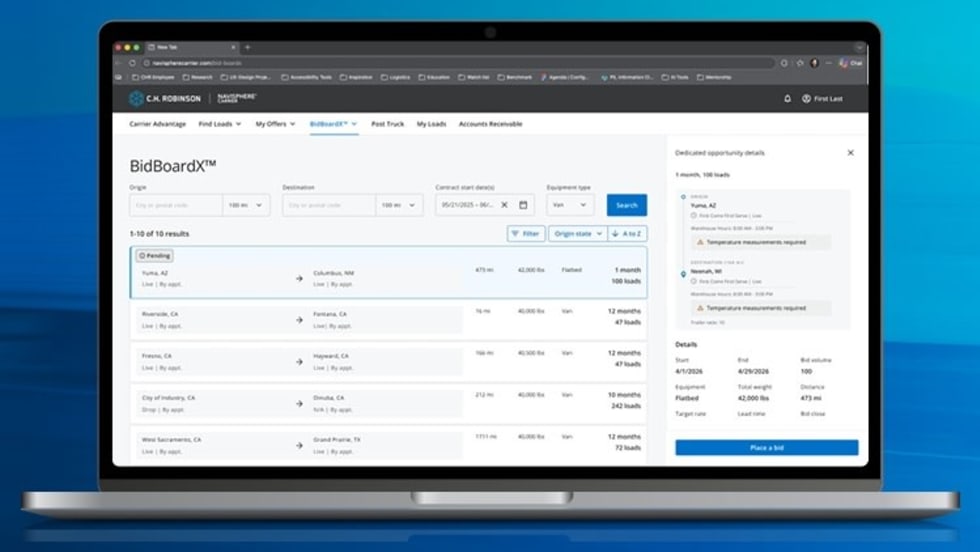
New C.H. Robinson Tool Opens Door to More Predictable Freight
BidBoardX lets carriers search, bid on, and secure committed freight opportunities through a single digital marketplace.
Read More →
New York City's Microhub Project is Delivering Results
Trucking, last-mile delivery companies, and environmental advocates like what they are seeing so far with New York's microhub program.
Read More →

Why Truck Detention Keeps Costing Fleets Time and Money
A 2024 ATRI study found detention affects nearly 40% of truckload stops and costs the industry more than $15 billion annually. Despite the toll on drivers, fleets, and supply chains, the problem remains stubbornly persistent.
Read More →
Time is Running Out to Apply for Exclusive HDT Event
Heavy Duty Trucking Exchange brings fleet managers and suppliers together for the deeper conversations that lead to ideas, partnerships, and solutions. Time is running out to apply for the September event.
Read More →
Amazon Launches Less-Than-Truckload Freight Offering for All Businesses
This launch is the latest addition to Amazon Supply Chain Services, a portfolio of supply chain capabilities from Amazon, including freight, distribution, fulfillment, and parcel shipping.
Read More →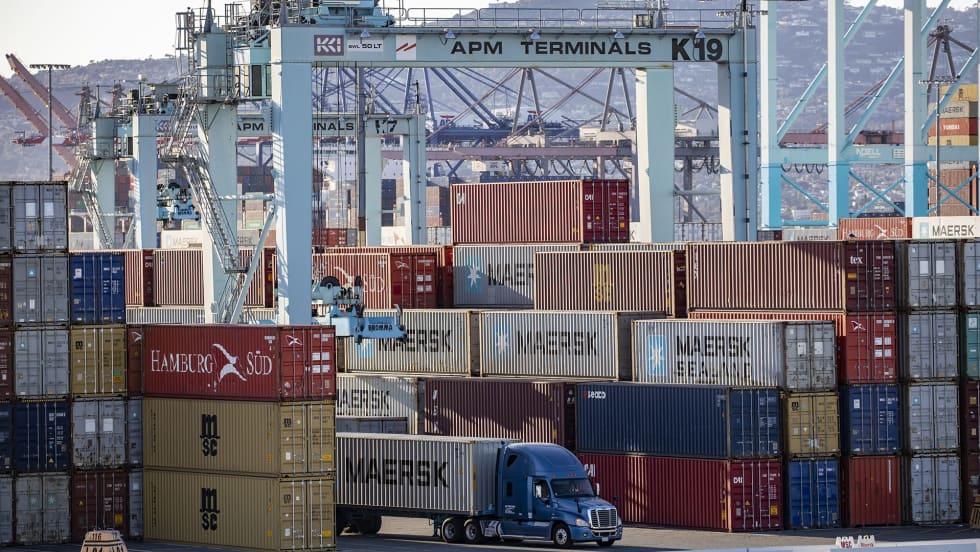
Import Cargo Volume to See Year-Over-Year Gain Again in June, Then Remain Below 2025 Levels Into Fall
After July, the report predicts a weakening in import volume as consumer uncertainty remains high and the impact of increasing inflation takes its toll.
Read More →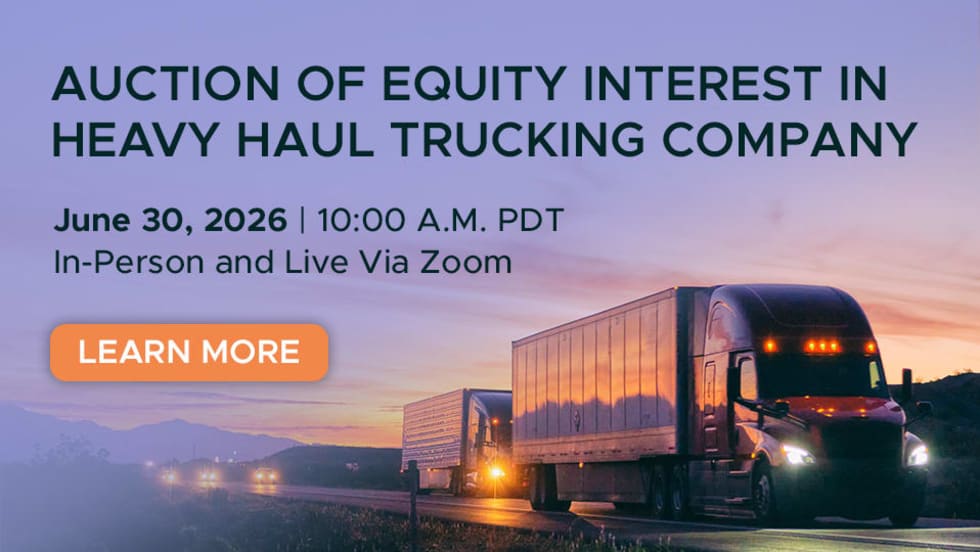
AUCTION OF EQUITY INTEREST IN HEAVY HAUL TRUCKING COMPANY!!
Mark your calendar: June 30, 2026 (10:00 a.m. PDT). A 37.5% ownership interest in MagnaTrans, LLC, a California limited liability company doing business as Magna Transportation Group, will be sold in an in-person and online auction to the highest bidder or bidders under Article 9 of the Uniform Commercial Code. The Rancho Cucamonga-based heavy haul and over-dimensional trucking company operates across California, Oregon, and Arizona.
Read More →
Volvo Trucks Adds Unattended Over-the-Air Software Update Capabilities
The latest evolution of Volvo’s over-the-air update technology allows software updates to run while trucks are parked, helping fleets keep vehicles current without disrupting operations.
Read More →
How Waste Connections is Using Data, Telematics, and AI
How do you manage and maintain more than 18,000 connected trucks? Data. Lots of it.
Read More →