




Keeping Cargo Where it Belongs
Anyone who's seen van trailers with sides bulging outward or dented from inside knows that at least some of that is caused by shifting cargo

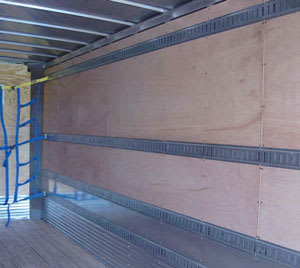
Anyone who's seen van trailers with sides bulging outward or dented from inside knows that at least some of that is caused by shifting cargo.
The Federal Motor Carrier Safety Administration spells out cargo securement requirements in some detail in its Part 393 regs, and drivers and companies can be penalized under the CSA program for failing to do it properly. Yet the inside of vans are often unseen by inspectors, so the regs go unenforced.
However, there are good reasons to properly secure those loads on top of getting the customers' freight to them undamaged. Freight that shifts can make a mess that drivers or handlers have to deal with. If a trailer tips over, unsecured freight can spill out through torn roof or side panels, which can be especially costly if you're talking about hazardous materials. If a load shifts enough to change the center of gravity in a trailer, it could make the rig more likely to roll over if the driver takes a turn too fast.
Improperly secured loads have even proven to be fatal. Freight that shifts during transit can fall out on top of an unsuspecting driver or dock worker when they open the trailer doors.
Spec'ing Load Securement
"The big majority of our van customers specify some kind of securement devices," says Tom Rodak, director of corporate marketing at Wabash National. Counterparts at other trailer makers agree. Reefer trailers use less of this equipment because food safety regulations require frequent interior sanitizing, and nooks and crannies in tie-down points take special care to clean out.
"Cargo securement for vans sells in two groups, truckload and less-than-truckload," explains Brent Beasley, director of national account sales for Great Dane Trailers. "LTL uses more equipment because they haul more mixed freight, mixed sizes and shapes, that have to be stacked. So they will have vertical log posts on 16- and 24-inch centers, and captive beam systems."
Logistics tracks, also called "log" tracks, are metal strips with indented holes into which the hook ends of straps, nets, hoops and bars are inserted. They come in several types, including A, E and O, which define the holes' shapes. They can be arranged vertically in support posts and horizontally along the wall and floor. Straps and nets can be attached anywhere from floor to ceiling to keep cargo in place.
"TL carriers accept vertical logistics posts on 48-inch centers and in some cases 24 inches," Great Dane's Beasley says. "We rarely build a trailer anymore without logistic controls - posts or horizontal log tracks. Tracks are the standard A-track - some call them E-track - and some reefers have short tracks at the rear and use a cargo net across the back of the load to keep it off the doors."
Although some people think of A- and E-tracks as the same thing, they are different, Beasley says. "Years ago the E-track had the same type of mechanism with a flange. Now the A-track is square and harder to connect to, but cheaper to make. E-tracks come in 10-foot sticks or sections, while As are full-length."
Ancra, Kinedyne and others sell these tracks to trailer manufacturers. Some trailer makers, such as Wabash and Great Dane, fabricate their own.
Captive beams are semipermanently attached to a trailer's interior and can be shifted on tracks and paired to support shelving. When not in use, they are stowed in the ceiling.
Thus cargo can be stacked without lower boxes or packages being crushed by weight from on top. Kinedyne has a product called Kaptive Beam, and Ancra has Lift-A-Beam II, whose adjustable components safely add cargo capacity. These can be combined with various restraints to keep cargo on their respective decks.
Another option, "load lock" bars, compress against walls. "They are not real valuable in dry vans unless they're kept near the floor or ceiling because walls will flex outward," says Chuck Cole, chief engineer at Utility Trailer. These are more commonly used in reefer trailers whose walls are stronger.
Securing Cargo to the Floor
Floor tiedown points also vary in design. Recessed rings, sometimes called "bull rings," are used to secure heavy cargo such as steel coils. There's also the F-track with round holes, placed crossways in the floor and ceiling, with vertical bars or hoops inserted to separate loads, explains Chris Lee, chief engineer with Hyundai Translead. These are used by door and window makers to keep the somewhat fragile products from leaning against each other. The U.S. Postal Service uses stake pockets embedded in floors at certain spacings to hold poles that restrain mail bins and containers.
Like all manufacturers, Utility Trailer installs a variety of tracks, rings and other devices according to customer specifications, says Cole. It also offers its own floor-mounted Adjust-able Load Securement System. The ALSS consists of a pair of full-length tracks at the outer edges of flats or near walls of vans; each track has a groove into which J-hooked straps are inserted. The straps are then tightened down against loads.
So, if loads aren't properly secured in van trailers, it's not because there's a lack of equipment for the purpose.
More Equipment
New Mack Granite Cab Puts Driver Comfort Front and Center
Mack’s next-generation vocational truck features a roomier cab, premium seating, advanced steering technology, and a driver-focused interior designed with direct input from professional operators.
Read More →
Mack Unveils Fan-Selected Patriotic NASCAR Pioneer Wraps
Racing fans picked the patriotic design now featured on three Mack Pioneer trucks hauling NASCAR equipment across the country during the 2026 season.
Read More →
Michelin Expands X Line Grip D Tire Line
Michelin is expanding its X Line Grip D drive tire lineup with a new pre-mold retread and additional sizes, building on what the company says is strong fleet adoption of the tire's traction, mileage, and fuel-efficiency benefits.
Read More →
Engine Technology Forum Launches SCR, DEF Resource Center Amid Emissions Debate
The Engine Technology Forum’s new online hub aims to provide fleets, policymakers, and equipment owners with fact-based information about selective catalytic reduction technology, diesel exhaust fluid and emissions compliance.
Read More →
Prime Inc. to Open $7.9M Flagship Used-Truck Dealership
A new driver-focused facility to sell Prime Inc's used trucks and trailers will be the first purpose-built location in the company's history.
Read More →
Lessons Learned About Alternative Fuels: Start Small, Stay Flexible
Practical advice on adopting alternative fuels and ZEVs from HDT's 2026 Top Green Fleets, from renewable diesel and natural gas to electric trucks.
Read More →
Kenworth Names Peter Ahrens General Manager
Leadership changes at Kenworth take effect July 1 as the OEM promotes two longtime Paccar executives to key management roles.
Read More →
Hino Adds Electric Class 6/7 Truck
Hino says the Le Series is an important step in the company's efforts to reduce environmental impact and support its customers’ sustainability goals.
Read More →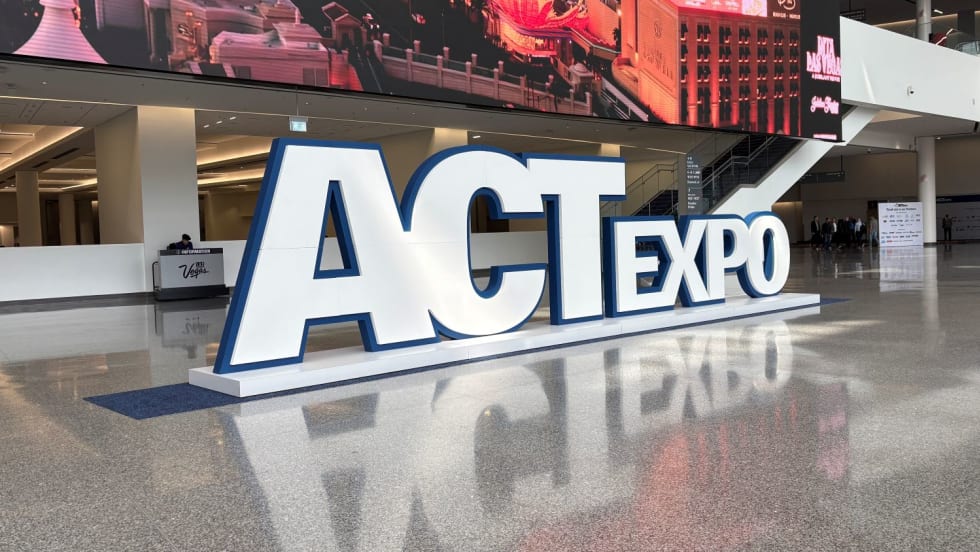
ACT Expo 2026: Highlights in Photos
The 2026 Advanced Clean Transportation Expo featured a broad range of commercial vehicle technologies, from EVs to autonomous trucks to the latest diesel and alternative-fuel engines.
Read More →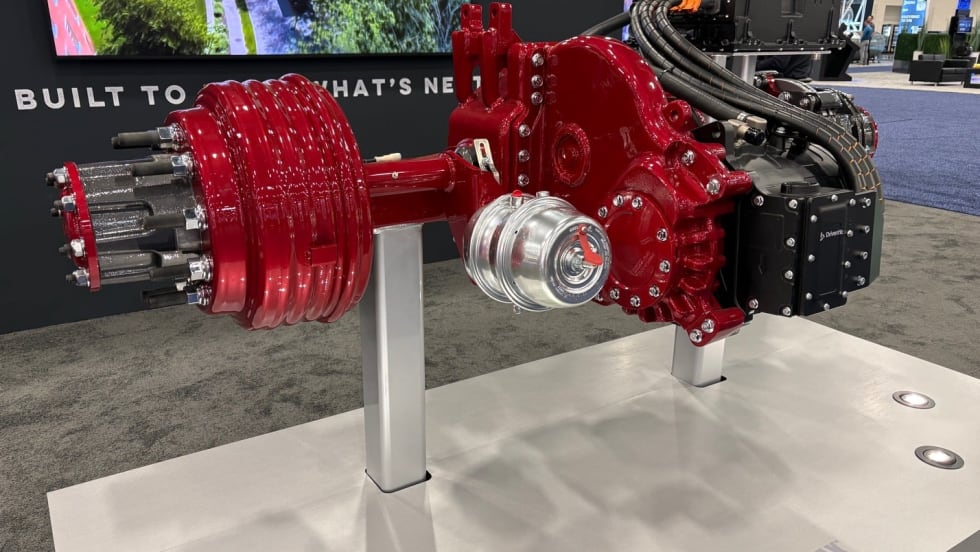
Hendrickson Debuts Electraax E-Axle for Medium-Duty Trucks
Developed with Driventic, Hendrickson's new integrated e-axle is designed to improve efficiency, reduce weight, and extend range in Class 6-7 EV applications.
Read More →