




Inside the Best Fleets to Drive For Competition
It's not enough for a trucking fleet to simply care about its drivers. There is a lot more that goes into being chosen as a Best Fleet to Drive For. Part two of a three-part look into the Best Fleets to Drive For competition.
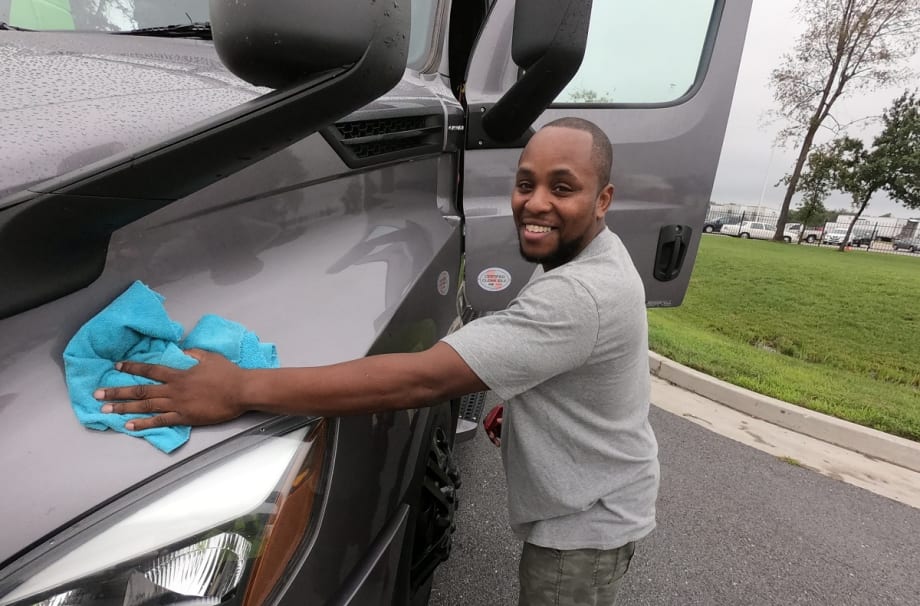
Prime Inc. has a special website dedicated to celebrating its drivers and company events, like Pride and Polish.
Photo: Prime Inc.
In October, about 40 of the nearly 100 fleets nominated for the Best Fleets to Drive For competition registered for a webinar that will provide key insights on how judging will work.
The optional webinar served as a how-to, and as importantly, a how-not-to, guide for participating in the next steps in the program. But first comes a staff meeting. The Best Fleets program, run by CarriersEdge in partnership with the Truckload Carriers Association, has grown so much, administrators have had to bring in more support staff to assist with the vetting process. New to the interviewing process this year are Courtney Muir and Christine Brooks-Wilson; both are CarriersEdge staffers.
They joined CarriersEdge founders Jane Jazrawy and Mark Murrell, who have until this year managed the interview process on their own.
The staff meeting
This year, for the first time, an industry journalist – me – has been embedded into the entire Best Fleets selection process. That includes a staff meeting before the webinar for nominees. The meeting occurs via WebEx, two hours prior to the official nominee webinar.
We are first walked through the online questionnaire and shown how nominated fleets can answer a lengthy series of questions about all aspects of their operation. There are 110 questions in total, covering a broad spectrum of their operational practices. Topics include: business information; compensation; benefits; human resources strategy; operational strategy; performance and recognition programs; development and career opportunities; and work-life balance.
CarriersEdge is a technology company, so it’s no surprise the back end of the system accessed by program administrators is slick and user-friendly. Program administrators can compare responses to past years, enabling them to identify industry- and company-wide trends.
By Oct. 17, 10 nominees had finished their questionnaires and were ready to advance to the next stage: the interview. At that point, program administrators follow up on the information supplied and do a phone interview with the nominee. They’ll look to follow up on any inconsistencies, ask for expansion on key topics, and try to get a deeper look into the nominated fleet’s true business practices.
The newbies are first advised to sidestep any rookie mistakes.
“Make sure you get the time zones right,” offered Jazrawy. “A lot of our participants are in Central.”
The new interviewers are advised to record everything in real-time, as details from various interviews can easily blend together. They’re encouraged to ask nominees to expand when they offer generic responses like “we offer a family environment,” or, “we have an open door policy.” Those types of responses make Murrell and Jazrawy cringe.
“We want them to stop saying things like that,” Murrell admitted.
Organizers use the Calendly app to book interviews; nominees can select a date and time that works for them. Interviews are booked for an hour-and-a-half, but may take less time. With Muir and Brooks-Wilson briefed on the process, it’s time to launch the webinar.
The webinar
Murrell points out the questionnaire must be completed by Nov. 29 – it’s a hard deadline. Fleet interviews will conclude by Dec. 13, and driver surveys – each fleet must submit a number of driver surveys in relation to its fleet size – must be finished by Dec. 31, at midnight.
Jazrawy assures fleets on the webinar that any sensitive information they don’t want shared, will not be publicly disclosed. But most fleets are happy to share their best practices.
The questions asked vary from year to year, based on industry – and even societal – trends. This year, organizers want to know what a typical weekend looks like for a professional driver, what action plans are in place to assist drivers in the event of a natural disaster, and about harassment policies.
Participants are strongly urged to avoid “marketing-speak.”
Jazrawy gives some examples: “We are committed to driver safety, or creating a family atmosphere, or we believe driver communication is really important. What we want to know is, how do you facilitate driver communication. Tell us why you are doing something, don’t tell us the theory behind it.”
“It doesn’t give us anything to work with,” added Murrell. “If you say you’re committed to driver safety, well, you and every other fleet. What are you doing? That’s where every fleet ends up being different.”
As a journalist, I find myself nodding in agreement. Organizers urge fleets to send in pictures, showing what they’re doing for their drivers. The more information the better, is what it comes down to. It’s the time for nominated fleets to shine, and the interview can make all the difference between advancing to the list of finalists or being lost among the also-rans.
James Menzies is the editor of Truck News magazine where this article originally appeared, and was used with permission from Newcom Media.
More Drivers

Truck Drivers Need More Than Another Alert
Fleets have more visibility into truck health, safety events, and driver activity than ever. The next challenge is turning all that information into useful guidance for the person who has to decide what to do next.
Read More →
FMCSA Removes 110 Truck Driver Training Schools from Certified ELDT List
Federal regulators also are targeting more than 160 additional training providers and launching a nationwide audit of third-party CDL skills testers as part of a broader crackdown on trucking fraud.
Read More →
Hours of Service Pilot Programs: FMCSA Readies for 2027 Rollout
Two pilot programs could eventually reshape hours-of-service rules, giving truck drivers options to pause their 14-hour clock or use longer split sleeper rest periods.
Read More →
Medical Cards, English Proficiency Reshape Roadcheck Violations
Medical-card violations jumped to the top of the driver out-of-service list during CVSA’s 2026 International Roadcheck, while English-language proficiency violations appeared among the leading violations for the first time.
Read More →
Driver Trust Can Make or Break the Success of Fleet Safety Technology
New Teletrac Navman research suggests that onboarding, transparency about driver data, and positive feedback can play a significant role in how commercial drivers respond to safety and coaching technology.
Read More →
EEOC Sues KLLM Over Alleged Sex Discrimination in Driver Training
KLLM is facing a federal sex-discrimination lawsuit over policies the EEOC alleges put female truck driver trainees at a disadvantage.
Read More →
FMCSA Moves to Codify English Language Requirements for Commercial Drivers
By changing regulations on English-language proficiency requirements for commercial drivers, rather than relying on a guidance memo, the FMCSA said future administrations won't be able to walk back the Trump administration's stricter enforcement with just a memo.
Read More →
Drivers Put Western Star Trucks to the Test at Star Nation Experience
Watch to get an inside look at the Western Star trucks, technology, and community behind the Star Nation Experience 2026!
Read More →
Trump Administration Looks to Put More Veterans Behind the Wheel
The Freedom Haulers program pulls together existing and expanded programs at several federal agencies to recruit veterans to drive commercial heavy-duty trucks and cut the red tape for them to get a CDL, training, and employment.
Read More →
Putting Mack’s Command Steer to the Test
A test drive of Mack’s Command Steer active steering system evaluates how it can make truck driving easier and less tiring.
Read More →