




Hurricanes, Heatwaves, and Highway Funding
As climate change accelerates, its impact on U.S. highway and bridge infrastructure needs to be a factor in infrastructure planning and funding.


HDT's Deborah Lockridge writes about climate change and transportation infrastructure.
Image: HDT Graphic
The images that came out of North Carolina in the wake of Hurricane Helene in September stunned Americans.
On top of the storm killing more than 200 people, about half of them in North Carolina, and destroying untold numbers of homes and property, the storm and the flooding it caused closed more than 1,000 roads and bridges in North Carolina. Images and video showed large portions of I-40 ripped out.
Who would have expected a hurricane to affect the Blue Ridge Mountains?
Possibly climate scientists.
Much of the discussion in trucking regarding climate change has centered on the best way to cut the industry’s carbon footprint, and the near-obsession with regulators to push battery-electric trucks as the only way to address greenhouse gas emissions.
But there’s another concern related to climate change of vital importance to trucking, and that’s how it is affecting the highways and bridges our industry relies on to move America’s goods.
How Climate Change Affects Infrastructure
As the Earth’s temperature continues to rise, rainfall is becoming increasingly extreme. But most of our country’s infrastructure, including roads and bridges, was never designed to handle such storms.
Nor was it designed to handle the kind of heat waves and extreme temperature swings that also have come with climate change.
As climate change accelerates, its impact on U.S. highway and bridge infrastructure is becoming impossible to ignore.
Whether or not you want to argue about how much humans are to blame for climate change, it’s hard to argue that it is happening. The warmer temperatures in the Gulf of Mexico are fueling monster hurricanes like Helene. Glaciers are retreating and the polar ice caps are shrinking. Scientists expect 2024 to again set a record high for global temperatures.
Multiple locations across the U.S. saw record-breaking temperatures this summer. In much of the country, October felt nothing like Fall, no matter how many pumpkin spice lattes you ordered. (How about getting that on ice?)
What Does Climate Change Have to do with Highway Funding?
While many in trucking hope the new administration will provide some relief from what they see as unrealistic emissions regulations, it also could mean less money for infrastructure funding in general — and especially money to work on making our infrastructure more resilient to climate change.
President-Elect Trump has said he intends to scale back the government. That could mean less money for transportation infrastructure, although it is Congress who actually passes the highway spending bills. According to published reports, the incoming Republican-controlled Senate could stall transportation and infrastructure spending.
Infrastructure Spending
For years, infrastructure funding had been something of a bipartisan issue. Elected officials want to be able to boast of projects funded in their districts (after all, one politician’s pork project is another serving his or her constituents.)
However, the issue didn’t come up much during this presidential election. That's a big difference compared to Trump’s 2016 campaign promise of $1 trillion in infrastructure funding. (A promise he was unable to deliver on.)
The current highway law, the Infrastructure Investment and Jobs Act (aka the Bipartisan Infrastructure Law), provides funding for fiscal years 2022 through 2026. Conversations about the next highway bill need to start happening just as soon as the incoming Congress takes their seats on Capitol Hill.
Filling The Highway Trust Fund
A big question will be how to fund the Highway Trust Fund. As vehicles have gotten more fuel efficient, and an increasing number of electric vehicles don’t buy fuel or pay fuel taxes at all, the fund keeps falling behind rising infrastructure expenses.
Congress needs to not only address those ongoing funding issues, but also the question of how to fund infrastructure that incorporates design and materials that are more resilient to the threats caused by climate change.
It's crucial to make sure the U.S. infrastructure can withstand the challenges ahead — and our industry can keep on truckin.'
Watch Lockridge's recent conversation with the Truckload Carriers' Association's Dave Heller, where highway funding is one of the topics:
More Fleet Management

What the U.S.-Canada Trade War Means for Trucking
Escalating U.S.-Canada tariffs could disrupt cross-border freight, reduce truck volumes, raise costs, and create new uncertainty for carriers on both sides of the border.
Read More →
What Are Trucking’s Top Concerns for 2026?
The American Transportation Research Institute wants to know what's worrying trucking fleet managers, drivers, and other stakeholders in its annual Industry Issues survey.
Read More →
American Trucking Associations Looks for a New Leader
ATA President and CEO Chris Spear abruptly left his job at the association on August 21, at a pivotal time for the trucking industry.
Read More →
Public Wi-Fi Cybersecurity Risks: How Truck Drivers and Fleets Can Protect Their Data
Public Wi-Fi can expose truck drivers and fleets to credential theft, malware, and other cyber threats. Here’s how to reduce the risk on the road.
Read More →
For Nicky Cupp, Fleet Innovation Starts With Frustration
HDT Truck Fleet Innovator Nicky Cupp turns everyday pain points at Fraley & Schilling into opportunities for better technology and smarter processes.
Read More →
Adam Buttgenbach’s Approach to Electric Trucks: Start With Where They Fit
HDT Truck Fleet Innovator Adam Buttgenbach helped PepsiCo build one of North America’s largest EV fleets by focusing on where electric trucks make operational sense.
Read More →
Deen Albert: Let Automation Do the Math, People Make the Decisions
HDT Truck Fleet Innovator Deen Albert makes sure people are still at the heart of operations at Grand Island Express, even while adopting artificial intelligence tools. AI-assisted dispatch helped boost revenue 25% with the same number of trucks.
Read More →
Trimble’s New AI Agent Takes Aim at Fleet Back-Office Busywork
Arc Agent works across Trimble TMS products to automate repetitive tasks such as freight orders, maintenance, invoices, fuel costs and more.
Read More →
How HDT’s 2026 Truck Fleet Innovators Are Rethinking Fleet Operations
Meet five trucking leaders who are challenging assumptions, solving operational problems, and putting innovative ideas to work.
Read More →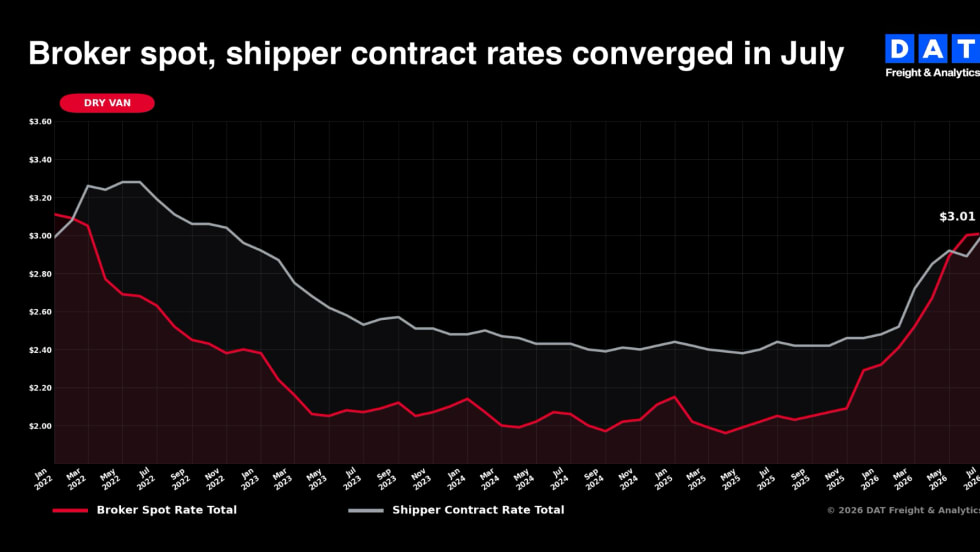
Tight Trucking Capacity Pushes Rates Higher Even as Freight Volumes Fall
“Spot rates moving ahead of contract rates have historically signaled a tightening market, but we haven’t seen a capacity-driven market quite like this one,” said DAT's Dean Croke.
Read More →