




How to Be Proactive With Tank Corrosion Prevention
In truck, rail tankers and beyond, Chemically Bonded Phosphate Ceramics can stop corrosion, improve safety, extend equipment life and minimize maintenance and downtime.
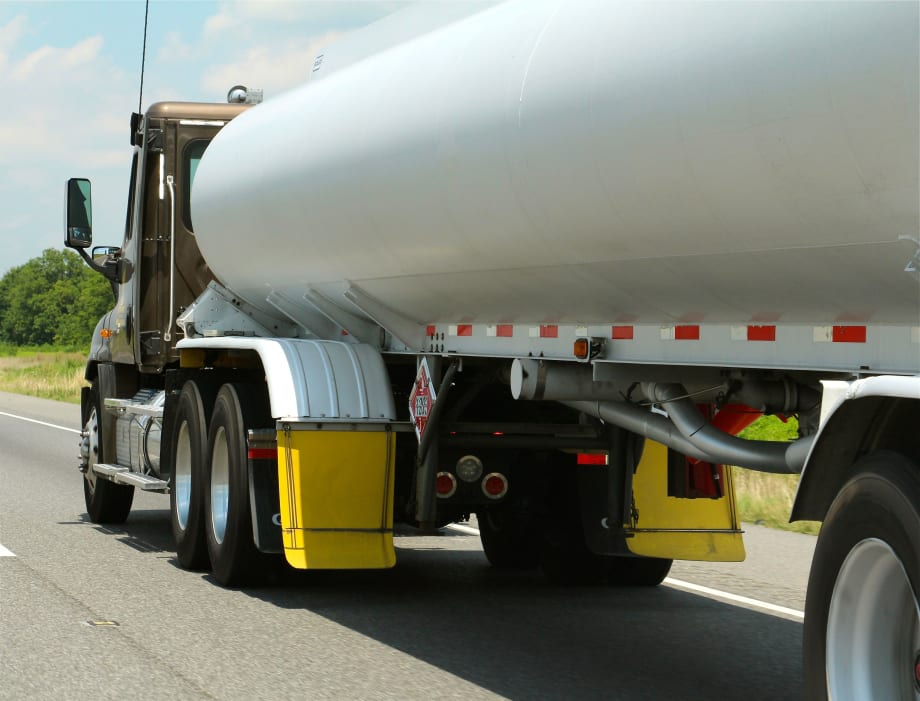
Photo: Evan Lockridge
Photo: Evan Lockridge
Thousands of chemicals, petroleum products, and corrosive elements like salt water brine are transported every day, including by tanker truck.
Carbon steel corrosion can require early tank replacement and maintenance, as well as pose a safety risk in terms of potential leaks, spills, and even fire and explosion, so effective corrosion protection is a must.
“We clean just about any tank hauling product or waste on the road or rail,” says Joe Svehlak, facility manager at DFW Tank Cleaning, a Dallas-Fort Worth, Texas-based full service tank cleaning facility that specializes in chemical cleaning. “Protecting against corrosion is vital in such tanks, as it is in our facility flush tanks.”
According to Svehlak, effective corrosion resistance is essential in the flush tanks because they hold the wastewater from the first flushes of tanks that the company cleans, which can include residual chemicals, until it is treated. This amounts to thousands of different residual chemicals held in the flush tanks annually – from petroleum products and salt-water brine to fluoride, caustic soda, and a variety of acids.
Against such tank corrosion challenges, traditional polymer paints and rubber type coatings have long been used as physical barriers to keep corrosion promoters such as water and oxygen away from steel substrates. This works until the paint is scratched, chipped, or breached, and corrosion promoters enter the gap between the substrate and coating.
Truck or rail tankers hauling waste, including sand and sediment, can be particularly prone to scratches, chips, or breaches. When that happens, the coating can act like a greenhouse – trapping water, oxygen and other corrosion promoters – which allows the corrosion to spread.
While stainless steel can be used for tanks to resist corrosion, it can be up to six times more costly than carbon steel, as well as challenging to weld, fabricate, and maintain. A new generation of anti-corrosion coating, called chemically bonded phosphate ceramics, is now available.
Rugged Anti-Corrosion Protection
“Our corrosion protection for our 10,000-gallon flush tanks has to be particularly rugged because we mix the wastewater so it does not stratify, and sand, rocks, and even metal shavings can be present from the waste trailers we service,” says Svehlak. “The corrosion protection also has to withstand the high-temperature, high-pressure water we often work with.”
To control corrosion, the tank cleaning facility chose to have Ennis, Texas-based DC Metal Construction, a privately owned company specializing in steel construction and industrial plant building projects, coat the inside of two flush tanks. The flush tanks were coated with a spray-applied inorganic coating called EonCoat from the Raleigh, N.C.- based company of the same name. EonCoat represents a new category of chemically bonded phosphate ceramics (CBPCs) that can stop corrosion.
In contrast to traditional polymer coatings that sit on top of the substrate, the corrosion resistant coating bonds through a chemical reaction with the substrate, and slight surface oxidation actually improves the reaction. An alloy layer is formed. This makes it impossible for corrosion promoters like oxygen and humidity to get behind the coating the way they can with ordinary paints. The corrosion barrier is covered by a ceramic shell that resists corrosion, fire, water, abrasion, chemicals, and temperatures up to 400 degrees.
Although traditional polymer coatings mechanically bond to substrates that have been extensively prepared, if gouged, moisture and oxygen will migrate under the coating’s film from all sides of the gouge.
By contrast, the same damage to the ceramic-coated substrate will not spread corrosion because the carbon steel’s surface is turned into an alloy of stable oxides. Once the steel’s surface is stable (the way noble metals like gold and silver are stable) it will no longer react with the environment and corrode.
Visible in scanning electron microscope photography, EonCoat does not leave a gap between the steel and the coating because the bond is chemical rather than mechanical. Since there is no gap, even if moisture was to get through to the steel due to a gouge, there is nowhere for the moisture to travel. The only spot that can corrode is the scribe line itself, which eliminates the possibility of the corrosion migrating.
“Unlike traditional methods, the corrosion-resistant coatings for mild steel have a double layer of protection,” says Bobby Hobbs, a DC Metal Construction job foreman. “The tough, outside ceramic coating will not chip like paint and takes sandblasting to remove. The chemically bonded layer stops corrosion and will not allow corrosion promoters to spread.”
“EonCoat has stood up really well to everything from chemicals and salty brine to abrasion, high-pressure water and heat,” adds Svehlak. “I believe it will double the life of our tanks while significantly lowering maintenance costs and downtime.”
According to Svehlak, the coating’s rugged anti-corrosion properties could also benefit a wide range of transportation-related businesses.
“Tanker truck and rail operations can benefit from the anti-corrosion coating’s reliability,” says Svehlak. “Its abrasion resistance would be a big plus to wastewater haulers or super sucker truck operators with vacuum tanks that may encounter metal chips, glass shards, etc. when cleaning out sumps. It would also resist tank corrosion when transporting petroleum products or even used restaurant waste such as oil, fat, or grease.”
Another advantage of CBPC coatings is a quick return to service that minimizes equipment downtime. For corrosion protection projects using typical polymer paints such as polyurethanes or epoxies, the cure time may be days or weeks before the next coat of traditional ‘three part systems’ can be applied, depending on the product. The cure time is necessary to allow each coat to achieve its full properties, even though it may feel dry to the touch.
In contrast, a corrosion resistant coating for carbon steel using the ceramic coating in a single coat requires almost no curing time. Return to service can be achieved in as little as one hour.
“After appropriate tank preparation, we found that if we spray EonCoat in the morning the tank can be returned to service the same day because it applies in one coat and dries quickly,” says Hobbs.
EonCoat consists of two, non-hazardous components that do not interact until applied by a plural spray system like those commonly used to apply polyurethane foam or polyurea coatings. Since the coating is inorganic, there are no VOCs, no HAPs and no odor. This means that the coating can be applied safely, even in confined spaces.
This article was authored under the guidance and editorial standards of HDT's editors to provide useful information to our readers. Del Williams is a technical writer based in Southern California and wrote this on behalf of EonCoat. He writes about health, business, technology and educational issues.
More Equipment

How Volvo Updated Its D13 for EPA 2027 [Watch]
Volvo’s updated D13 promises lower emissions without sacrificing performance or fuel economy. Take a closer look at what changed inside the engine in this HDT Spotlight video.
Read More →
Michelin Tire Improves Efficiency and Durability for Regional Fleets
The Michelin X Multi Energy D2 is a regional haul drive tire engineered to help fleets improve fuel efficiency, durability and traction in demanding stop-and-go operations.
Read More →
ZF Expands Commercial Vehicle Push in North America
ZF is expanding its North American commercial-vehicle presence with new transmission applications, electrification, trailer technology and autonomous-driving systems.
Read More →
Tesla Wants a Self-Driving Semi. Are Cameras Enough?
Could Tesla’s camera-only autonomous driving technology work on an 80,000-pound Semi? In this commentary, HDT's Deborah Lockridge takes a look at Tesla, Cybercab, and how autonomous trucks see the road.
Read More →
Kodiak: Driverless Long-Haul Truck Launch on Track for 2026
Kodiak AI says its driverless long-haul safety case is 93% complete and it remains on track to begin commercial operations by year-end 2026.
Read More →
What DOT’s Automated Vehicle Strategy Means for Trucking
The U.S. Department of Transportation issued a new automated-vehicle strategy that outlines plans for driverless-truck regulations, cross-state freight corridors, and federal safety standards.
Read More →
East Coast Port Launches $45M Electric Truck Push
The Port Authority of New York and New Jersey announced millions in incentives for zero-emission drayage trucks, yard tractors, and new charging hubs near the port.
Read More →
PlusAI Going Public to Fund Autonomous Truck Launch
A SPAC deal could provide PlusAI with up to $300 million as it works toward a 2027 commercial launch of factory-built autonomous trucks.
Read More →
NHTSA Moves to Rewrite Truck Fuel-Economy Rules
The National Highway Traffic Safety Administration says it lacks authority to regulate medium- and heavy-duty truck engines separately from complete vehicles, but the existing standards have not yet been eliminated.
Read More →
Detroit Opens Orders for EPA 2027 Engines
Detroit isn’t starting from scratch to meet EPA 2027 diesel emissions standards. Its Gen 6 DD13 and DD15 engines keep much of today’s platform while updating the fuel and aftertreatment systems.
Read More →